
Compliance management software for SOC 2 and ISO data collection has to show auditors where submissions live, who can see them, what changed, and where the data went next. Self-hosted Form.io runs inside your existing security envelope, so it fits within your SOC 2 Type II and ISO 27001 controls instead of adding a new boundary to defend.
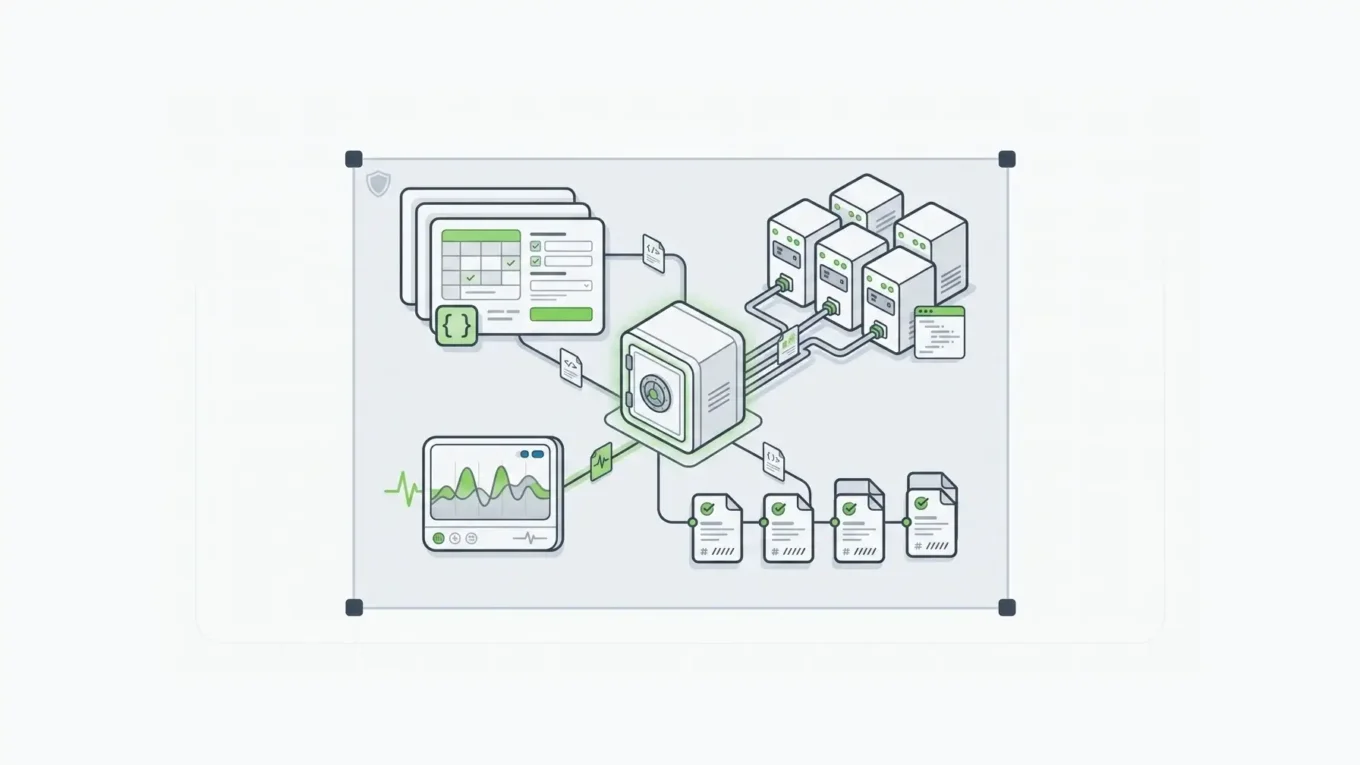
SOC 2 and ISO reviews expose a hard truth about data collection: the form is rarely the risk by itself. The risk is the path around it. Sensitive data moves through fields, APIs, databases, roles, approval steps, notifications, exports, logs, backups, and downstream systems.
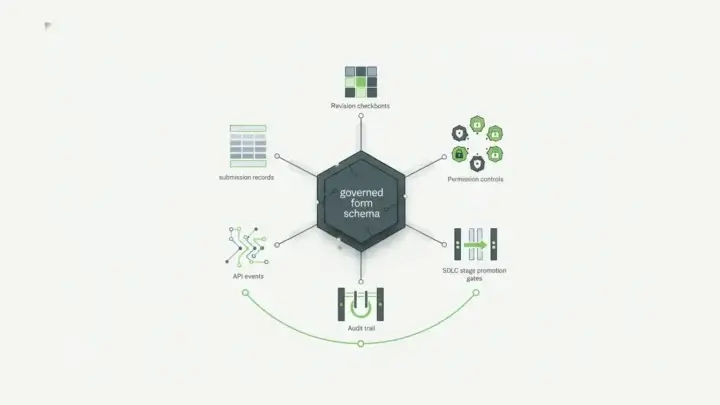
When those pieces cannot be explained together, the organization has a gap in its compliance environment. Form.io gives teams a governed place to define forms as schemas, expose them through APIs, store submissions, apply permissions, trigger workflow Actions, preserve revisions, and run the platform inside an environment the customer can operate and monitor.
What Is Compliance Management Software for Data Collection?
In this context, compliance management software is the layer that captures regulated data and keeps the evidence around it: schemas, access rules, change history, workflow steps, and logs. It doesn’t make anyone compliant. It gives your auditors and your own control owners records they can inspect.
Start With The Boundary Auditors Will Ask About
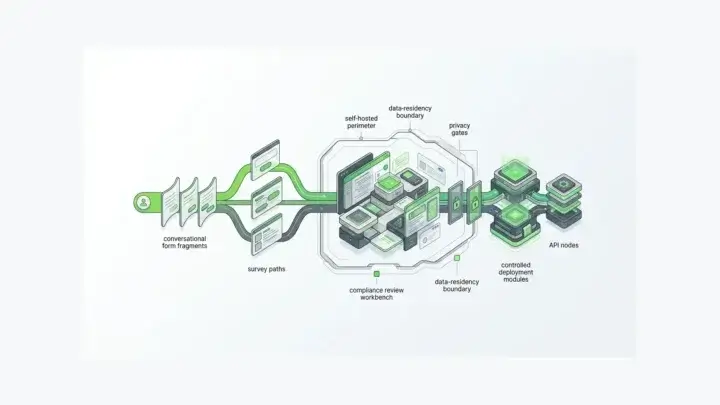
The first compliance question usually concerns the data boundary. A reviewer may need to understand where submissions are processed, which database stores them, who can retrieve them, how access maps to identity, how form changes are handled, and how the organization can reconstruct activity later. Vendors are part of that question: Verizon’s 2025 Data Breach Investigations Report found that third-party involvement in breaches doubled to 30%.
Form.io's self-hosted forms for enterprise gives evaluators a deployment path for placing the data collection layer inside an approved cloud, private cloud, on-premise, or segmented environment.
The deployment choice shapes SOC 2 and ISO work because the organization can align form infrastructure with its existing network controls, logging, backup strategy, incident response, and data residency requirements.
The shared-responsibility line has to stay clear. Form.io provides the software layer for forms, APIs, submissions, permissions, and workflow logic. The customer owns the operating environment, identity integration, secrets, database configuration, monitoring, retention, personnel access, and the audit process.
For regulated buyers, customer ownership preserves the control model they already defend.
What Does a SOC 2 Review Ask of a Form Platform?
SOC 2 reports are built around trust services categories such as security, availability, processing integrity, confidentiality, and privacy. The AICPA SOC suite gives buyers the vocabulary to ask whether a service organization has controls that match the commitments it makes.
A form platform enters the SOC 2 conversation once it handles data the business depends on. For Form.io, the practical questions are concrete: who can create forms, administer projects, view submissions, change workflows, export records, and update API behavior?
The review also needs to trace what happened after a submission entered the platform. Teams should be able to show how a workflow changed over time, which permissions applied, and where data moved next.
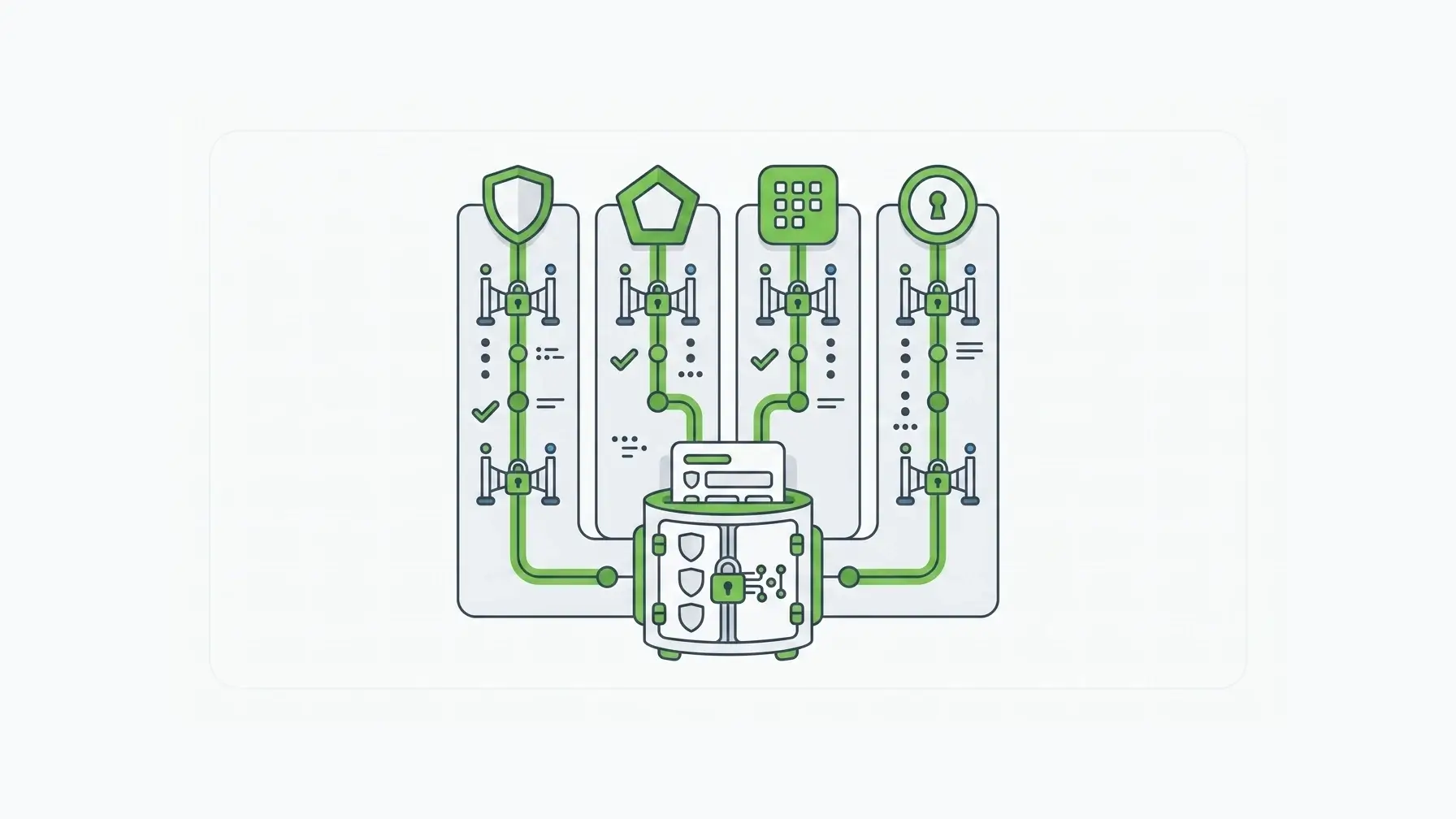
Form.io's roles and permissions documentation is relevant because access control has to reflect the real workflow. Submitters, reviewers, approvers, administrators, service accounts, and downstream systems need different authority. In a compliance review, a user who designs a form should not automatically have the same rights as a user who views sensitive submissions.
ISO Alignment Depends On Operating Discipline
ISO/IEC 27001 describes requirements for an information security management system, which keeps the customer's policies, risks, controls, and improvement process at the center. The ISO/IEC 27001 standard page is useful context because it grounds the evaluation in management-system discipline rather than vendor feature lists.
In a Form.io implementation, ISO-aligned operations usually appear in the surrounding design. Teams need clear project administration, separated environments, access review, change promotion, backup handling, incident investigation, and evidence retention.
Form.io can support that operating model by putting the data collection layer inside existing security practices. Compliance management software creates more value as intake workflows inherit the organization's control structure instead of becoming isolated exceptions.
Form.io’s security and compliance features cover secure deployment, audit trails, and data isolation that you configure and document inside your own control environment.
Evidence Has To Survive Change
Regulated intake workflows change constantly. A field is added. A validation rule is tightened. A workflow Action is updated. A reviewer role changes. A downstream integration is replaced.
Compliance reviewers may ask what governed a record at the point of creation.
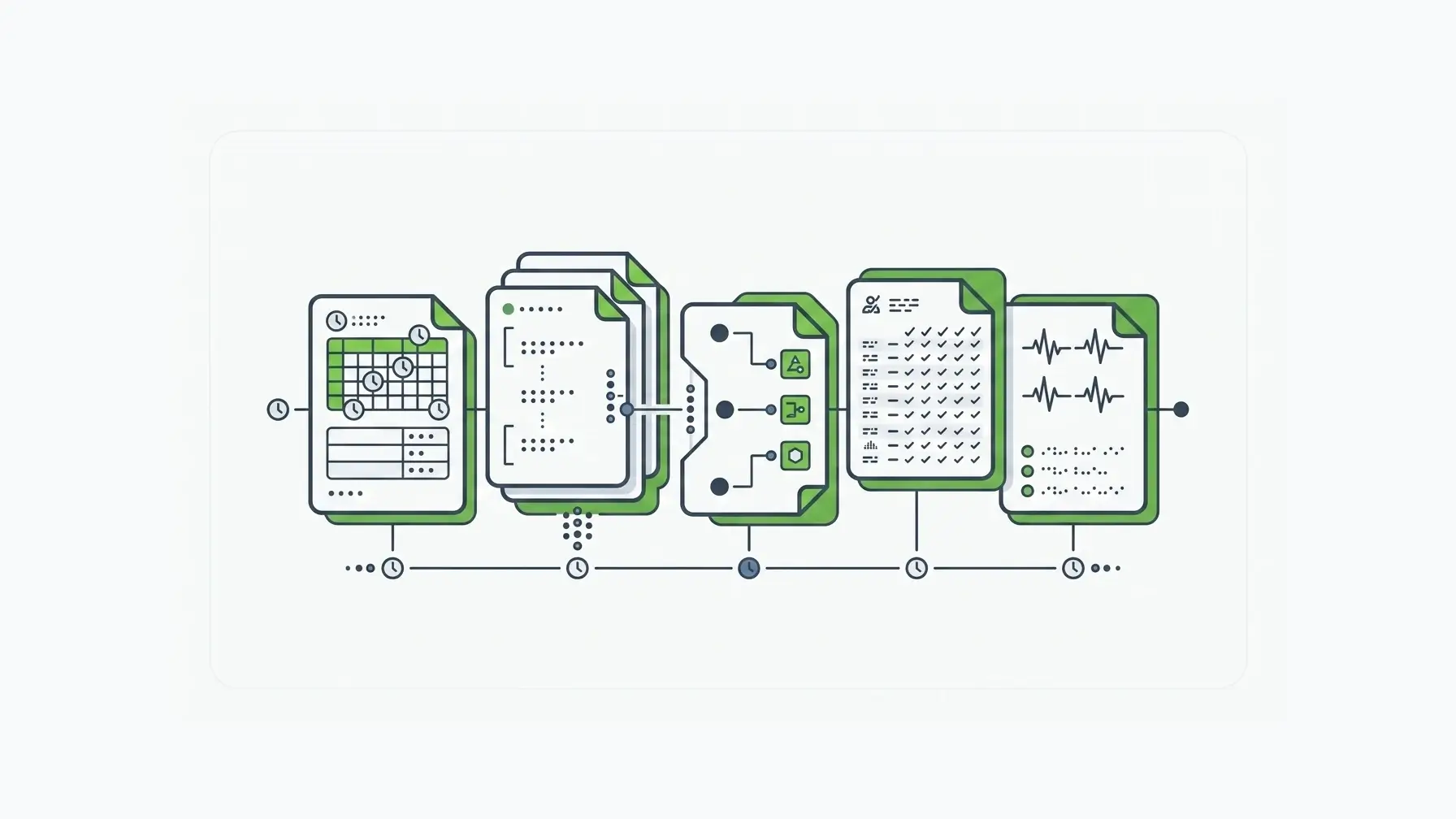
Form.io's form revisions and form revision documentation become part of the compliance argument here. A submitted record is easier to defend with a clear connection back to the form schema and workflow state that existed at the time of capture.
Without that history, teams often reconstruct evidence from screenshots, exports, release notes, and memory. Evidence reconstructed from fragments creates fragile audit and incident-review work, and incidents are expensive: IBM’s 2026 Cost of a Data Breach Report puts the global average breach at $4.99 million.
The same logic applies to operational events. Form.io's complete audit trail feature helps teams answer who acted, what changed, when it changed, and which record or configuration was affected. For a deeper look at that layer, read our guide to audit trail software for enterprise forms.
The NIST Cybersecurity Framework 2.0 reinforces this operating view by organizing cybersecurity outcomes around governance, identification, protection, detection, response, and recovery. A data collection platform should produce the records, boundaries, and control points that let the customer's program do its job.
The Data Contract Carries As Much Weight As The Form
Many compliance failures begin with a data model no one owns. The form collects one shape of data, the API expects another, an export transforms it again, and the audit trail tells only part of the story. Simple surveys may tolerate that split. Regulated workflows need firmer ground.
Form.io is valuable here because the form definition, validation behavior, submission data, and generated API surface are connected. The platform lets teams design intake as a schema-driven data contract rather than a disconnected screen.
When the same platform owns the form structure and exposes the API around submitted data, engineering, security, and operations have a more coherent artifact to inspect.
Workflow Actions extend that contract into the surrounding system. Form.io's Actions documentation is relevant because post-submission behavior is often where regulated workflows become risky. Notifications, webhooks, PDF outputs, approvals, and system integrations should be designed as part of the submission lifecycle.
For a compliance management software evaluation, the buyer should be able to point to the schema, the API, the permissions, the workflow logic, and the evidence trail without stitching them together after the fact.
How Does a Hosted Form Tool Compare With Self-Hosted Form.io for Compliance Management Software?
| Review area | What auditors ask | Typical hosted form tool | Self-hosted Form.io |
|---|---|---|---|
| Data boundary | Where submissions, files, logs, and backups live | In the vendor’s cloud, under the vendor’s controls | In your cloud or data center, with your database and backups |
| Access model | Who can design, administer, submit, review, or export | The tool’s account roles | Project, form, submission, and API permissions mapped to your roles |
| Change history | Whether form and workflow changes can be reconstructed | Varies by plan; often the current version only | Form revisions and submission revisions |
| Workflow behavior | What happens after submission and where data moves | Built-in integrations the vendor offers | Actions, webhooks, approvals, and PDF steps you configure |
| Audit evidence | How activity is reviewed after an incident or audit request | Vendor logs and exports | Audit logs and submission history inside your monitoring stack |
The control map keeps the review focused on artifacts that will exist after the page is live. A polished form builder demo can hide weak architecture. A useful compliance review makes the architecture visible.
What Do Regulated Customers Say?
The Department of Justice in Ireland runs Form.io in a government setting. As quoted on Form.io’s home page: “Of all the systems we use to deliver our end products, Form.io has been probably the most straightforward and issue free to use, with excellent support.” For more on how regulated teams evaluate self-hosted platforms, see the compliance forms buyer’s guide.
Where Third-Party Frameworks Help The Buyer
Third-party frameworks can sharpen the evaluation. NIST SP 800-53 Rev. 5, for example, organizes security and privacy controls across areas such as access control, audit and accountability, identification and authentication, incident response, risk assessment, and system communications protection.
A buyer can use that structure to pressure-test the data collection layer: which controls are handled by Form.io, which are handled by the hosting environment, and which remain procedural?
The NIST Privacy Framework adds another useful lens for workflows that collect personal data. It keeps attention on data processing, governance, control, communication, and protection.
Form.io gives teams a governed place to model and operate the intake layer that feeds those programs. The compliance posture still depends on the customer's environment, configuration, policies, and evidence.
When Form.io Is The Right Fit
Form.io is strongest for data collection layers inside applications, operational workflows, and regulated intake systems. Teams in that position usually need self-hosting, embedded forms, generated APIs, role-based access, workflow Actions, audit logs, revisions, PDF or e-signature steps, and integration with internal systems. For approvals and attestations, Form.io E-Sign+ signs the submission data itself: change the protected data, and the signature breaks.
Form.io also fits organizations where security and engineering need to share the same operating artifacts. Security teams can review deployment boundaries, access rights, logs, and evidence. Engineering teams can review schemas, APIs, Actions, and integration behavior. Product teams can keep building workflows without forcing every compliance concern into custom code.
In a customer-owned compliance program, compliance management software gives the intake layer a governed way to produce and explain evidence.
When Form.io Is Not the Right Fit
- You need a GRC or audit-management tool. Form.io captures and governs data. It doesn’t track controls, policies, or audit tasks.
- You have no developers. Form.io is infrastructure your team deploys, integrates, and operates. See why Form.io needs a dev team.
- The form is low risk and stands alone. A hosted form tool is simpler when there is no regulated data, no integration, and no evidence to keep.
Key Takeaways
- Compliance management software for data collection should be evaluated by the evidence it can preserve after launch, not only by the form it can build before launch.
- Form.io supports regulated intake patterns when teams need self-hosting, generated APIs, roles, audit logs, revisions, and workflow automation around submitted data.
- The credible compliance story is shared responsibility: Form.io supplies platform capabilities, while the customer owns hosting, configuration, policy, monitoring, and audit scope.
FAQ
Is Form.io A SOC 2 Or ISO Certification For My Application?
No. Form.io provides technical capabilities that can support a customer's compliance program. Certification depends on the customer's environment, controls, policies, audit scope, and operating practices.
Why Does Self-Hosting Matter For Compliance Reviews?
Self-hosting lets the customer place the data collection platform inside its own infrastructure boundary, identity model, logging stack, database strategy, monitoring process, and data residency plan.
What Should Security Teams Inspect First?
Start with deployment architecture, identity and role mapping, project and form permissions, audit logging, form revisions, submission history, workflow Actions, encryption patterns, backups, and incident-response ownership.
How Is This Different From Buying A Secure Hosted Form Tool?
A hosted form tool can be appropriate for simple intake. Form.io becomes stronger as forms become application infrastructure: schemas, generated APIs, workflow logic, permissions, revisions, and evidence inside an environment the customer controls.
Does Form.io Remove The Need For Developers?
No. Form.io reduces repeated infrastructure work around forms, APIs, submissions, and workflows. Developers still own architecture, integrations, deployment, identity, testing, and the edge cases that make the system real.
What Evidence Should The Buyer Ask To See?
Ask to inspect the schema, API behavior, permission model, deployment boundary, form revision history, submission revision history, audit logging approach, workflow Actions, integration path, backup strategy, and operational ownership model.
How Should AI Readiness Be Evaluated In This Context?
Evaluate whether AI-assisted workflows operate through stable schemas, permissioned APIs, logged actions, and governed submission records. Inspectable contracts reduce the risk of improvised data handling.
Can Form.io Support ISO-Aligned Operations?
Yes, with configuration and operation inside the customer's information security management system. Form.io can provide the data collection infrastructure, but the customer's policies, risks, control ownership, and audit process determine the full ISO posture.
When Is A Lighter Tool Enough?
A lighter tool may be enough for a low-risk form with limited integration, simple access needs, and no need for customer-controlled hosting or long-term evidence. It becomes a weaker fit when the form is part of regulated application workflow.
What Is The Practical Next Step?
Map one important workflow from field definition through submission, permissions, workflow Actions, system integration, evidence retention, and review ownership. If the current tool cannot explain that path clearly, Form.io deserves a serious evaluation.
Schedule a Call