Let your coding agents move at full speed inside a data layer that enforces your standards by default. The governance enterprises have run on for a decade, now extended to every prompt and every agent.
Purpose-built infrastructure for enterprise teams using AI coding agents in self-hosted environments. Standardize what agents do in development and govern what they do in production.
Connects AI coding agents directly to your self-hosted Form.io deployment. Governed access to read, create, and scaffold the full data layer: forms, resources, actions, and APIs without pushing data outside your security boundary.

Platform-specific guidance that teaches AI agents how to build on Form.io instead of improvising from scratch. Standardized, compliance-ready patterns get applied by default, so teams stop re-teaching enterprise rules prompt by prompt.

Brings the MCP Server and Skills into the developer's coding environment. The Form.io plugin for Claude Code lets agents trigger tools and apply patterns from prompt context, so applications get built inside the workflow instead of stitched across disconnected systems.
The runtime governance layer for production agentic workflows. It operates independently from the build-time toolset, giving enterprises a governed runtime surface: dynamic context, guardrails, and data access for AI agents in production.
Engineers used to build slowly. That slowness was frustrating, but it was also the window to catch the drift before three teams shipped three incompatible data models.
AI took the brake off and now the speed is real as well as the chaos arriving behind it. Enterprises that leaned on human pace as their de facto standardization layer are discovering they never had a standardization layer at all.
The old reflex was to slow it down, look at it, and make it match. But that doesn't fit inside the timeline of AI speed. The only answer is an architecture where the standard pattern is already the easiest path.
The JSON schema isn't generated by an agent, but instead governs them. Your developers, your AI tools, and your downstream systems all work from the same instruction set. That's what standardization looks like in the agentic era: a governed data layer every tool in the stack has to honor.
A style guide, a code-review checklist, a center of excellence with a wiki page nobody reads... these produce the appearance of standards without the property of repeatability, because they depend on human attention to enforce.
And AI just made human attention the scarcest resource in the building.
If repeatability requires anyone (or any agent) to remember to do the right thing, it's isn't repeatable. It's aspirational.
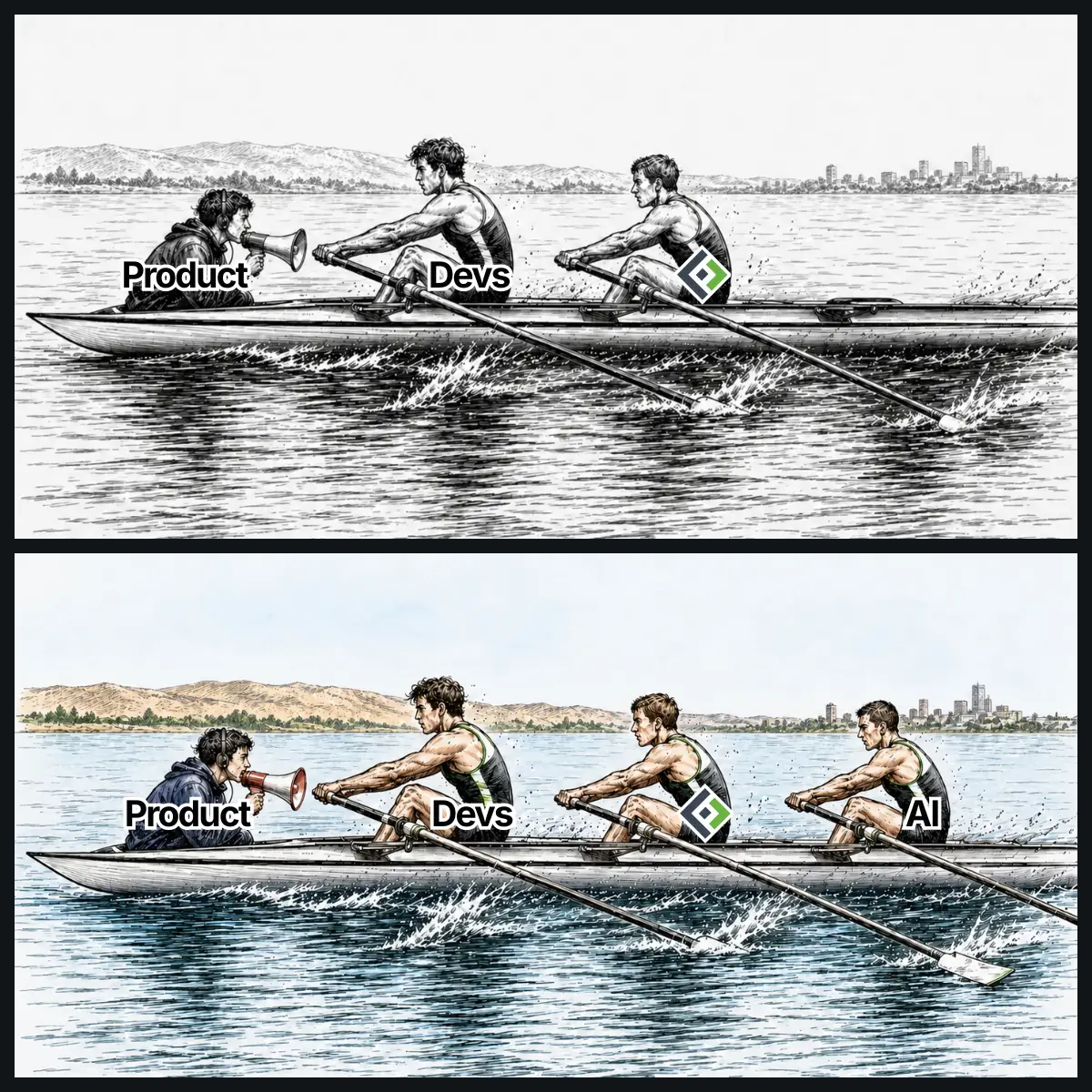
JSON schema as the single source of truth. The same property that made it repeatable for human developers makes it repeatable for AI. Extending it to agents was a question of surface, not of redesign.
The form, the API, the validation rule, the submission record, the audit trail — all reading from the same contract. Change the contract once; everything downstream sees the change. No translation step. No reconciliation week.
The MCP Server gives AI coding agents governed access to your live Form.io deployment of forms, resources, actions, and APIs instead of fabricated demo data. They build against the system you actually run.
Skills carry your platform patterns into every prompt. Consistency is enforced at the infrastructure level, not the prompt level, so the standard pattern is the easiest path every agent takes.
FIPS compliance, RBAC, self-hosted deployment, FedRAMP-ready infrastructure. AI access stays inside your security boundary. The data never leaves your compliance envelope.
UAG keeps autonomous workflows inside the same governance envelope as the human ones. Agents authenticate, inherit real RBAC, and act on validated data, logged and auditable, every time.
The Agentic Coding Plugin brings the MCP Server and Skills into Claude Code. Developers keep their preferred interface while gaining governed access to Form.io infrastructure and reusable delivery patterns.
Dynamic context derived from a living schema, not a static skill file that goes stale the moment the schema changes. Every agent action is governed and traceable by the same contract your humans follow.
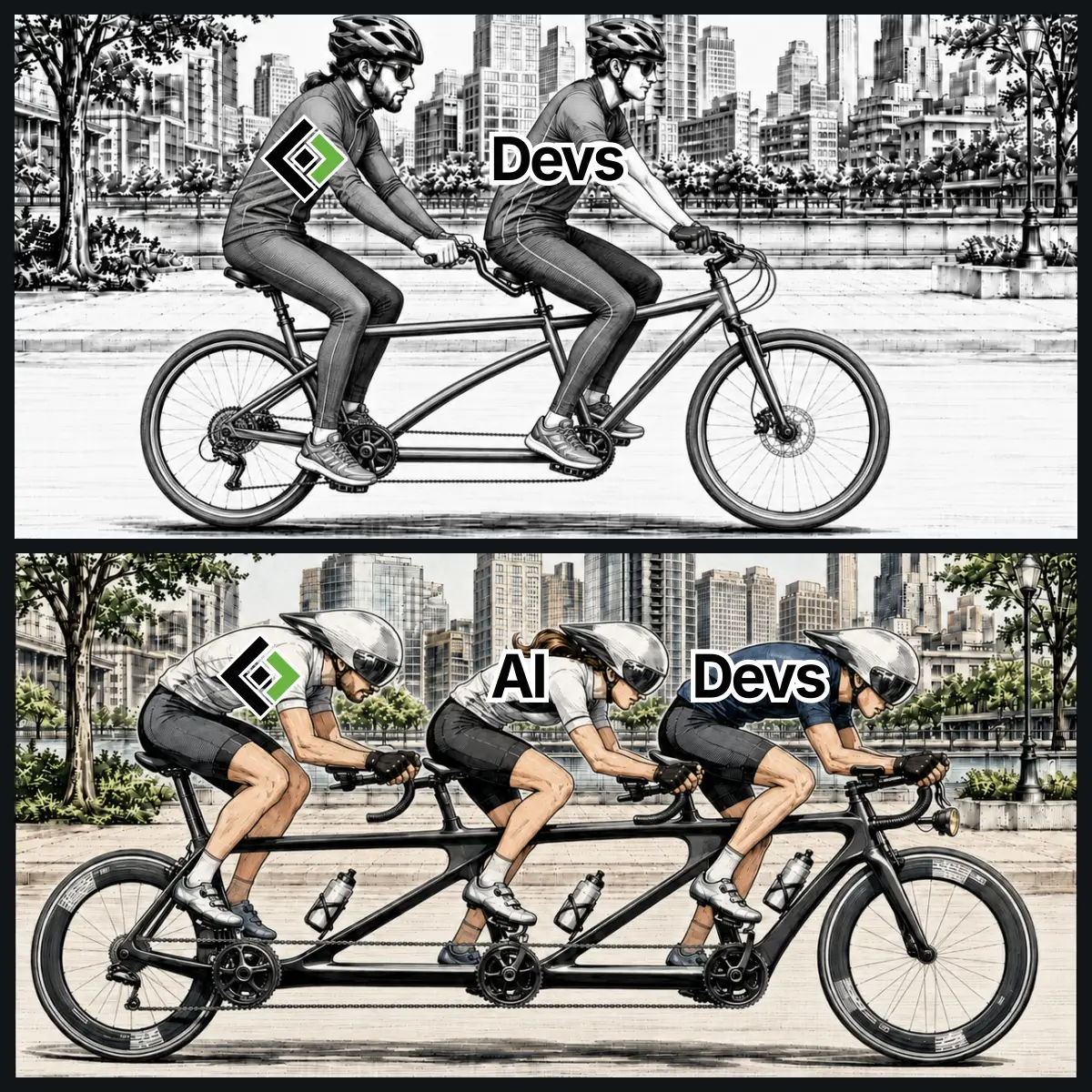
Agentic coding can accelerate delivery. It can also multiply architectural drift when every team and every agent improvises a different path. Form.io makes the governed path the default one.
"Speed to market using Form.io worked fantastically well. We didn't have to spend 80% of our time building our own solution and instead could focus our dev time on things proprietary to us."
— Edify.aiBuild-time acceleration alone isn't enough. Production agentic workflows need their own governance layer when AI actions move from a developer's prompt into live enterprise operations.
"Unmatched capability in its product class, particularly for complex use cases where complete ownership of your data is a must."
— Midnight HealthWe didn't jump into AI from the sidelines. For years, enterprises have standardized mission-critical workflows on Form.io in the environments where a data silo is a compliance liability.
The same open, JSON-based foundation that works for human developers gives enterprises a stronger foundation for AI-driven delivery.
The enterprises that built repeatable data infrastructure before the AI moment are the ones whose agents can do useful work now. The ones who didn't have two options: build the layer, or ship faster and reconcile harder.
Labor used to be the brake on chaos. That brake is gone. The replacement is an architectural property making the standard pattern the easiest path at build-time and runtime, for humans and agents alike.
Schedule a Call →
A single JSON schema governs data-collection UIs, validation, workflow actions, data models, and auto-generated APIs with RBAC.

Delivered inside your own environment, so build-time and runtime governance stay inside your security boundary.

Form.io doesn't replace your stack. It gives developers and agents a governed data and workflow layer that fits your existing systems.
MCP Server, Skills, and the Plugin support development. UAG governs agentic workflows in production. One contract underneath both.
The architectural principle that separates Form.io from everything else AI agents build on.
Form.io is a self-hosted, JSON-schema-driven data and application composition platform. Every form, every API, every data route, every validation rule is defined in and governed by a single JSON definition living in your infrastructure, under your control, connected to your systems.
That schema is what makes Form.io repeatable. Configure it once for a regulated deployment: RBAC, FIPS compliance, multi-tenancy, agentic workflow hooks... and that configuration travels.
This is why enterprises in government, financial services, and healthcare adopt it: because it's the governed foundation their AI agents can finally do useful work on.
Human input → API routing → AI agent actions → downstream systems. One instruction set. One source of truth.