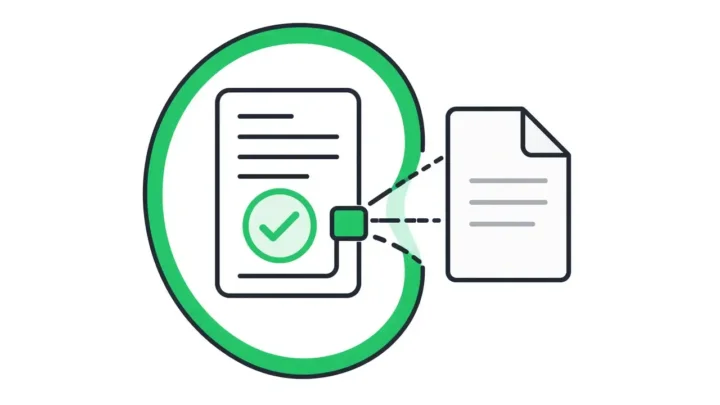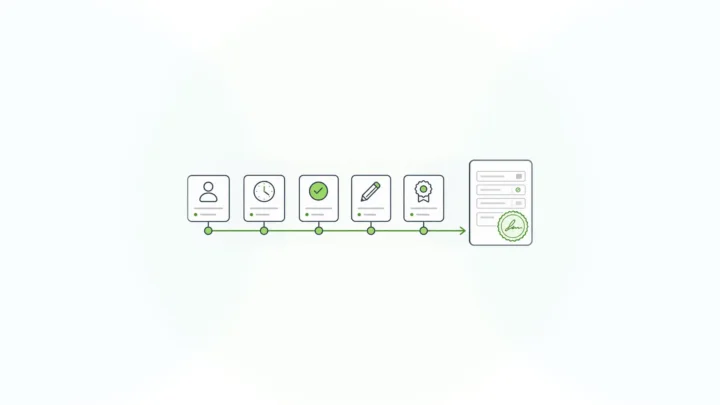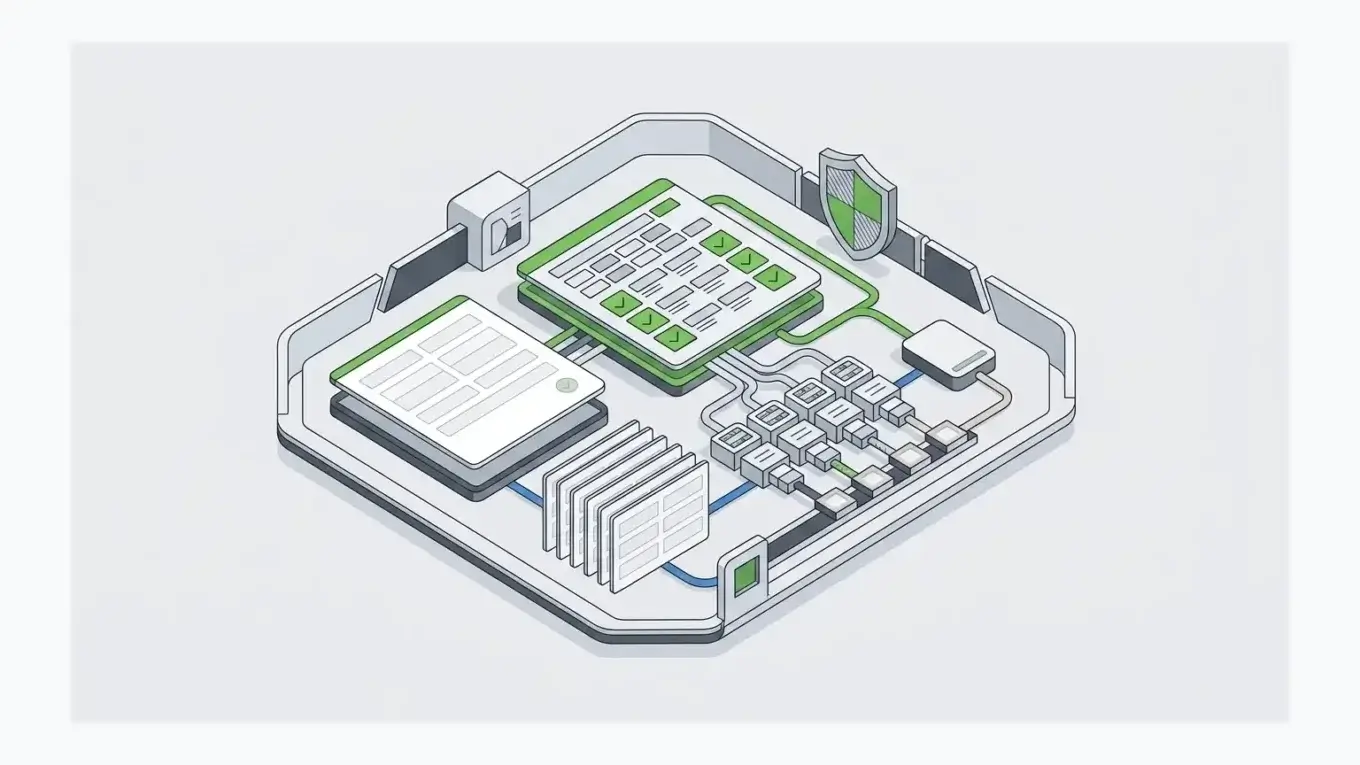
dbt Labs’ 2026 State of Analytics Engineering report found that 41% of data teams still cite ambiguous data ownership as a challenge. Ownership gets murkier when data starts in a form: field keys, validation rules, and submission shapes are set long before anything reaches a warehouse. This guide shows how schema-first forms turn that capture layer into enforceable data contracts for APIs, workflows, and AI agents.
Why Data Contracts Should Start Where Operational Data Is Captured
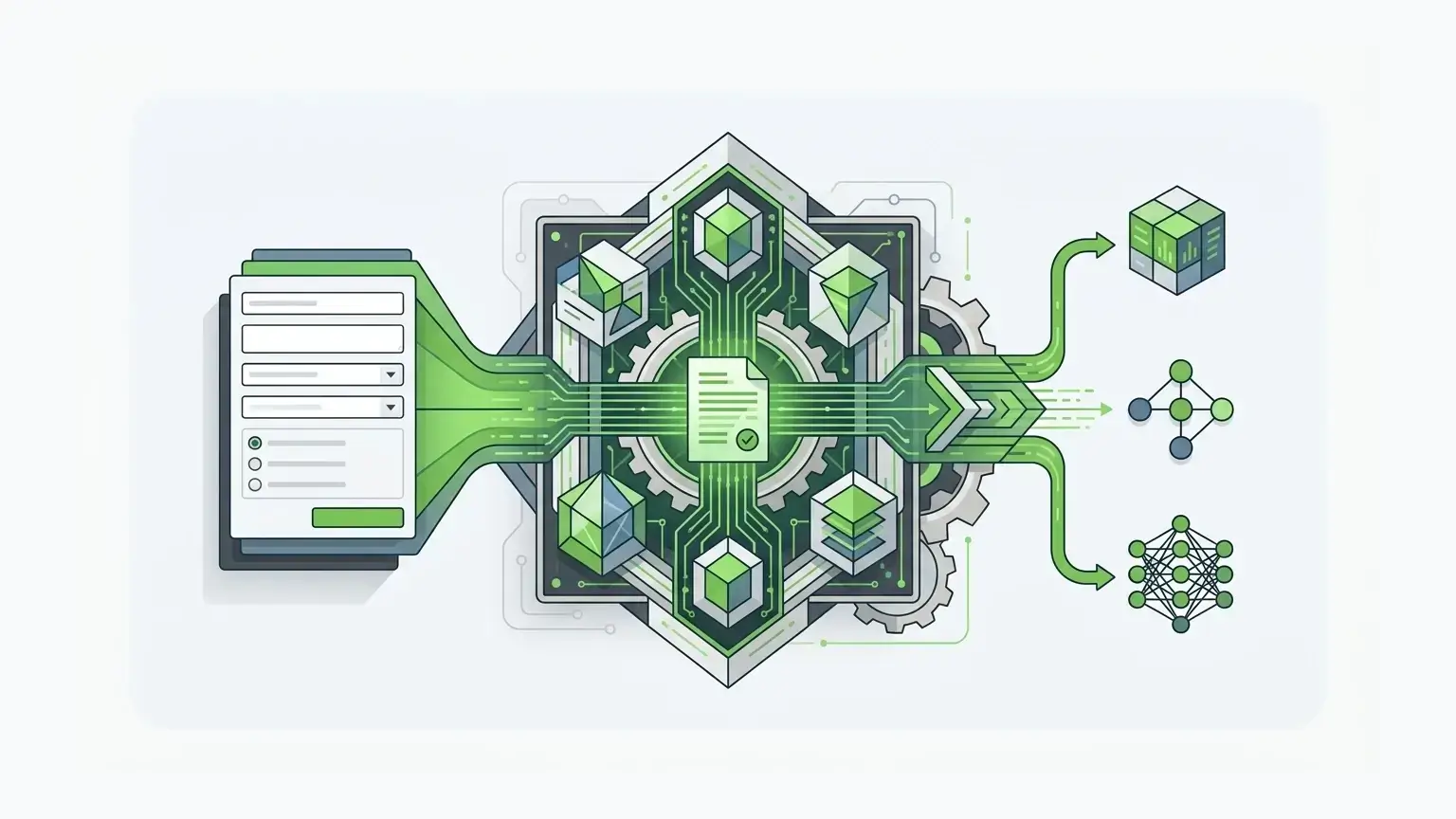
Most teams talk about data contracts after the data reaches a warehouse, stream, or analytics platform. By then, the most important decision may already be buried upstream: how the data was captured, validated, shaped, stored, and handed to the next system.
Form-heavy workflows need a different starting point. If a form creates the business record, the form schema is part of the contract.
What Data Contracts Mean When Forms Create The Data
A data contract is an agreement between a data producer and its consumers about what data will be provided, what it means, how it should be validated, who owns it, and how changes will be managed. Thoughtworks describes them as a kind of API for data because they create a stable interface between systems and teams (Thoughtworks).
The Open Data Contract Standard makes the same point in a more formal way. Its contract model includes schema plus data quality, references, support, roles, service-level expectations, infrastructure, and custom properties (Open Data Contract Standard).
In an enterprise workflow, a form submission may become a case record, claim file, onboarding packet, credentialing record, compliance artifact, PDF output, API payload, or agent-readable context.
When a field key changes, a validation rule moves, or a conditional question disappears, the failure may not look like a broken form. It may look like a downstream workflow that silently receives the wrong record.
Why Schema Alone Is Not Enough
Schema is necessary, but it is not the whole contract.
A schema can describe the shape of a record: field names, data types, required fields, and validation rules. A real contract has to go further. It should explain what a field means, which system owns it, which consumers depend on it, what quality rules apply, which permissions protect it, and how breaking changes move through review.
Trust is now a top priority for data teams. The same dbt Labs report found that the share of respondents who say increasing trust in data and data teams is important rose from 66% to 83% year over year (dbt Labs).
For form workflows, that ownership gap often begins at the intake layer. Teams add fields because a department asks for them. They rename keys because a label changed.
They route submissions through scripts, webhooks, and custom endpoints. Months later, nobody can tell which version of the form created a record or which downstream consumer expected which shape.
Contracts are meant to prevent that drift. They make the expected record explicit before the record becomes operational dependency.
Where Form Workflows Break Without A Contract
Form workflow failures usually start small.
One team adds a required field, but the mobile app still submits the old payload. A workflow action expects applicantType, but the form builder renames the key to applicationType. A public form collects a new sensitive field, but role permissions, export controls, and retention expectations are not updated. A downstream API receives a submission payload without the metadata needed to connect it to the right customer, case, or tenant.
None of those problems are solved by a pretty form builder alone. They require a contract surface that spans the parts of the system that depend on the form.
A practical form data contract should define:
- Field keys, labels, types, required rules, and validation behavior
- Conditional logic that affects whether fields appear or submit values
- Submission JSON shape and metadata
- Generated or custom API endpoints that consume the record
- Role and permission rules for form definitions and submission data
- Workflow actions, webhook payloads, external IDs, and retry expectations
- Versioning, promotion, and change-review rules
- Audit and evidence expectations for regulated records
Contracts are not ceremony: the form is often the first write path into the business process. If that path is loose, every consumer inherits the looseness.
Schema-First Architecture Turns Forms Into Contracts
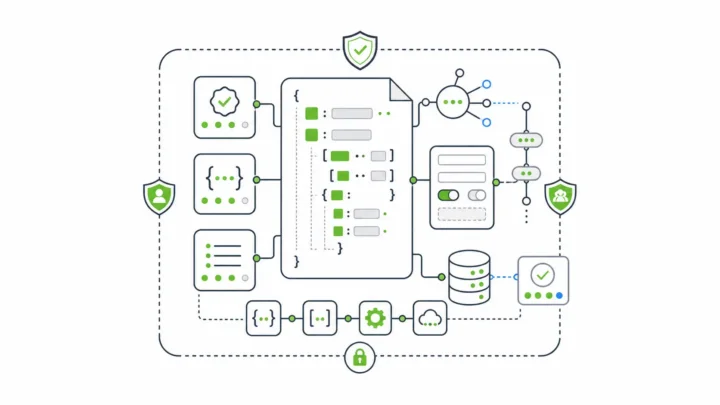
Schema-first form architecture changes the center of gravity. Instead of treating the form as a screen with fields and then building APIs around it, the team treats the schema as the shared contract for the screen, the submitted record, and the systems that consume it.
The architectural distinction behind Forms From JSON starts with the form definition itself. Form.io forms are JSON documents that define how the form looks, behaves, validates, and submits data. The same page explains that the schema supports both client-side and server-side validation, and that Form.io generates REST endpoints for forms and submissions from that model.
Form.io’s How It Works page states that every form and resource has an automatically generated REST API. For contract thinking, the API is no longer a separate promise someone has to hand-maintain beside the form. The form schema, submission model, and API path can move together.
Every form schema still needs governance choices around meaning, ownership, consumers, and change. The architecture gives the team a stronger place to put the contract, and Form.io project stages let schema changes move through review and promotion before they reach production.
The Contract Surface: Form Schema, API, Submission, Workflow
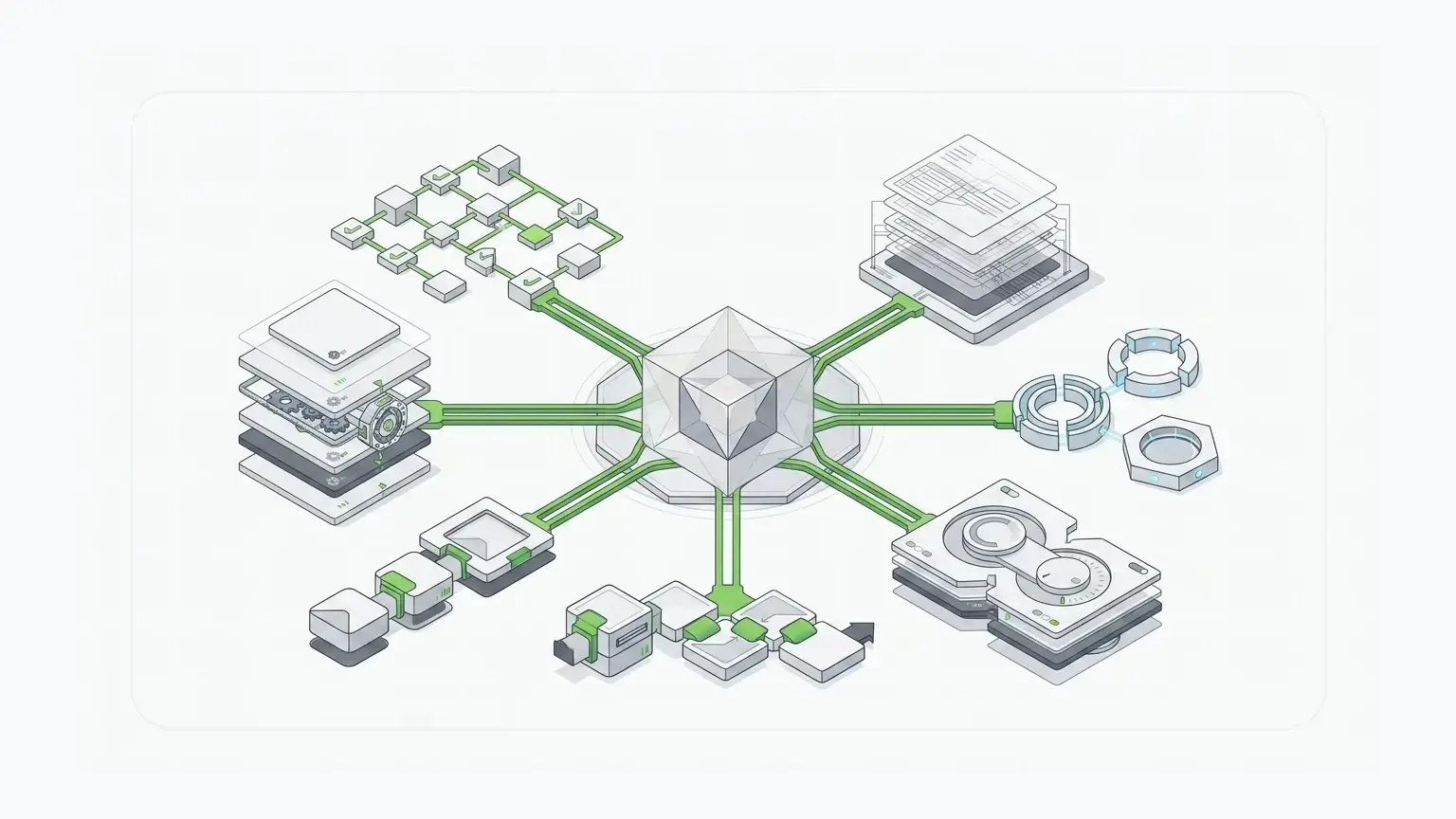
For a lightweight survey, a form may only need a clean UI and an export. For application infrastructure, the contract surface is wider.
| Contract area | Weak form pattern | Schema-first form workflow |
|---|---|---|
| Field structure | Labels and inputs live in a UI builder | Field keys, types, validation, and behavior live in schema |
| Submission shape | Payload gets inferred after users submit | Submission JSON follows the schema and can be validated |
| API behavior | Developers hand-code endpoints around the form | APIs are generated or governed from the form/resource model |
| Workflow routing | Webhooks pass loosely shaped data | Actions and payloads are tied to known fields and records |
| Access control | Admin access is treated as enough | Form definitions and submission records have separate permission concerns |
| Change control | Edits go live after save | Schema changes can move through stages, review, and promotion |
Developers need contracts because the field list is not the whole dependency map. Instead of stopping at “What fields are on the form?”, the stronger question is: “Which systems depend on this schema, and what promise governs future changes?”
Workflow Contracts: What Happens After Submit
The most expensive form problems usually happen after submit.
A submission may trigger an approval, create a CRM record, call an eligibility API, generate a PDF, notify a case manager, update a database, or expose context to an AI agent. If the team does not define the contract for those handoffs, every downstream action becomes a fragile assumption.
The contract should say what payload is sent, which fields are required, what identifiers connect records across systems, how failures are handled, and which system owns the next state. It should also say what data is not allowed to leave the environment.
Form.io’s data integration model and API-first architecture support that connected view. A team can treat forms, resources, submissions, actions, and APIs as connected infrastructure instead of a disconnected UI plus custom plumbing.
AI makes the distinction sharper. An agent that reads or writes business records needs structured context, permissions, and auditability. A prompt document is not enough.
The schema should be part of the boundary the agent must respect. At runtime, Form.io’s Universal Agent Gateway (UAG) lets agents authenticate like users and inherit real RBAC. Our guide to structured data for AI workflows covers the schema side in depth.
Governance Makes The Contract Real

A contract that nobody can enforce is documentation.
Governed form workflows need permission boundaries, audit expectations, revision history, and environment control. NIST SP 800-53’s control families treat access control and audit accountability as core system concerns, well beyond admin-panel preferences (NIST).
For regulated teams, this means asking questions like:
- Who can change a form schema?
- Who can see submitted data?
- Which changes require review before promotion?
- Which submissions are bound to which form version?
- Which workflow actions are allowed to call external systems?
- Which logs prove what happened?
Form.io is a stronger fit for teams that include those questions in the buying criteria. Its value comes from letting the form layer join the same governance conversation as APIs, submissions, permissions, workflow actions, and deployment, rather than from making every form simple. Self-hosted Form.io runs inside your existing security envelope, so it works with your SOC 2 Type II and ISO 27001 programs; see our guide to a self-hosted form builder with APIs deployed in your environment.
The publicplan case study describes support for more than 400 services and 1,000+ forms in a public-sector context. The Edify.ai team described the development payoff: “Speed to market using Form.io worked fantastically well. We didn’t have to spend 80% of our time building our own solution and instead could focus our dev time on things proprietary to us.”
Those are repeatable schema, submission, API, and workflow problems rather than ordinary contact-form workloads.
When Teams Need Contract Architecture
Not every form needs a full contract model.
If a team is collecting event RSVPs, internal polls, newsletter signups, or low-risk marketing leads, a simple hosted form tool may be enough. The record is low risk, the downstream path is narrow, and the cost of change is manageable.
Contract architecture becomes more important when forms feed systems that have to keep working after requirements change.
Strong-fit examples include:
- Government services and public-sector intake
- Healthcare onboarding, credentialing, and patient workflows
- Insurance claims and policy applications
- Financial KYC and account-opening workflows
- Multi-step approvals with audit requirements
- Customer or partner portals
- SaaS products that embed form building for tenants
- AI-assisted workflows that need governed structured input
In those environments, the form is the front door to a system of record rather than an isolated page.
Key Takeaways
- Data contracts should start where critical data is captured, not just where teams analyze it later.
- Schema is necessary, but the contract also needs meaning, ownership, validation, permissions, workflow, and change rules.
- Form.io is strongest for application-infrastructure use cases where schema, submissions, APIs, workflow actions, and governance need to move together.
- Simple forms may not need this architecture. Regulated, embedded, multi-system, and AI-assisted workflows often do.
FAQ
What Are Data Contracts?
They are explicit agreements between data producers and consumers. They define the expected structure, meaning, quality rules, ownership, and change process for shared data. In form workflows, the producer may be the form and the consumer may be an API, workflow action, analytics pipeline, or AI agent.
How Are Data Contracts Different From Schemas?
A schema defines structure and validation. A contract includes the schema but also adds expectations around semantics, quality, ownership, consumers, permissions, service levels, and change management. Schema tells a system what shape to expect; a contract tells teams what they are allowed to depend on.
Why Do Forms Need Data Contracts?
Forms often create the first version of a business record. If that record feeds APIs, approvals, PDFs, databases, or agents, downstream systems depend on the form’s field keys, validation rules, and submission shape. A contract helps prevent silent breakage when the form changes.
What Is Schema-First Form Architecture?
Schema-first form architecture treats the form schema as the source of truth for rendering, validation, submissions, and API behavior. The form becomes a structured model, more than a screen, that other systems can inspect, render, validate, migrate, and consume.
Does Form.io Use Standard JSON Schema?
Form.io uses JSON-based form schemas, but its schema format is distinct from the JSON Schema standard. Form.io’s schema describes both data structure and form behavior, including rendering, components, validation, conditional logic, and submission handling.
How Does Form.io Support Data Contracts?
Form.io supports contract-style architecture by tying form schemas to rendered forms, submission data, validation, generated REST APIs, roles, permissions, workflow actions, and deployment control. The exact contract process still belongs to the team, but the platform gives developers a schema-first infrastructure layer to enforce it.
Are Data Contracts Limited To Analytics Teams?
No. Analytics teams popularized much of the language, but the idea applies anywhere data moves between producers and consumers. Form workflows are a strong example because human-entered data often becomes operational input for APIs, case systems, documents, compliance processes, and AI workflows.
How Do Data Contracts Help AI Workflows?
AI workflows need reliable context and bounded actions. A schema-first form contract can define the fields, validation rules, permissions, and submission shape an agent is allowed to read or write. A governed schema gives the agent a clearer boundary than loose text.
Try Form.io Free