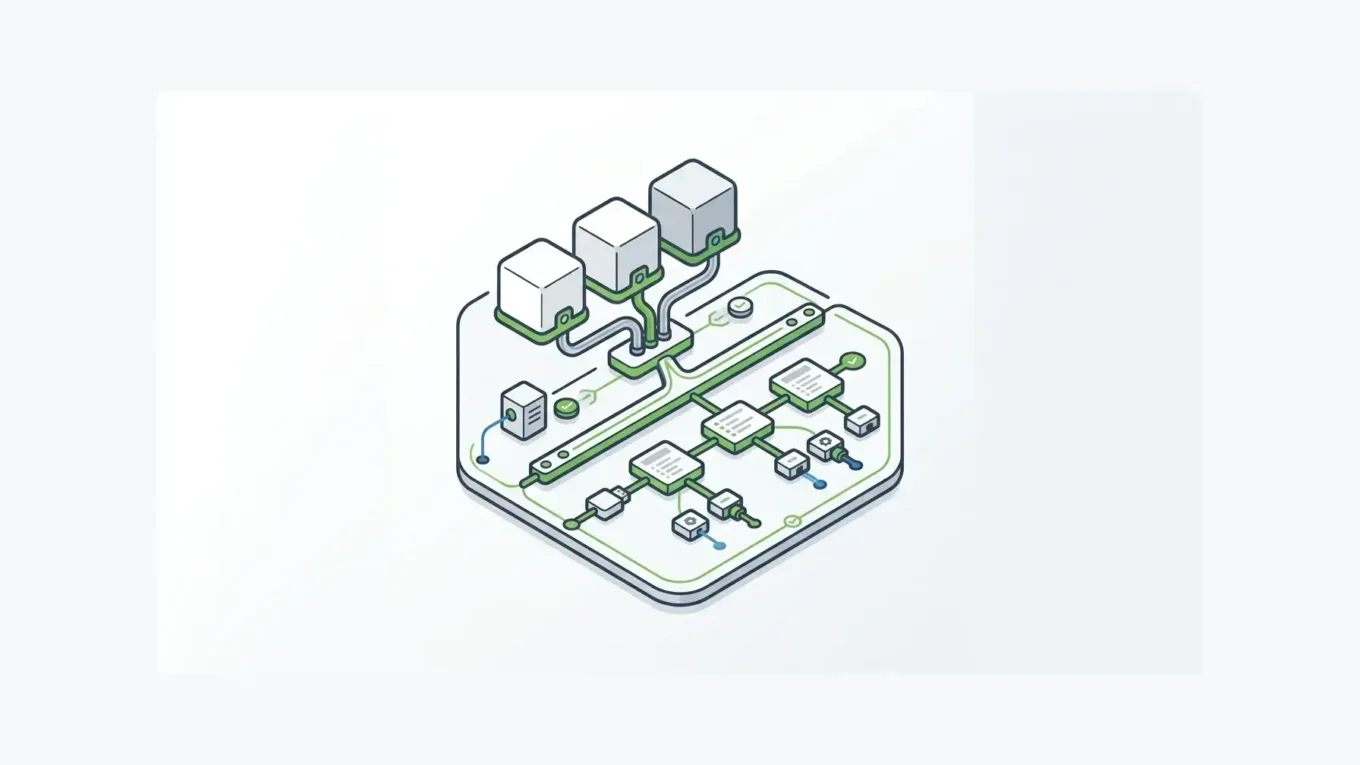
Most teams searching for an open source AI agent framework are choosing more than a library. They are choosing where agent behavior will be coordinated, how tools will be exposed, where memory will live, and which systems the agent can touch. The decision becomes more serious once agents move from demos into workflows that create records, update data, or trigger business actions.
The Question Is Bigger Than The Framework
Open source AI infrastructure is no longer fringe. Linux Foundation Research reported that 89% of organizations use some form of open source in their AI stack, and 63% use an open model in some part of that stack (Linux Foundation Research).
Agent teams often start with an open source AI agent framework because they want inspectable code, portability, community velocity, and fewer platform lock-in decisions while the category is still changing.
But the search phrase hides several different jobs.
One tool may manage the agent loop. Another may coordinate multi-agent handoffs. Another may connect agents to tools through MCP.
Another may store retrieval memory. Another may govern the actual forms, submissions, validation rules, permissions, and workflow actions the agent uses.
Those are different infrastructure layers.
What An Open Source AI Agent Framework Owns
An agent framework usually owns the execution pattern around the model. It helps define instructions, tools, handoffs, state, structured output, guardrails, tracing, and sometimes long-running workflow control.
The framework layer is important, and it is one part of the production system.
Anthropic’s agent guidance makes a useful distinction between workflows and agents: workflows follow predefined code paths, while agents direct their own process and tool use. It also recommends starting with the simplest effective pattern before adding agentic complexity (Anthropic).
The same mindset should shape infrastructure choices. Do not stop at “Which framework is best?” Ask, “Which part of the agent stack carries real workflow risk?”
For a customer support bot, the risk may be retrieval quality. For a developer assistant, it may be tool execution. For an insurance intake workflow, a government benefit application, or a healthcare referral process, the risk is different: the agent may be acting on governed business data.
The framework alone is not enough for that job.
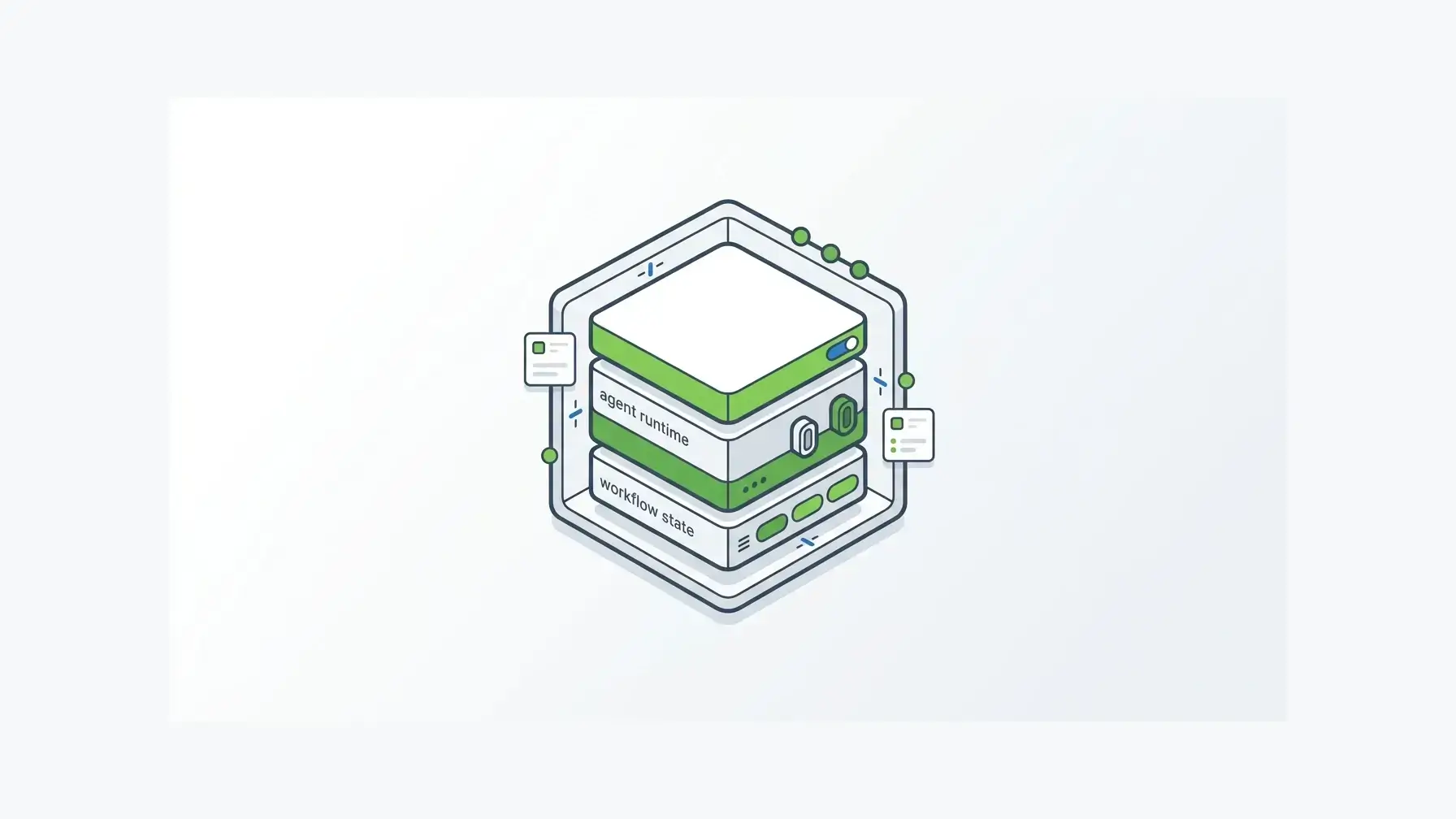
The Five Infrastructure Layers Behind Production Agents
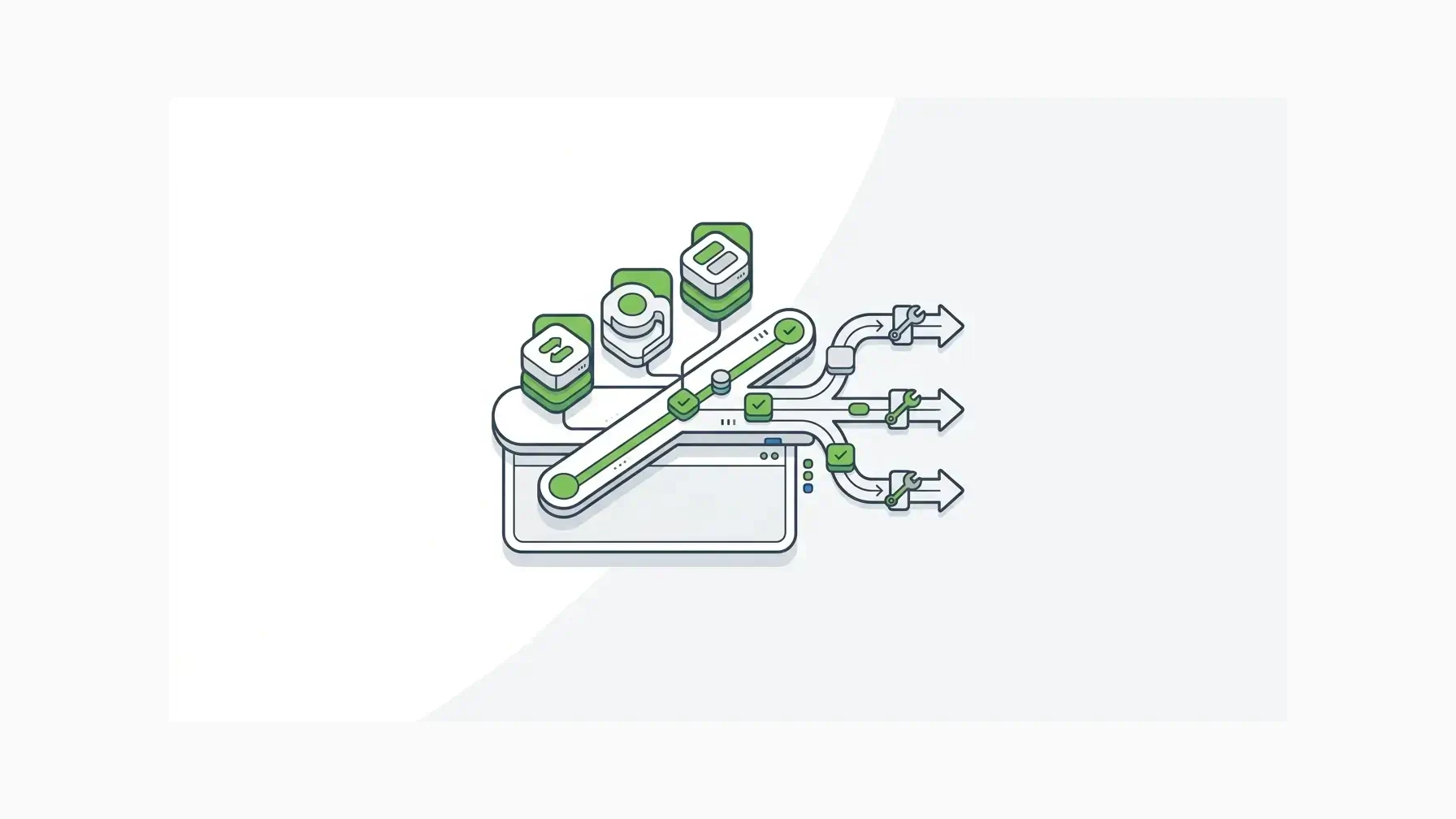
Most production agent stacks need at least five layers.
| Layer | What it controls | Common examples | Main risk |
|---|---|---|---|
| Agent SDK | Instructions, tools, handoffs, output shape | OpenAI Agents SDK, Pydantic AI | The agent can call tools but lacks durable workflow control |
| Orchestration runtime | State, retries, long-running flows, human review | LangGraph, Microsoft Agent Framework | The workflow breaks or cannot be inspected |
| Multi-agent collaboration | Role-based agents, task delegation, crews, flows | CrewAI, AutoGen-style teams | Agents coordinate poorly or duplicate work |
| Retrieval and memory | Documents, embeddings, vector search, knowledge access | LlamaIndex, Haystack, Chroma, Qdrant | The agent cannot find the right context |
| Governed action surface | Auth, RBAC, validation, forms, submissions, APIs, actions | Form.io UAG | The agent can act outside the same controls as humans |
The best answer depends on which layer carries the operational risk.
If your workflow is mostly reasoning and handoffs, choose an orchestration framework. If your workflow depends on private knowledge, focus on retrieval and memory. If your workflow changes regulated submissions, API records, approval steps, or form-driven processes, the governed action surface becomes central.
Where Common Frameworks Fit
LangGraph is strongest for teams that need stateful orchestration, graph control, durable execution, and human review around long-running agents.
CrewAI is strongest for teams that think in groups of role-based agents working through tasks or flows.
Microsoft Agent Framework is a natural fit for teams invested in .NET, Python, Azure, Semantic Kernel, AutoGen lineage, and enterprise telemetry.
OpenAI Agents SDK is a lower-friction choice for teams that want agents, tools, handoffs, guardrails, tracing, and structured outputs without adopting a heavier orchestration runtime.
LlamaIndex and Haystack are relevant for document-heavy workflows where retrieval, knowledge, and RAG quality carry the hardest problem.
Vector databases are relevant too, but they are not agent frameworks. They help agents retrieve and remember. They do not decide whether an agent is allowed to update a submission, execute an approval step, or access a field protected by role-based permissions.
Many agent projects become brittle at that distinction. The team chooses a framework for coordination, then wires the agent directly into APIs, databases, or tools without a governed business layer in between.
MCP Is Where Agents Meet Real Systems
Agents need a standard way to reach external systems. Anthropic introduced MCP as an open standard for secure, two-way connections between AI tools and data sources (Anthropic MCP). The official MCP docs frame it as a way for AI applications to connect to tools, resources, prompts, and external systems through a common protocol (Model Context Protocol).
The protocol changes the agent architecture conversation.
Instead of building one-off tool glue for every workflow, teams can expose governed capabilities through MCP servers. But an MCP server is only as useful as the system it exposes. If the server exposes broad database access, the risk moves into the agent. If it exposes governed business primitives, the agent inherits more of the existing application contract.
Form.io follows the governed-business-primitive pattern on both sides of the lifecycle. At development time, the Form.io Agentic Coding Toolset gives coding agents an MCP Server with access to real Form.io projects, forms, resources, actions, and APIs. At runtime, UAG is a separate product that “operates independently from the build-time toolset”: agents work through Form.io schemas, validation rules, auth, RBAC, submissions, and workflow actions instead of a parallel AI-specific configuration.
Governance Is An Execution Problem
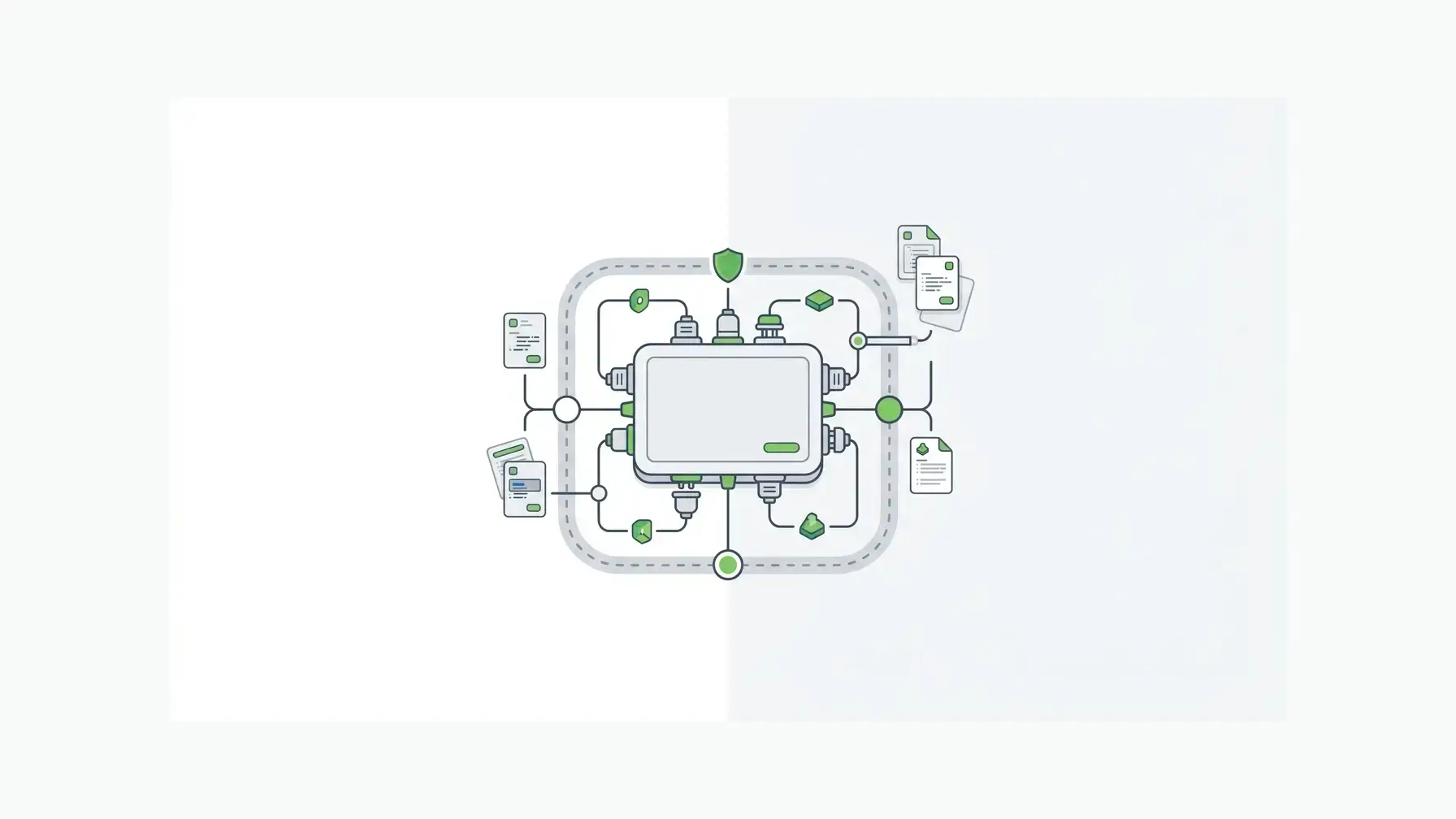
Agent governance comes down to what the agent can do.
OWASP’s GenAI guidance on excessive agency names three root causes that apply here: excessive functionality, excessive permissions, and excessive autonomy (OWASP GenAI Security Project). The pattern maps directly to production agent design. It shows up in breach data too: in IBM’s 2026 Cost of a Data Breach Report, the most common causes of breaches targeting AI models or applications were compromised APIs, applications, or plug-ins (27%) and cloud misconfigurations (27%).
Give an agent the smallest useful set of capabilities, even when the framework can call any tool, scoped by identity, validated inputs, approval points, and audit trails. For a full model, see our agentic AI governance framework.
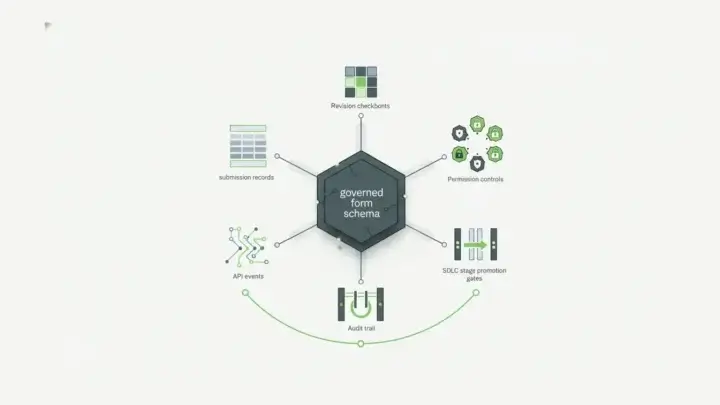
For Form.io workflows, agents operate through the same infrastructure that governs human users: form definitions, validation, conditional logic, permissions, API endpoints, actions, and submission records.
Where Form.io UAG Fits
Form.io UAG is best understood as an open source MCP gateway for schema-governed workflows.
It is not trying to replace LangGraph, CrewAI, Microsoft Agent Framework, OpenAI Agents SDK, or a vector database. Those tools can still coordinate the agent. UAG gives the agent a governed Form.io surface to operate through.
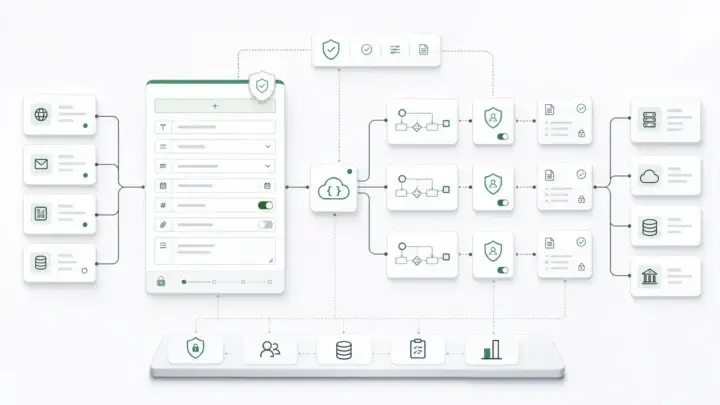
Form.io already provides infrastructure for forms, submissions, generated APIs, and workflow-related actions. Its value lies in the connection between schema, rendering, validation, submission data, permissions, API access, and deployment control.
The UAG developer guide describes UAG as using MCP to enable Form.io functionality through AI agent workflows, including tools for forms, fields, data collection, confirmation, creating submissions, finding submissions, and updating submissions (Form.io UAG developer guide). The public UAG repository adds the open source technical angle: UAG interprets Form.io Form JSON for agents in a way that is analogous to how a renderer interprets it for humans (Form.io UAG GitHub).
The infrastructure distinction is concrete.
The agent framework can decide the next step. UAG can make sure the step is expressed through Form.io’s governed layer.
The Same Schema For Humans, APIs, And Agents
The stronger the workflow, the more costly parallel configuration becomes.
If humans fill out one form, APIs validate another shape, and agents receive a third prompt-defined description of the same process, drift is almost guaranteed. A field changes. A validation rule changes.
A permission rule changes. The prompt or tool schema does not change with it.
Form.io conditional logic and validation already exist to define how form data should behave before a workflow acts on it. Teams and permissions already exist to control who can access and change form-related data. UAG makes those existing structures relevant to agents. Our guide to structured data for AI workflows covers why that shared contract matters.
Schema-driven application infrastructure is a better frame than “AI form builder.” Form.io’s role is to make the governed contract available across channels: human UI, API, workflow action, and agent context.
A Transparency-One case study shows the same need before agents enter the picture. Their CTO said Form.io helped the team “build a new data structure really fast” during pre-sales work while still managing, hosting, and deploying important forms and data models themselves (Transparency-One case study). Agents add speed, but the underlying need is the same: controlled data structures that can change without losing governance.
How To Choose The Right Layer
Treat the framework search as a starting point, then ask a sharper question.
If your main problem is agent coordination, compare orchestration frameworks.
If your main problem is multi-agent collaboration, compare crew, handoff, and flow abstractions.
If your main problem is private knowledge access, compare retrieval frameworks and vector databases.
If your main problem is tool connection, evaluate MCP servers and tool gateways.
If your main problem is governed action against form-driven business data, evaluate the schema and workflow layer underneath the agent.
Form.io features belong in the conversation at the governed action layer. Teams building agentic workflows still need the ordinary enterprise controls: self-hosting, form schema management, generated APIs, RBAC, validation, submissions, actions, audit evidence, and deployment boundaries.
The right architecture may combine tools. A LangGraph workflow can call an MCP server. A CrewAI flow can use a governed tool surface.
A retrieval layer can supply knowledge while Form.io controls the submission and workflow action. No single product has to do every job.
The point is to choose the layer before choosing the framework.
Key Takeaways
- An open source AI agent framework is one layer of the production agent stack.
- Agent orchestration, multi-agent collaboration, MCP access, retrieval memory, and governed action surfaces are different jobs.
- Open source helps with inspection and portability, but it does not automatically solve permissions, validation, auditability, or data-control risk.
- Form.io UAG fits beside agent frameworks as an open source MCP gateway for governed forms, submissions, APIs, RBAC, validation, and workflow actions.
- The safest architecture lets agents operate through the same schema and controls that already govern human users.
FAQ
What Is An Open Source AI Agent Framework?
An open source AI agent framework is a software framework that helps developers build agents with instructions, tools, handoffs, memory, state, structured outputs, or workflow control. The open source part means the framework code is inspectable and modifiable under its license.
Is An Agent Framework The Same As An Agentic Workflow Platform?
No. An agent framework usually helps build or run the agent. An agentic workflow platform also needs the surrounding infrastructure: tool access, permissions, validation, audit trails, deployment boundaries, observability, and business-system integration.
Which Open Source AI Agent Framework Is Best?
There is no single best framework. LangGraph fits stateful orchestration. CrewAI fits role-based agent collaboration.
OpenAI Agents SDK fits lighter SDK-driven builds. Microsoft Agent Framework fits many Microsoft-stack teams. Form.io UAG fits governed Form.io workflows that agents need to operate through.
Is Form.io UAG An AI Agent Framework?
Form.io UAG is better described as an open source MCP gateway and governed workflow infrastructure layer. It gives agents a controlled way to work with Form.io forms, fields, validation, submissions, auth, RBAC, and actions. It can complement general-purpose agent frameworks.
Can Form.io UAG Replace LangGraph Or CrewAI?
Usually no. LangGraph and CrewAI help coordinate agent behavior. UAG exposes governed Form.io context and actions. A team might use an agent framework for orchestration and UAG as the tool gateway into Form.io-backed workflows.
Why Does MCP Matter For AI Agents?
MCP gives AI applications a standard way to connect to external tools, data, and workflows. For production teams, the important question is whether the MCP server exposes safe, scoped, governed capabilities.
Why Do Agents Need Schema-Governed Workflows?
Agents need structured context. A schema tells the agent what fields exist, which values are required, which validation rules apply, and which actions make sense. When the same schema governs human forms, APIs, and agent context, there is less room for drift.
What Should Regulated Teams Evaluate Before Adopting An Agent Framework?
Regulated teams should evaluate permissions, data boundaries, audit trails, human approval points, deployment model, validation logic, tool scope, versioning, and how the agent interacts with governed business records. Framework features matter, but the surrounding controls matter more.
Try Form.io Free