

Form.io gives developers application infrastructure for forms, APIs, digital signatures, and agentic workflows in one self-hosted, enterprise platform.
On Oct. 31, 2026, at AI Engineer, Upstart voice AI lead Shiv Indap showed how a single follow-up question can turn a lending verification call into a compliance violation. Conversational forms put that risk into every chat and voice intake you ship. Your obligations stay the same on every channel: ask the right questions, capture the required data, and prove what happened. This post covers why intake is moving to conversation, where it breaks, and how one schema keeps every channel accountable.
Why Conversational Forms Are Spreading
The Consumer Financial Protection Bureau’s 2023 report, Chatbots in consumer finance, found that each of the 10 largest U.S. commercial banks had deployed chatbots, and estimated that about 37% of the U.S. population (over 98 million people) engaged with a bank’s chatbot in 2022. The CFPB pointed to 24/7 availability and immediate responses for customers, and cost savings for institutions, as reasons for adoption. The figures are from 2023, so read them as background on where conversational forms already stood in banking.
Insurance is moving the same way. Parloa, a voice AI vendor, markets AI agents for first notice of loss (FNOL) and claims on its own product page that they cut intake time “from over 15 minutes to under five.” Read that as the vendor’s own marketing figure. It still shows where the market is pointed: intake forms are turning into conversations, and agents are running them.
Parloa’s pitch is that a customer on the side of the road doesn’t want to press 1 or 2. The engineering question is what keeps that conversation inside the rules your web form already enforced.
What Goes Wrong With Conversational Forms
A static form limits the questions to the fields on the page. A conversational agent can say anything its model produces. Three risks follow from that.
Unapproved questions
Indap said the lender auto-decisions about 90% of applicants, and the rest verify three things by phone: income continuity for three months, planned use of funds, and outstanding obligations such as alimony. If a borrower says the loan is for medical use, the agent cannot ask the amount. If they say travel for a graduation, the agent has to clarify whose graduation, because the answer changes the purpose. One extra question, asked in a friendly tone, is enough to create a violation.
Inconsistent capture
A web form will not submit without its required fields. A conversation can drift, skip a topic, or accept a vague answer. The CFPB report also warns that chatbots may fail to recognize when a consumer is raising a dispute or invoking federal rights, because only certain words or phrasing trigger the right path. If two customers say the same thing in different words and get two different records, you have a capture problem.
Records that are hard to audit
Upstart’s early call review ran on a Google Sheet. Five columns became ten, then fifteen, with random edits, Indap said. The team rebuilt review around structured evaluation, and agreement between the automated judge and human reviewers on compliance rose from 33% to 92% once they encoded unwritten rules and aligned reviewer guidance. For developers, the lesson is simple. A transcript is evidence of what was said. You still need a structured record of what was asked, what was captured, and whether it passed validation.
The Rules Already Apply to the Conversation
You do not need a new regulation to know conversational forms are covered. The CFPB said in 2023 that chatbots, like the processes they replace, “must comply with all applicable federal consumer financial laws,” and that entities may be liable when they fail to. The bureau also treats chat logs that contain personal information as sensitive consumer information. The report is older, so treat it as background. As of 2023, its point about liability still holds.
Insurers have a more specific expectation. The NAIC Model Bulletin on the Use of Artificial Intelligence Systems by Insurers, adopted Dec. 4, 2023, says insurers must adopt, implement and maintain a documented AI program for responsible use of AI, according to Holland & Knight’s summary. The NAIC’s own adoption map, current as of Nov. 3, 2026, lists 29 adopting jurisdictions, including the District of Columbia and Puerto Rico. A documented program is much easier to show when every channel writes to the same defined record.
One Schema Behind Conversational Forms, Web Forms, and Apps
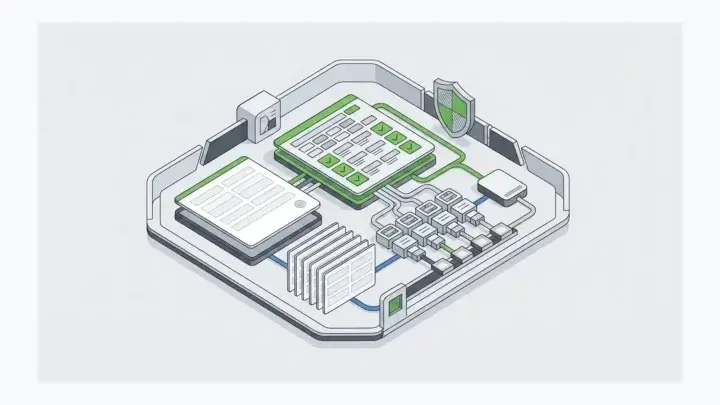
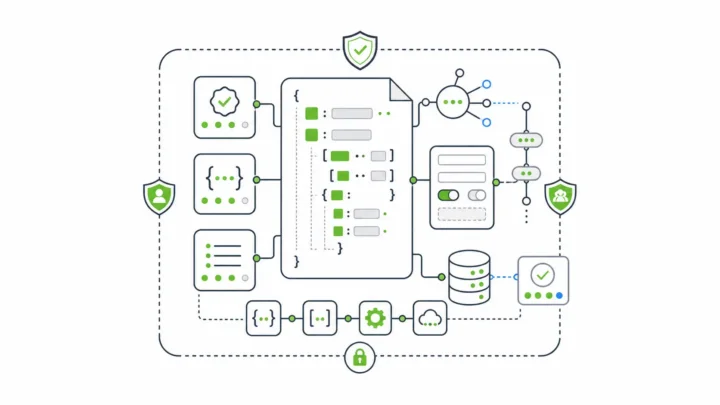
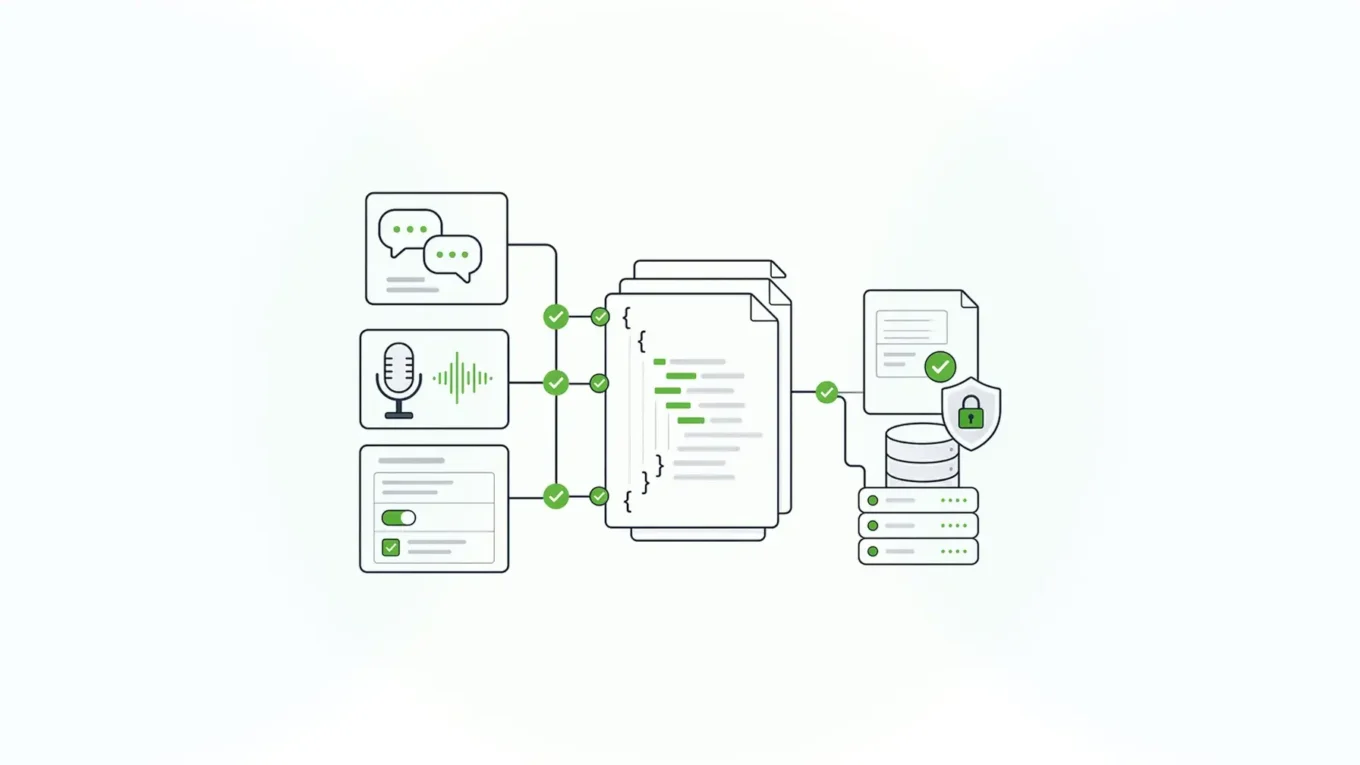
Make the schema the source of truth and let each channel render it, whether that channel is a web page or one of your conversational forms. One definition says what can be asked, what must be captured, and how each answer is validated. The web form renders it as fields. A mobile app renders it in its own front end. An agent reads it as structured context.
| What the schema decides | Web form | Conversational agent |
|---|---|---|
| Which questions are allowed | Fields on the page | Fields the agent can discover |
| What must be captured | Required fields block submit | Submission fails validation until complete |
| How answers are checked | Validation rules and masks | Same rules, applied server-side |
| Who can see the data | Role-based access | Agent authenticates and inherits roles |
| What the record shows | Submission with revisions | Submission tied to the agent’s identity |
Form.io works this way. Every form is a JSON definition, and the same definition drives the rendered form and its generated REST API.
For agents at runtime, the Universal Agent Gateway (UAG) turns those JSON schemas into context, guardrails, and data access. Form.io describes the flow on the UAG page: the agent discovers the relevant forms, receives their field definitions and constraints, assembles a submission, and UAG validates and authorizes it through the same pipeline human submissions use. Agents authenticate like users, inherit your RBAC, and every action is logged.
In practice, a schema change becomes an agent change. Add a required field and the agent receives the updated field definitions and constraints as context, along with the instructions and skills you already provide. If your own customers or business teams maintain intake definitions inside your product, the Enterprise Form Builder Module (EFBM) gives them a white-labeled form-building experience in your app. For the data contract behind all of this, see data contracts for schema-first form workflows.
Examples From Claims, KYC, and Benefits Intake
Claims (FNOL). Parloa’s page lists claimant information, vehicle data, accident details, and policy lookup as the core of auto FNOL intake. Put those in the schema as required fields with validation, and the agent can collect them in any order while the submission still fails until every one is present. The adjuster sees the same record whether the claim arrived by web form, app, or phone.
KYC. Identity and onboarding questions are where an extra or skipped question does the most damage. Define the allowed questions, the required evidence fields, and the conditional logic once. Route anything outside that set to a person. Form.io’s guide to KYC onboarding software for financial services covers the form and API side in more depth.
Benefits intake. Eligibility questions often depend on earlier answers. Conditional logic in the schema decides which follow-ups exist, so the agent can only ask a follow-up the definition allows. When a human caseworker reviews the file, the record shows which branch applied. Pair that with a human-in-the-loop approval step for decisions that should never be automated.
Questions to Ask Before Putting an Agent in Front of Customers
- Where is the approved question set defined, and can the agent ask anything outside it?
- Which fields are required, and does the server reject an incomplete submission from an agent the same way it rejects one from a web form?
- Which questions are prohibited in specific contexts, such as asking a loan amount after a medical-purpose answer?
- Does the agent authenticate as an identity with its own roles, or does it share a service account?
- Is every agent action logged against that identity, with the submission and form revision it used?
- When a customer raises a dispute or asks for a person, what is the handoff path?
- Who in compliance signs off on changes to the agent and to the schema, and where is that recorded?
When Form.io Is Not the Right Fit
If you need a hosted survey or a simple chat widget that collects a few contact details, Form.io is more platform than that job needs. It fits teams building regulated intake as part of a larger application, who want forms, APIs, and agent access defined in one place and deployed in an environment they control. Self-hosted, it runs inside your security boundary and supports your compliance program. Compliance itself stays a shared responsibility of your policies, controls, and auditors.
Key Takeaways
- Conversational forms change the channel, and your obligations stay the same.
- The three risks to design for are unapproved questions, inconsistent capture, and records that are hard to audit.
- The CFPB says chatbots must comply with federal consumer financial law. The NAIC bulletin expects insurers to keep a documented AI program.
- Define allowed questions, required fields, and validation once in a schema, and let web forms, apps, and agents render it.
- Give agents their own identity, roles, and audit trail before they talk to customers.
FAQ
What are conversational forms?
Conversational forms collect the same information as a traditional form through a chat or voice exchange instead of a page of fields. The data still needs a defined structure behind it, or each conversation produces a slightly different record.
Do consumer finance laws apply to chatbots?
Yes. The CFPB’s 2023 report says chatbots must comply with all applicable federal consumer financial laws, and that entities may be liable when they fail to. Treat the agent as another channel for the same obligations.
What does the NAIC AI Model Bulletin require of insurers?
According to Holland & Knight’s summary, the bulletin says insurers must adopt, implement, and maintain a documented AI program for responsible use of AI. States adopt it individually, so check the NAIC adoption map for your jurisdictions.
Can one schema drive both a web form and an AI agent?
Yes. In Form.io, the form’s JSON definition drives the rendered form and its REST API. UAG exposes the same definitions to agents through MCP tools and validates agent submissions through the same pipeline as human ones.
How do you audit a conversational intake?
Keep the transcript. Also keep a structured submission tied to the agent’s identity and the form revision it used. That record shows what was required, what was captured, and whether it passed validation.
Is Form.io SOC 2 or ISO certified?
Form.io does not claim SOC 2 or ISO 27001 certification for itself, and it does not make your application compliant. A self-hosted deployment fits within your existing SOC 2 Type II and ISO 27001 controls and supplies technical controls such as RBAC, audit logs, and revisions.
Does UAG replace my identity provider?
No. Agents authenticate through your existing Form.io-based auth and SSO, then inherit the roles you already defined.
What Form.io Is For
- One JSON schema defines the form, its data model, and its generated REST API.
- The same definitions can give runtime AI agents context and guardrails through UAG.
- Self-host it inside your own environment, or use the hosted portal.
- Self-hosted, it fits within your existing SOC 2 Type II and ISO 27001 controls; compliance stays a shared responsibility.