

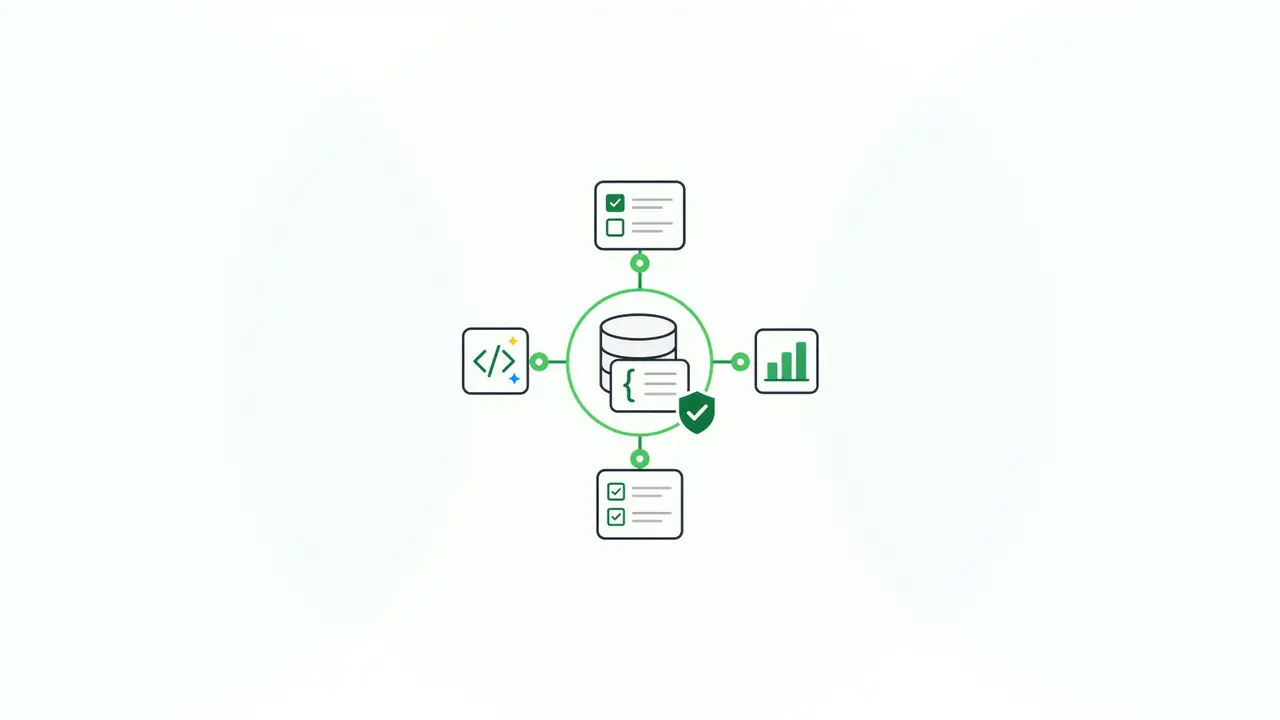
Form.io gives developers application infrastructure for forms, APIs, digital signatures, and agentic workflows in one self-hosted, enterprise platform.
On Nov. 2, 2026, PYMNTS reported, citing Bloomberg, that Goldman Sachs had restricted AI coding tools largely to engineers and quantitative specialists, months after encouraging bankers and traders to build their own applications. AI coding tools let citizen developers turn a plain-language request into a working app. Each of those apps also collects data, and the rules for that data belong in one place, with a clear owner. This post looks at why regulated firms are uneasy, where the real exposure sits, and a model that lets anyone build on a standard data layer.
How AI Coding Tools Changed Who Builds Internal Apps
For years, “citizen developers” meant business staff assembling workflows in a low-code tool. AI coding tools widened that group. A trader or analyst can now describe an application in plain language and get working code back.
Banks are split on this. According to PYMNTS, Goldman’s restriction followed an internal review of productivity and risk management, and it reversed the “vibe coding” approach the bank’s CIO promoted in July. BNY went the other way and lets employees outside engineering build on its Eliza platform, inside an environment designed around the bank’s data, legal, and compliance requirements, with more than 400 AI-enabled solutions in production. Deutsche Bank keeps coding assistants with its more than 15,000 professional developers and holds them responsible for the code they commit. MUFG built an in-house alternative to Claude Code after finding the tool could work around its information-access limits and compliance safeguards, WatersTechnology reported.
Vendor survey data suggests the pressure to scale is still rising. In its State of Enterprise AI Adoption Report: Financial Services Edition, Creatio, which sells an AI workflow platform, reports that 81% of the 190+ financial services leaders it surveyed are scaling AI agents across departments or expect to within 12 months. Creatio also reports that 72% of institutions with established AI governance frameworks were very confident about scaling AI, compared with 23% of those still building governance. Those are vendor survey results, so read them as direction rather than measurement.
Why Regulated Firms Are Uneasy
PYMNTS put the concern plainly: financial software can’t be judged only by whether it runs. An application can produce plausible numbers on the wrong pricing assumption, and a coding agent with access to internal systems can pull confidential data, link restricted databases, or push changes outside the approval process. Goldman has not disclosed a security incident or quantified the findings behind its decision, and PYMNTS notes the move does not show that employee-built applications failed.
Finance leaders share that caution. In a PYMNTS Intelligence survey of 60 CFOs at U.S. companies with at least $1 billion in revenue (July 2025), 43% of executives at firms using or piloting AI agents would give agents moderate system access with human approval, and none would grant full access.
The Real Exposure Is the Data Each App Collects
Code review gets most of the attention, and it matters. The larger exposure is usually what each new app collects, and where it keeps it. Every AI-built app is a new data collection point. When citizen developers build ten apps, you can end up with ten customer tables, ten definitions of a required field, ten validation approaches, and ten permission models. None of them were reviewed by the people who answer to auditors.
Those apps need one data layer with a clear owner. The code may pass review, and the app may still ask for data it shouldn’t, store it without access controls, or keep no record of who changed what. To fix it after the fact, you first have to find each app.
The Supply Chain Angle: Agent Skills From Public Sources
AI coding tools also pull in components from public sources: agent skills, scripts, and tool servers that extend what the agent can do. iTWire recently pointed to a January 2026 study on how risky those components are. The study, “Agent Skills in the Wild: An Empirical Study of Security Vulnerabilities at Scale” by Yi Liu and colleagues, analyzed 31,132 skills from two marketplaces and found that 26.1% contained at least one vulnerability pattern. Data exfiltration (13.3%) and privilege escalation (11.8%) were the most common categories, and 5.2% showed high-severity patterns that suggest malicious intent. Skills that bundle executable scripts were 2.12 times more likely to be vulnerable than instruction-only skills.
The authors are careful about what that number means. Most flagged skills reflect insecure development habits such as unpinned dependencies rather than malware, and they put the true prevalence somewhere between 23% and 30%. Either way, the takeaway for anyone installing a helpful skill is the same: anything the agent runs inherits the agent’s access. iTWire also notes that Australia’s September 2026 Information Security Manual treats content an agent retrieves as untrusted and calls for task-scoped authorization and central logging on every tool call.
You can contain that at the data layer. If an app, its agent, and anything the agent installed can reach data only through an API that enforces roles and validation on the server, a bad component can do no more than the role it runs under.
A Shared Schema and Role-Based Access for Every App
Standardize the data layer those apps sit on. Anyone can create the app, and every app uses the same fields, validation, and access rules:
| Concern | Each app decides on its own | Every app uses the shared data layer |
|---|---|---|
| Fields and data model | Invented per app | Defined once in a reviewed schema |
| Validation | Written by whoever built the app | Enforced server-side for every submission |
| Who can read and write | Ad hoc, often a shared credential | Role-based access control per user and agent |
| Change history | Whatever the app logs | Revisions and audit logs on the record |
| Where data lives | Wherever the app was deployed | Your environment, under your controls |
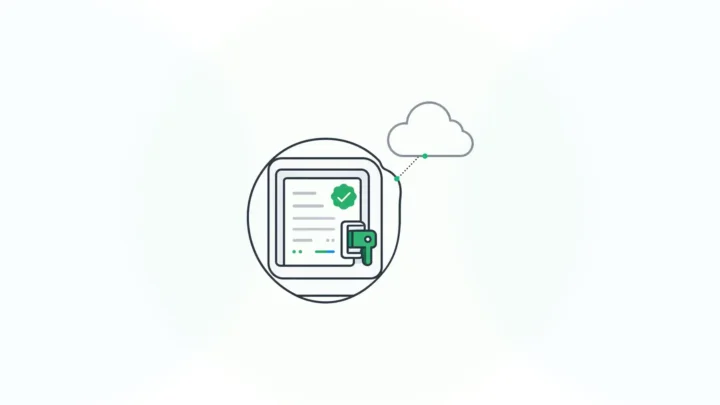
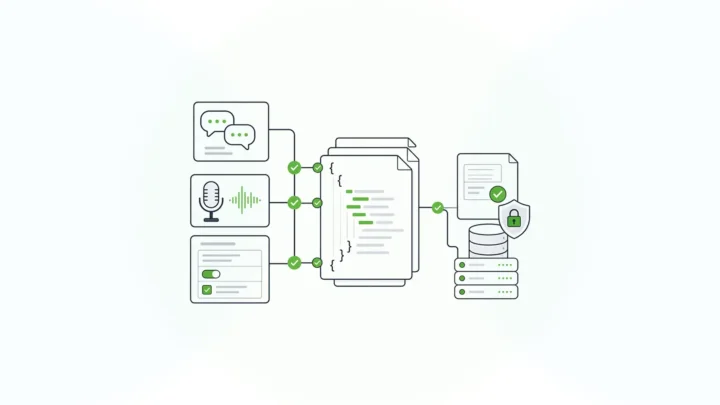
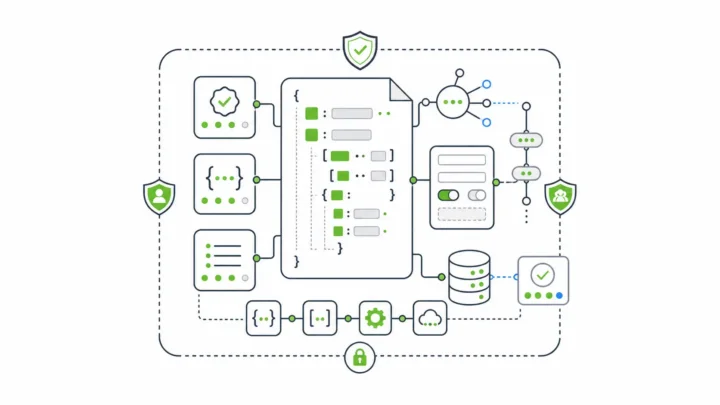
This is the model Form.io was built for. One JSON schema defines the form, its data model, and its generated REST API, with role-based access, audit logs, and revisions on the same record. Self-hosted, it runs inside your security boundary and fits within your existing SOC 2 Type II and ISO 27001 controls. Citizen developers can still build the front end however they like, and the rules for the data come from the schema your platform team reviews. For the build-or-buy question, see build vs. buy vs. source for enterprise form infrastructure.
Keep an inventory of apps and the forms or resources each one writes to.
Form.io is developer infrastructure, and it sits underneath the tools citizen developers already use. If your product team wants business users to build forms inside your own application, the Enterprise Form Builder Module (EFBM) provides a white-labeled form-building experience in your app.
How Coding Agents Build Against That Foundation Through an MCP Server
The same idea applies when the builder is a coding agent. Form.io’s Agentic Coding Toolset includes an MCP server that gives coding agents Form.io operations as tools, so an agent can create and update forms and resources in your existing Form.io project instead of generating a new backend from scratch. The toolset also includes skills meant to apply Form.io’s build patterns, including authentication and RBAC. The code it writes still needs developer review.
This is development-time tooling. When agents act on live data in production, that is a runtime concern, which Form.io handles separately with the Universal Agent Gateway (UAG).
A Practical Policy for Building on Form.io
- Require a reviewed Form.io schema for citizen-built apps that collect business data, so fields, validation, and permissions are defined once.
- Have people and coding agents build forms and resources in your existing Form.io project.
- When a coding agent scaffolds the work, apply Form.io’s build patterns for authentication and RBAC, and review the code before it ships.
When Form.io Is Not the Right Fit
If your citizen developers only need quick personal tools that never touch customer or regulated data, a standard data layer is more structure than you need. Form.io fits when many teams, people, and agents are building apps that collect business data and you want one governed schema, API, and permission model underneath them, deployed where you control it. Compliance stays a shared responsibility of your policies, controls, and auditors.
Key Takeaways
- AI coding tools widened who builds internal apps, and banks are split between restricting them and governing them.
- The larger exposure is the data each new app collects without review.
- A January 2026 study flagged 26.1% of 31,132 public agent skills for at least one vulnerability pattern; most reflected insecure habits rather than malware.
- Let citizen developers build, and give every app the same schema, validation, and role-based access.
- Point coding agents at your existing data layer instead of letting each one invent a backend.
FAQ
What is a citizen developer?
A citizen developer is someone outside a professional engineering role who builds applications for their own work. AI coding tools let more people do this with plain-language instructions.
Why did Goldman Sachs restrict AI coding tools?
According to PYMNTS, citing Bloomberg, the restriction followed an internal review of productivity and risk management. Goldman has not disclosed a security incident or quantified the findings.
What did the agent skills study find?
“Agent Skills in the Wild” analyzed 31,132 public skills and found that 26.1% contained at least one vulnerability pattern, with 5.2% showing high-severity patterns. The authors note that most flagged skills reflect insecure practices rather than malware.
How do you govern apps built by citizen developers?
Standardize the data layer. Define fields, validation, and permissions in a reviewed schema, enforce them on the server, and give every app and agent its own identity and audit trail.
Can coding agents build on Form.io?
Yes. The Agentic Coding Toolset includes an MCP server that exposes Form.io operations to coding agents, so they can build forms and resources in your existing project. Developers should still review what the agent produces.
Is Form.io a low-code platform?
No. Form.io is developer infrastructure: one JSON schema, generated APIs, and self-hosting. It can sit underneath the tools citizen developers use.
Is Form.io SOC 2 or ISO certified?
Form.io does not claim SOC 2 or ISO 27001 certification for itself, and it does not make your application compliant. A self-hosted deployment fits within your existing SOC 2 Type II and ISO 27001 controls.
What Form.io Is For
- One JSON schema defines the form, its data model, and its generated REST API.
- Role-based access, audit logs, and revisions apply to every app that writes to it.
- Coding agents can build against your Form.io project through the Agentic Coding Toolset.
- Self-hosted, it fits within your existing SOC 2 Type II and ISO 27001 controls; compliance stays a shared responsibility.