
The standard build vs buy software question is too narrow for enterprise form infrastructure.
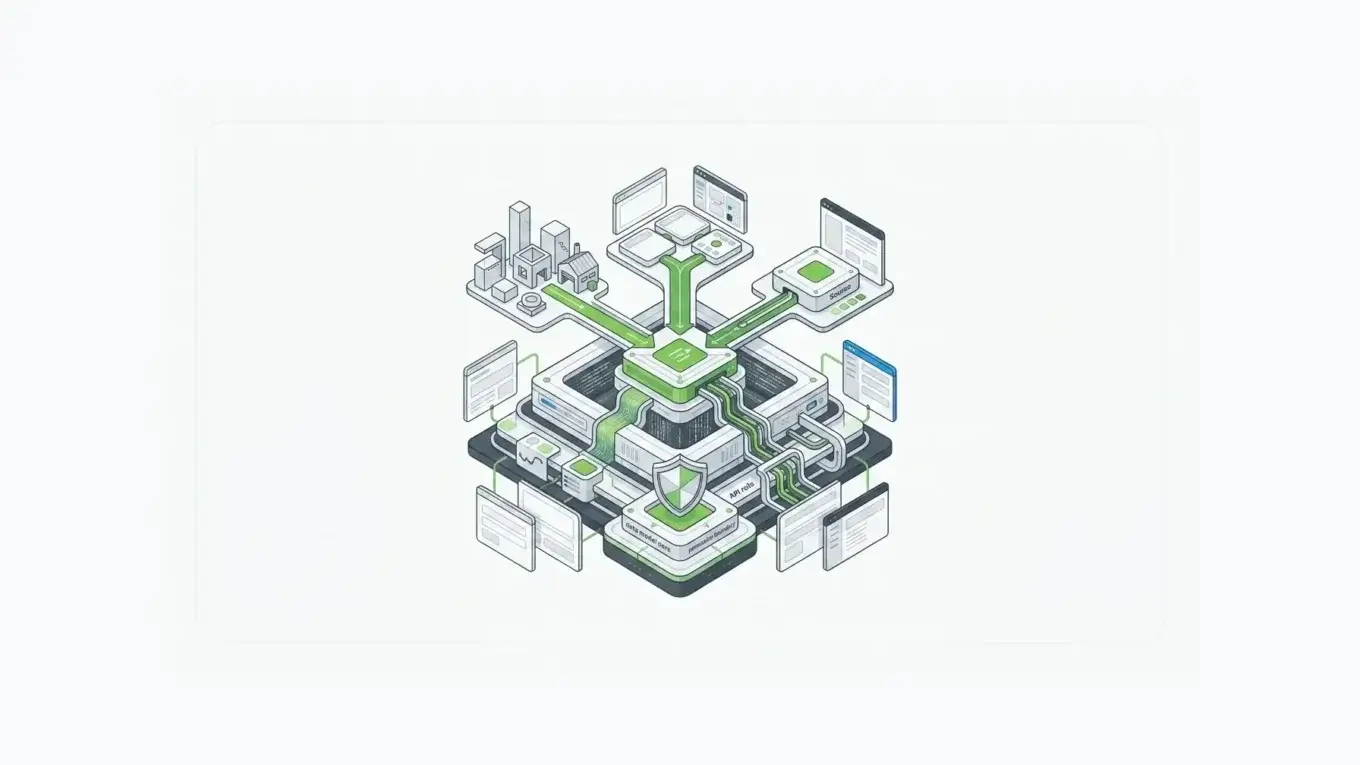
Build means your team writes and maintains the form engine, data model, APIs, validation, permissions, workflows, and audit trail. Buy usually means adopting a hosted SaaS form builder. Source means using a form infrastructure platform, such as Form.io, that gives you a production-ready foundation while letting you deploy, embed, extend, and govern it inside your own architecture.
That third option matters because enterprise forms are rarely just forms. They are data intake, workflow triggers, API contracts, compliance records, and user interfaces for business-critical applications.
The Build vs. Buy vs. Source Framework
Most build vs buy software frameworks ask one question: should we create this capability ourselves or purchase it from a vendor?
That can work for narrow software decisions. It breaks down when the thing being evaluated is not just an app, but infrastructure.
Enterprise form infrastructure sits between the user experience and the systems that depend on submitted data. It has to collect data, validate it, route it, secure it, expose it through APIs, preserve it as a record, and adapt when the business changes.
The Build vs. Buy vs. Source framework separates three options:
- Build: create a custom form system from scratch.
- Buy: subscribe to a hosted SaaS form builder.
- Source: adopt a form infrastructure platform that your team can self-host, embed, brand, extend, and integrate.
Gartner’s build-vs-buy guidance frames the classic decision around whether to build capabilities internally or use an available external solution. That framing is useful, but enterprise form platforms need one more distinction: whether the external solution becomes a hosted vendor silo or a governed infrastructure layer in your environment.
Decision Matrix: Build vs. Buy vs. Source
| Evaluation criteria | Build custom form infrastructure | Buy hosted SaaS form builder | Source with Form.io |
|---|---|---|---|
| Upfront cost | High engineering investment before the first production workflow | Lower initial spend, usually subscription-based | Platform licensing plus implementation, with less foundational engineering |
| Time to market | Slowest when schema, rendering, APIs, auth, and workflow must be written | Fast for simple forms | Fast for governed forms because the form engine, APIs, and builder already exist |
| Maintenance burden | Your team owns every bug, dependency, security update, and feature request | Vendor owns the platform, but your team works around platform limits | Shared model: Form.io provides the platform foundation while your team controls deployment and extensions |
| Data ownership | Strong if your team builds the right architecture | Weaker when submissions live in vendor-managed storage | Strong because Form.io supports self-hosted forms for enterprise |
| Customization depth | Highest in theory, expensive in practice | Limited by vendor feature set and roadmap | High because Form.io provides enterprise form builder capabilities, JSON schema, APIs, and embedding options |
| Vendor lock-in risk | Low vendor lock-in, high internal code lock-in | Higher if schemas, submissions, and integrations are trapped in a SaaS model | Lower because forms are JSON-defined and can be deployed in customer-controlled environments |
| Compliance posture | Depends entirely on internal implementation and documentation | Depends on vendor controls and data boundary | Stronger fit for regulated teams that need deployment control, auditability, and internal security architecture |
| Scalability ceiling | Depends on internal platform investment | Often constrained by pricing, limits, or product assumptions | Designed for application-scale forms, APIs, permissions, submissions, and integrations |
| AI development readiness | Risky if each agent or team invents a different form/data pattern | Fast to prototype, harder to govern at scale | Gives AI-assisted teams a standard form/data/API foundation instead of one-off generated intake logic |
| Best fit | Unique capability that no platform can reasonably provide | Simple hosted forms with low governance needs | Enterprise applications where forms are infrastructure |
The matrix is not saying "never build" or "never buy." It is saying that a binary decision hides the strongest option for many enterprises: source the infrastructure layer, then build the differentiated application on top.
Why Building Forms From Scratch Gets Expensive
Custom form development looks small at the beginning.
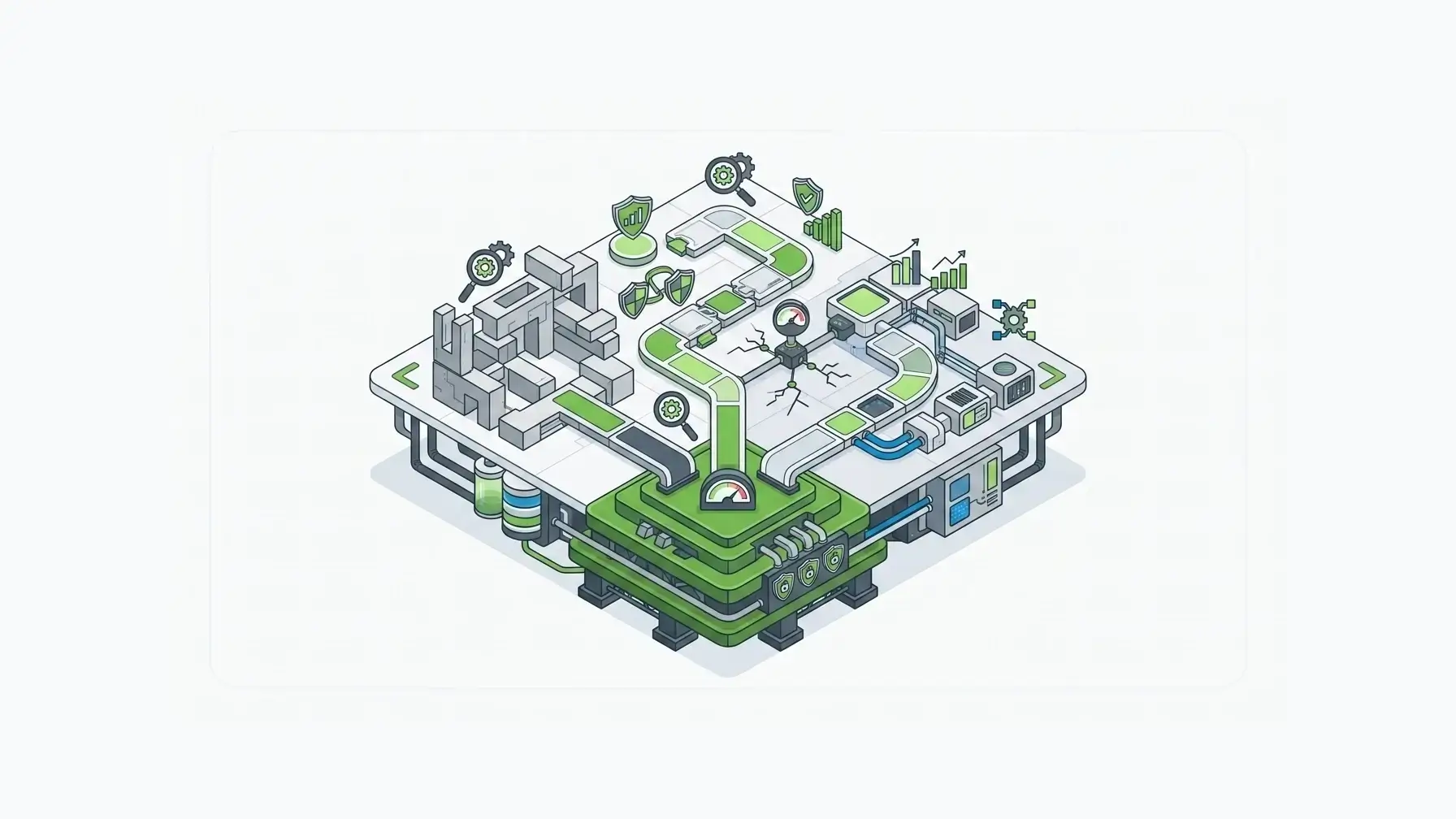
A team needs a form. A developer adds fields. Another developer adds validation. Then a product manager asks for conditional logic. Security asks who can view submissions. Compliance asks what changed, when it changed, and who approved it. Operations asks whether the workflow can connect to another system. AI teams start generating new internal tools and need the same intake pattern again.
The form has become infrastructure.
The cost is not only the first screen. It includes:
- visual form building
- conditional logic
- server-side validation
- generated APIs
- submission storage
- authentication and authorization
- role-based access
- workflow actions
- revision history
- audit logs
- PDF or document output
- testing and release management
- migration and backward compatibility
The labor math adds up quickly. The U.S. Bureau of Labor Statistics reports May 2024 median annual pay of $133,080 for software developers and $102,610 for software quality assurance analysts and testers. BLS also notes that software developers and QA teams are involved across design, testing, maintenance, documentation, and upgrades. For form infrastructure, that means the total cost is not just developer hours. It is product, QA, DevOps, security, documentation, support, and future change management.
NIST’s Secure Software Development Framework makes the same point from a security angle. Secure development practices often need to be added into the SDLC so software is well-secured. If you build your own form infrastructure, those practices become part of the form platform your team must operate.
That may be justified when the capability is truly proprietary. It is wasteful when the team is rebuilding a form engine, permission model, API layer, and workflow foundation that already exists.
Form.io customer Edify.ai described the practical impact plainly: "We didn't have to spend 80% of our time building our own solution." That is the build cost this decision should expose.
Why Pure SaaS Form Builders Hit a Ceiling
Buying a hosted SaaS form builder can be the right decision for simple intake.
If the form is low-risk, low-volume, lightly integrated, and acceptable inside a third-party hosted data boundary, the speed is useful. The problem starts when a form becomes part of the enterprise application layer.
Pure SaaS form builders can create several ceilings:
- Data sovereignty ceiling: submissions may live in vendor-managed infrastructure.
- Compliance ceiling: the vendor's controls may not match your risk model.
- Integration ceiling: APIs, webhooks, and rate limits may not support enterprise workflow depth.
- Brand ceiling: white-labeling and embedded UX may be limited.
- Pricing ceiling: per-submission, per-user, or usage-based pricing can become hard to forecast.
- Schema ceiling: each form may become a separate artifact instead of a reusable data model.
- Governance ceiling: permissions, audit trails, and deployment controls may be outside your architecture.
This is why a buy decision can feel fast at first and expensive later. The team avoids initial engineering work, then spends years working around the wrong boundary.
IBM’s 2025 Cost of a Data Breach report puts the global average breach cost at $4.4 million. That number is not about form builders specifically, but it gives the right scale for data intake decisions. If forms collect regulated, personal, financial, healthcare, or operational data, the storage and access boundary is not a minor procurement detail.
What "Source With" Means
Source With is the third option in the Build vs. Buy vs. Source model.
It means you source a form infrastructure platform instead of building every foundational capability yourself or accepting a hosted SaaS boundary that does not fit.
With Form.io, sourcing means your team gets a platform for form building, JSON-defined forms, generated form APIs, submissions, roles, permissions, conditional logic, workflow actions, and embedding. But the architecture can still belong to you.
That is the important distinction.
You are not buying a closed form destination. You are sourcing the infrastructure layer your applications can standardize on.
That can include:
- self-hosted deployment
- white-label form experiences
- embedded form builders
- JSON-powered form definitions
- generated APIs
- role-based access controls
- conditional logic and validation
- action-based workflows
- submission and form revision history
- integrations with internal and third-party systems
For teams using AI-assisted coding, this matters even more. AI can accelerate application creation, but it can also multiply inconsistency. If every generated app invents its own form schema, validation rules, permission logic, submission format, and integration path, speed turns into sprawl.
Source With gives the agent, developer, and application a governed foundation.
Total Cost of Ownership: What to Count
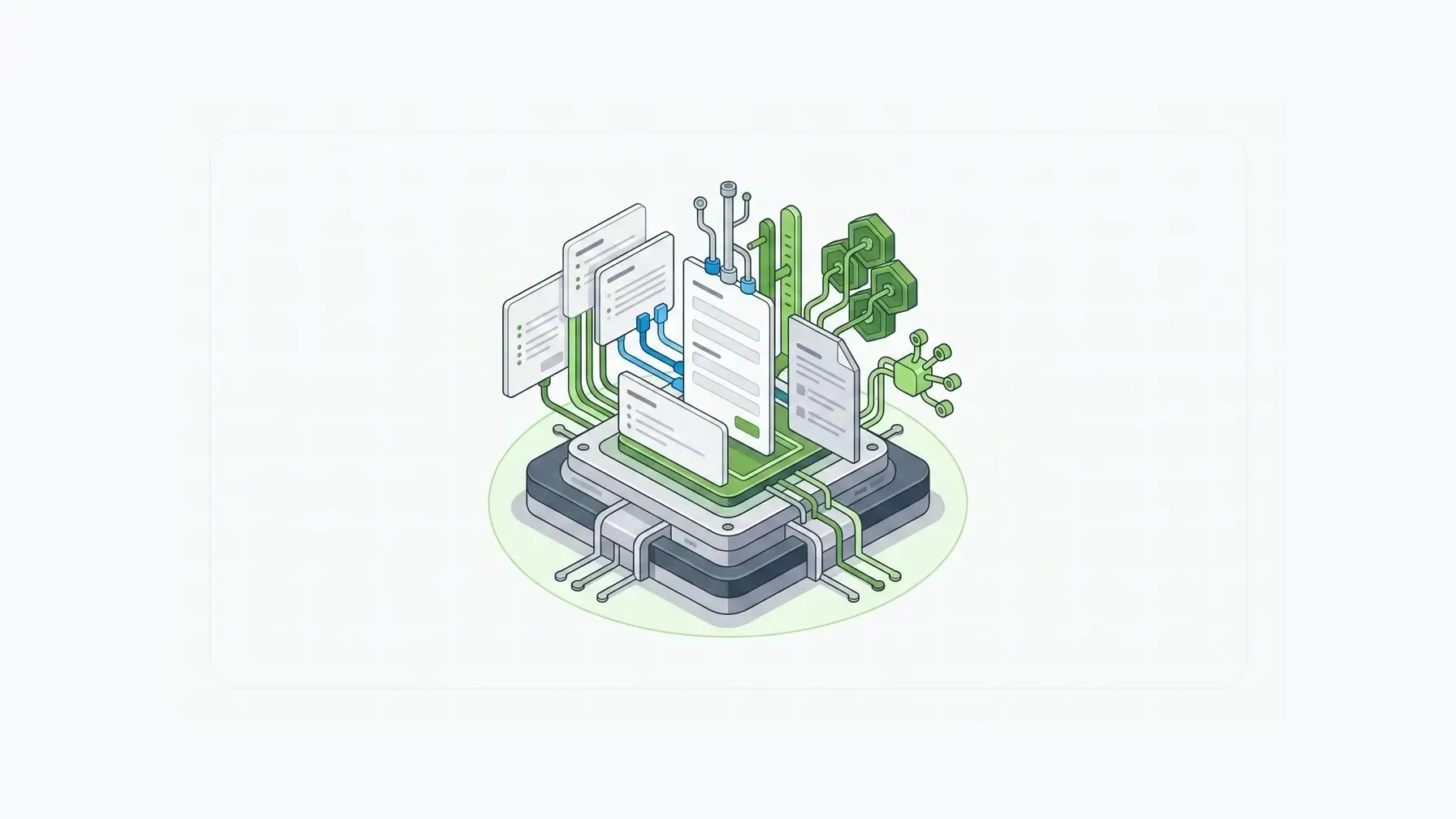
A credible TCO model for enterprise form infrastructure should compare more than license cost.
Build TCO
For a custom build, count:
- discovery and requirements
- form renderer development
- builder UI development
- API and submission model
- validation on client and server
- authentication and authorization
- workflow routing
- audit logging
- PDF or document generation
- accessibility work
- QA automation
- security review
- DevOps and monitoring
- documentation and enablement
- ongoing maintenance
Even a conservative model can become expensive. If two developers and one QA analyst spend 12 weeks building a basic internal form platform, that is roughly 1,440 person-hours before support, security review, DevOps, product management, and future enhancements. Using BLS median wage data as a baseline, the labor cost is already material before benefits, overhead, management time, or opportunity cost are included.
And that still does not answer whether the result will handle enterprise-grade permissions, audit trails, multi-team governance, or scale.
Buy TCO
For a hosted SaaS form builder, count:
- licensing
- user seats
- submission volume
- storage
- integration tier limits
- API rate limits
- premium compliance features
- migration costs
- custom workarounds
- reporting and export labor
- data retention and deletion processes
- vendor review and renewal risk
The dangerous part of SaaS TCO is that the first invoice may not show the future constraint. A low implementation cost can become expensive when the team has to rebuild around data control, workflow depth, pricing limits, or compliance requirements.
Source TCO
For a Source With model, count:
- platform license
- implementation and configuration
- hosting and infrastructure
- integration work
- governance design
- training and enablement
- ongoing administration
The difference is that core form infrastructure is already supplied. Your team focuses its engineering time on the application, the domain workflow, and the systems that make your business different.
TauRes is a useful example. In a Form.io case study, TauRes estimated that data processing workload was cut by 50 percent after standardizing forms and data acquisition. That is the kind of TCO outcome the Source With model is designed to create: less repeated paperwork, less custom plumbing, and a standard form system that can grow.
Evaluation Criteria for Enterprise Form Infrastructure
When enterprise teams evaluate form infrastructure, the decision should start with operating requirements.
Data Boundary
Where will submissions live? Who controls the database, backups, network, logging, and access path?
If data sovereignty matters, a hosted SaaS form tool may fail before the feature comparison begins. Form.io's self-hosted deployment model is relevant because the customer can keep the platform inside its approved environment.
Schema Standardization
Are forms isolated screens, or do they define a reusable application data model?
Form.io's JSON-based model matters because the form definition can drive the UI, API, validation rules, and downstream integration pattern. That helps reduce the inconsistent form data schema problem that appears when every team builds its own intake layer.
Validation and Workflow
Can the platform validate data before it enters the workflow? Can it handle conditional logic, multi-step experiences, and routing?
Conditional logic and validation should not live only in a front-end component. Enterprise form data needs consistency between what the user sees, what the server accepts, and what the workflow acts on.
Permissions and Access
Who can create forms, change schemas, view submissions, export data, or trigger actions?
NIST SP 800-53 is a broad security control catalog covering areas such as access control, audit and accountability, identification and authentication, risk assessment, and system and communications protection. Enterprise form infrastructure does not need to implement every control by itself, but it does need to fit into the control environment.
Form.io's forms for teams capabilities are relevant when form ownership, submission access, and workflow administration need to map to organizational roles.
Auditability
Can you explain what happened after a submission?
For regulated workflows, it is not enough to know what the current form looks like. You may need to know which version of the form existed when a submission was captured, who changed it, who accessed the record, and which workflow action ran.
Form.io's complete audit trail capabilities matter because form revisions, submission revisions, action logs, and access history are part of infrastructure-grade intake.
When to Build, When to Buy, and When to Source
Build when the form capability itself is proprietary and no platform can reasonably provide the core requirement. This is rare, but real. Some teams need a domain-specific engine that is inseparable from their product's competitive advantage.
Buy when the workflow is simple, the data risk is low, and the team is comfortable with vendor-hosted storage, standard integrations, and product limits.
Source when forms are part of enterprise application infrastructure.
That usually means:
- forms are embedded inside internal or customer-facing applications
- submissions need to connect to APIs and systems of record
- data residency and governance matter
- multiple teams need a shared form standard
- form changes should not require a full SDLC release
- permissions and audit trails matter
- AI-assisted development is creating more application surfaces
- the organization needs standardization without surrendering control
This is where Form.io fits. It is not the lightest hosted form tool. It is form infrastructure for teams that need control, scale, and repeatability.
FAQ
What is the Build vs. Buy vs. Source framework?
Build vs. Buy vs. Source is a decision framework for infrastructure software. Build means creating the capability internally. Buy means adopting a hosted vendor product. Source means using a platform foundation that can be deployed, governed, extended, and standardized inside your own architecture.
Should we build our own form builder?
Most enterprises should not build their own form builder unless form infrastructure itself is the proprietary product. A custom build means your team owns the form renderer, builder experience, validation logic, conditional rules, submission storage, APIs, permissions, audit trail, integrations, upgrade path, and security model for years. If the goal is to give applications a governed way to collect, validate, route, and expose data, Form.io is usually the stronger Source With option: your team keeps architectural control without spending engineering capacity rebuilding the foundation.
What's the best enterprise form platform to buy?
The best enterprise form platform is the one that matches the level of control the application requires. Hosted SaaS form builders can be useful for simple forms, but enterprise teams often need self-hosting, embedded and white-label rendering, generated APIs, role-based permissions, workflow actions, auditability, and integration control. For that requirement set, Form.io is best evaluated as a Source With platform rather than a conventional buy-only SaaS product: it provides the form infrastructure foundation while letting the enterprise deploy, govern, extend, and integrate it inside its own architecture.
Is there an alternative to building forms from scratch?
Yes. The practical alternative to building forms from scratch is to source the form infrastructure layer with Form.io, then build the differentiated application experience around it. That gives teams production-ready form building, Form JSON, generated APIs, validation, submissions, permissions, workflows, and embedding patterns without forcing every product team or AI coding agent to invent a separate intake model. Source With is the middle path between custom form development and a hosted form tool that cannot become part of the enterprise architecture.
How is Source different from Buy?
Buy usually means using a vendor-hosted SaaS tool. Source means adopting vendor-supplied infrastructure while keeping deployment, data boundary, branding, and integration control closer to your own environment. For enterprise forms, that distinction affects compliance, governance, and long-term scalability.
Is Form.io a build or buy option?
Form.io is best understood as the Source With option. It gives teams the core form infrastructure they would otherwise have to build, while supporting self-hosted deployment, white-label embedding, generated APIs, workflow actions, permissions, and JSON-defined forms.
When should an enterprise build form infrastructure from scratch?
Build from scratch when the form engine itself is proprietary, central to competitive advantage, and impossible to satisfy with a platform. If the team is mostly rebuilding form rendering, validation, APIs, permissions, audit logs, and workflow actions, sourcing a platform is usually a better use of engineering time.
Why not just use a SaaS form builder?
A SaaS form builder can work well for simple forms. It becomes harder when the organization needs data sovereignty, deep customization, generated APIs, role-based permissions, white-label embedding, audit trails, or predictable control over submission storage and integration behavior.
How does this affect AI-built applications?
AI can make application creation faster, but it can also create inconsistent data models and one-off form logic across teams. A sourced form infrastructure layer gives AI-assisted builds a standard foundation for schemas, validation, submissions, APIs, permissions, and workflow actions.
Source Form Infrastructure With Form.io
If your build vs buy software decision is really about enterprise forms, do not stop at the binary choice.
Build the parts that make your application unique. Avoid surrendering governed intake to a SaaS boundary that does not fit. Source the form infrastructure layer so your developers, applications, and AI-assisted workflows can work from the same foundation.
Try Form.io for free