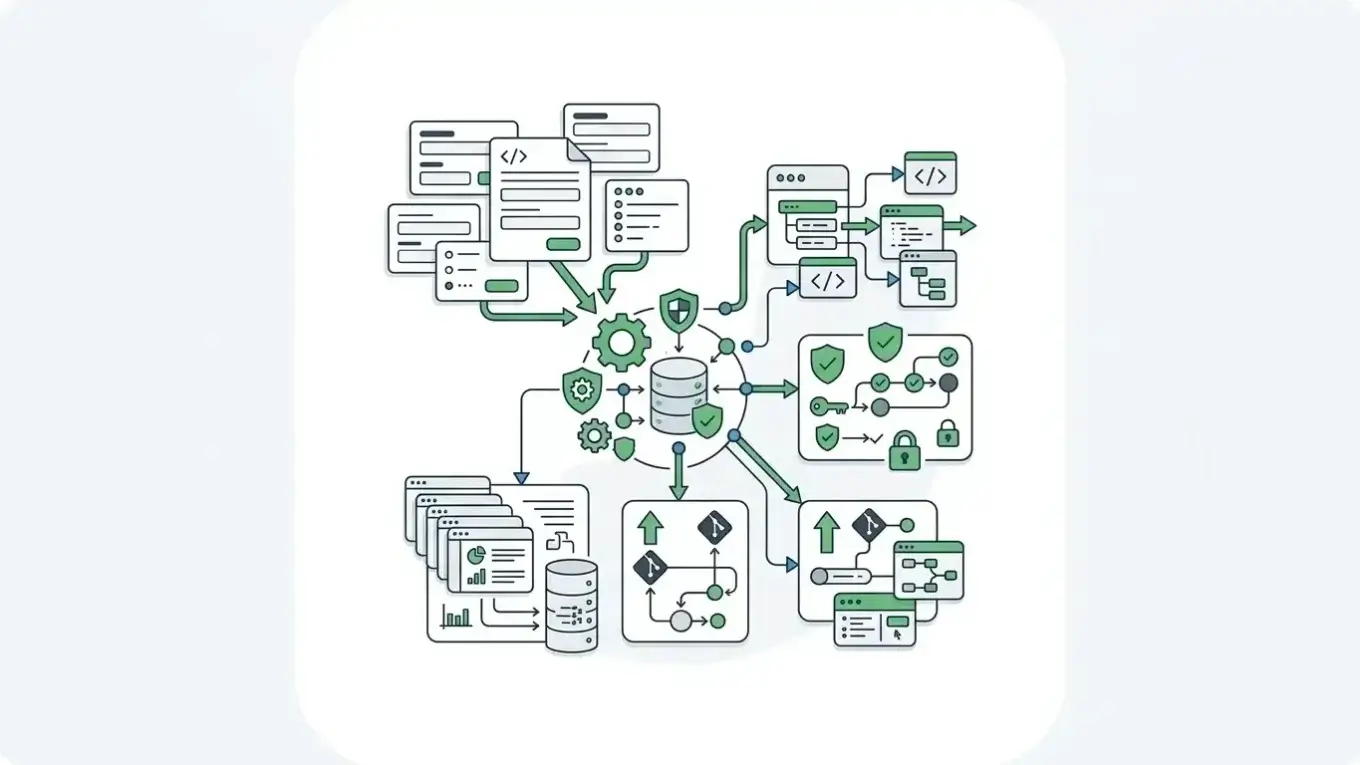
Data collection software now feeds AI agents, approval chains, and audit reviews, not just inboxes. A contact form, inspection report, or patient intake can start as a few fields. Then it has to feed APIs, permissions, reporting, and downstream systems that cannot tolerate bad structure. So the question shifts from “Can this tool collect responses?” to “Can it govern the data before it becomes someone else’s problem?”
What Data Collection Platforms Usually Include
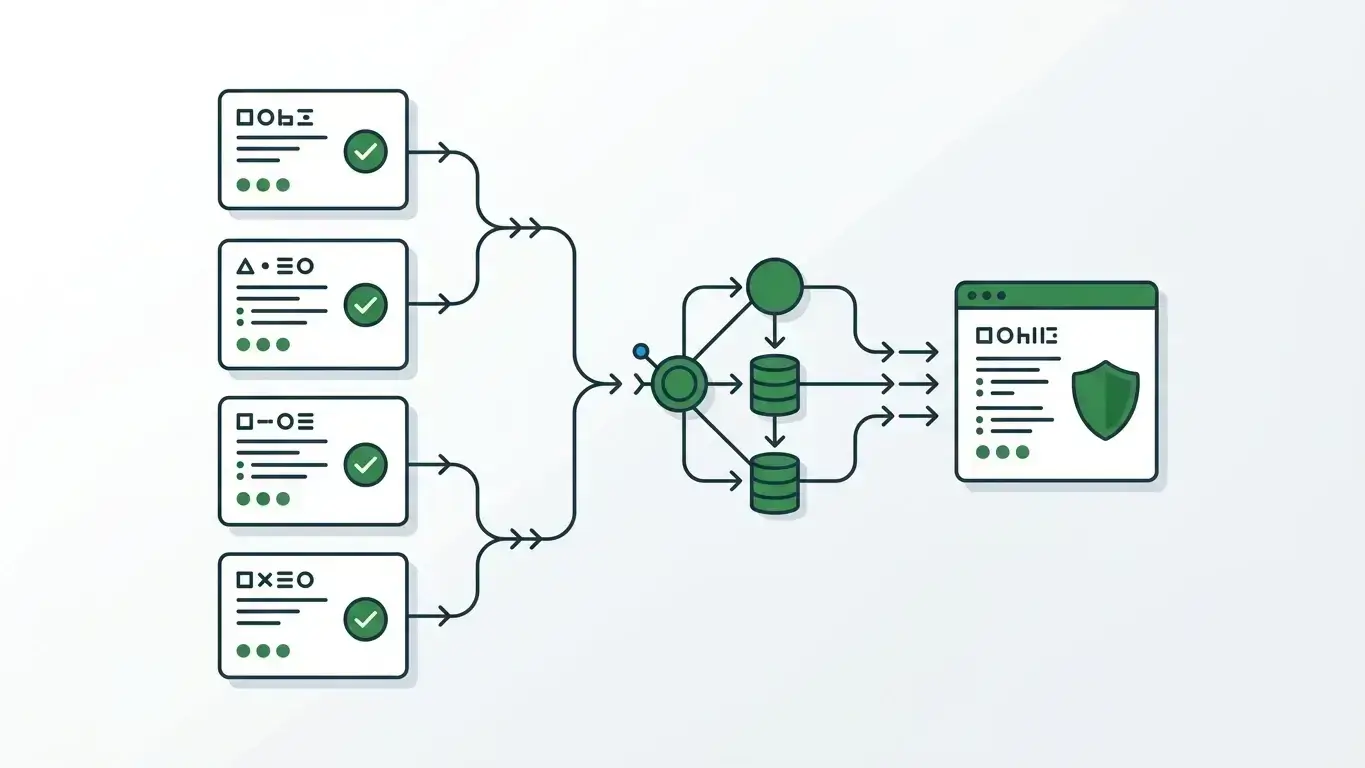
Most collection platforms give teams a way to gather information through structured inputs and store it somewhere for review. Common capabilities include online forms, mobile forms, file uploads, approval steps, table views, exports, notifications, or integrations.
For lightweight use cases, that can be enough. A marketing team needs an event signup. A department needs a simple request form.
A small business wants a contact form that feeds a spreadsheet. The form is useful, but it is not part of the application architecture.
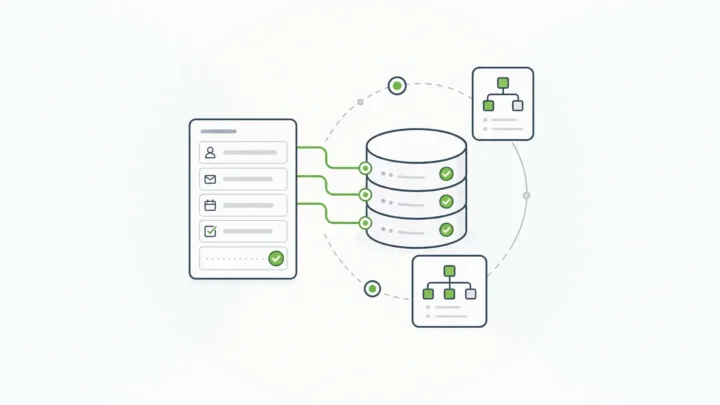
Enterprise collection is different. The collected record often becomes the first system-of-record event in a larger workflow. It may create a case, trigger eligibility logic, update a customer profile, start a review, feed an API, populate a PDF, or become audit evidence later.
Basic feature lists miss the real decision. The platform should be evaluated across the full path from input to governed record:
- Structured fields and repeatable data models
- Validation rules and conditional logic
- File and document capture
- Workflow actions and approvals
- Role-based access to forms and submissions
- API access for downstream systems
- Submission history, version context, and audit evidence
- Deployment and data-residency control
- Integration with existing enterprise systems
The rest of the workflow inherits what the first field allowed.
Where Lightweight Collection Tools Break Down
Lightweight tools usually break down at the moment the data becomes durable infrastructure.
A hosted form can collect a clean-looking response, but the structure behind that response may still be implicit. A table view can organize submissions, but it may not provide the API contract an application team needs. A workflow step can route a record, but it may not preserve enough context to explain which version of the form governed the submission. An export can move the data, but it often moves the cleanup problem into another system.
The cleanup problem is not theoretical. Gartner says poor data quality costs organizations at least $12.9 million per year on average. IBM also reports that 43% of chief operations officers identify data quality issues as their most significant data priority, and more than a quarter of organizations estimate they lose over USD 5 million annually from poor data quality.
The data quality problem often starts at capture. If the intake layer accepts ambiguous fields, inconsistent formats, missing attachments, weak validation, or disconnected identity context, downstream systems inherit the mess. Reporting teams see it later.
Compliance teams see it later. Operations teams feel it every day.
Enterprise buyers should evaluate the category as the controlled entry point for business data.
How To Evaluate Data Collection Software For Enterprise Use
The right platform depends on what the record has to become after submission.
| Evaluation area | Lightweight question | Enterprise question |
|---|---|---|
| Form creation | Can nontechnical users build a form quickly? | Can the form schema become a durable contract across UI, validation, APIs, and submissions? |
| Data structure | Are responses easy to view? | Are submissions consistently shaped for downstream systems? |
| Validation | Can the form require fields? | Can validation, conditional logic, and calculated values travel with the schema? |
| Workflow | Can the tool send notifications or approvals? | Can submission activity trigger governed workflow actions and integrations? |
| Access control | Can admins limit who sees responses? | Can roles and permissions govern forms, submissions, and project-level access? |
| API access | Can data be exported? | Are forms and submissions available through predictable APIs? |
| Auditability | Can the team view submission history? | Can historical records stay connected to form version, revision context, and workflow evidence? |
| Deployment | Is the vendor’s SaaS secure enough? | Can the collection layer run inside the customer’s approved environment when required? |
For low-risk forms, the left column may be enough. For regulated intake, product workflows, government services, insurance claims, healthcare referrals, financial onboarding, or AI-assisted operations, the right column becomes the real buying criteria.
Why APIs Change Enterprise Collection
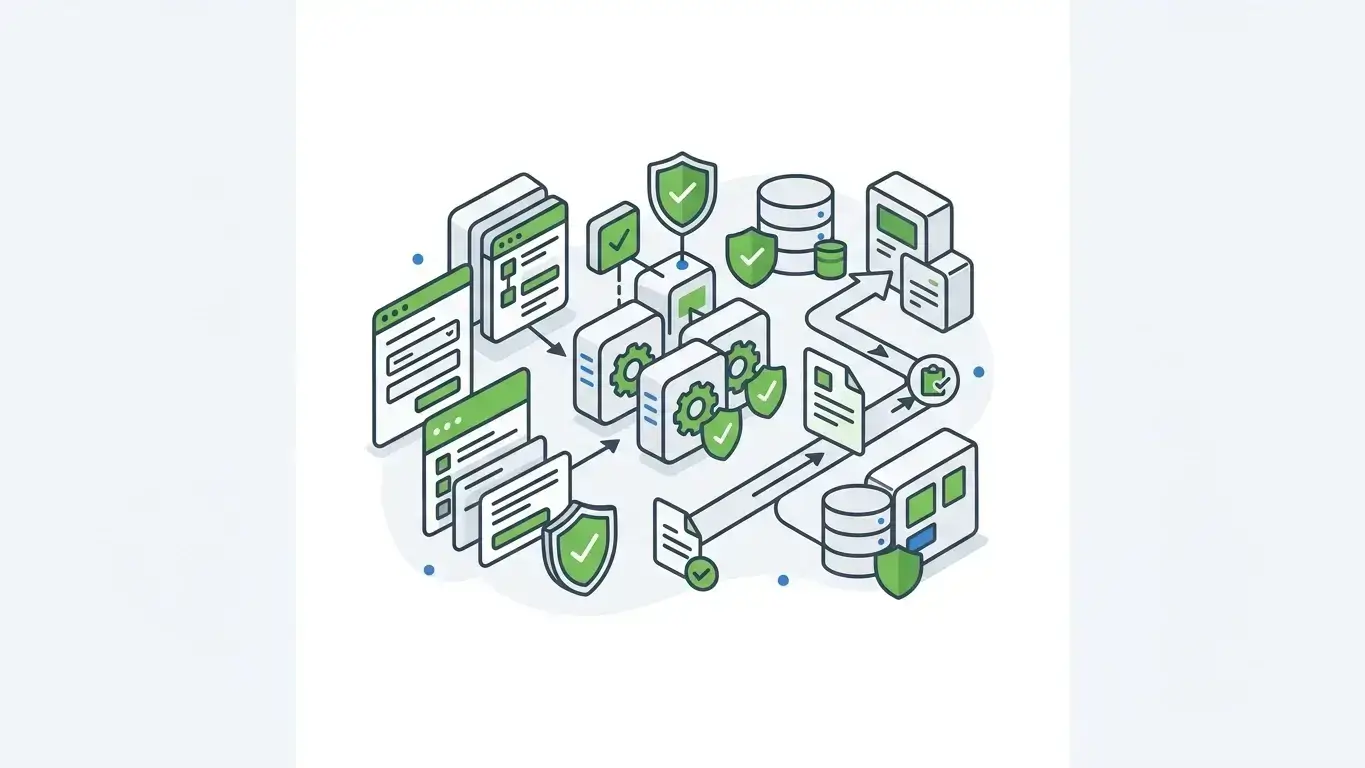
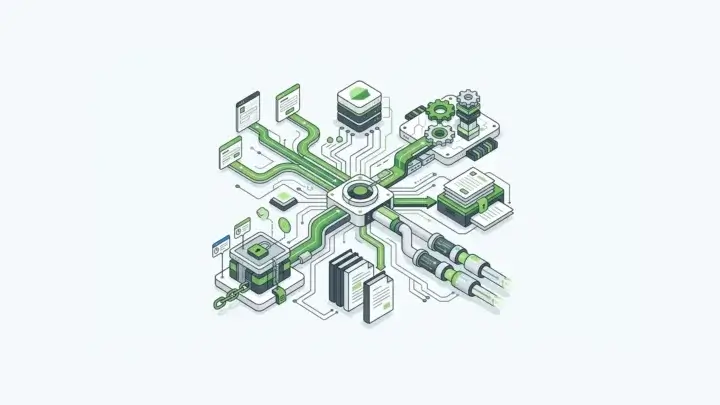
APIs are where the collection layer stops being a submission box and starts becoming application infrastructure.
If a form collects data that another system needs, export is a weak integration pattern. Export creates lag, cleanup, and ownership ambiguity. A governed API path gives developers a stable way to create, read, update, route, and reconcile submission data without reinventing the collection layer.
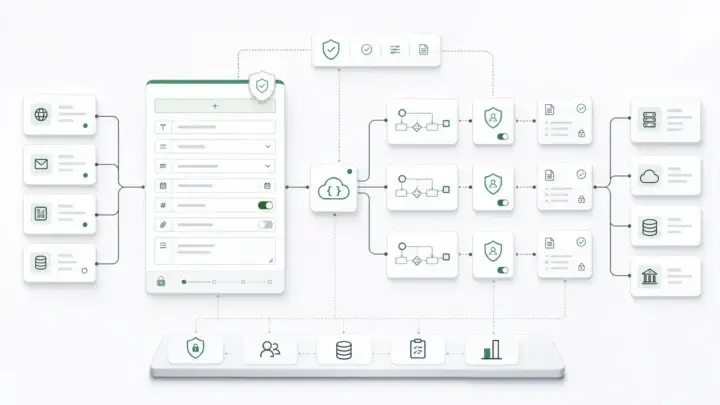
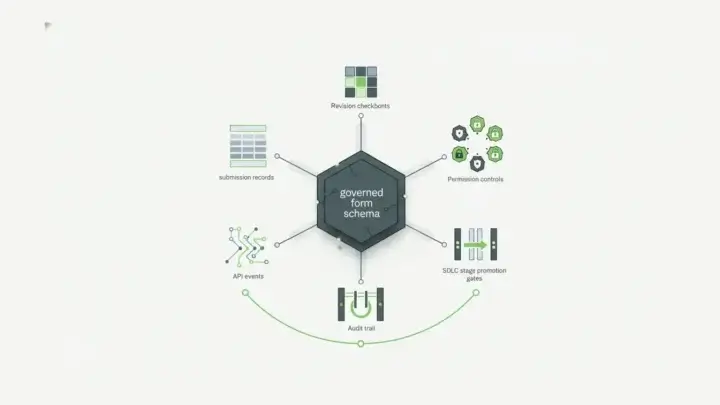
Form.io's platform is built around that contract. The same JSON-driven form definition can connect the form, the API, validation, workflow, and audit trail across teams and agents.
Data collection rarely stays isolated. A building permit application may need applicant details, parcel data, uploaded plans, review comments, signature evidence, and status changes. A patient referral may need eligibility fields, consent, attachments, clinician review, and downstream system integration. A claims intake workflow may need policy lookup, claimant information, supporting evidence, approvals, and generated documents.
In those cases, the platform should expose the record as a governed application object you can query, permission, and audit.
Governance, Permissions, And Auditability
Data collection creates risk when the wrong person can view, alter, approve, or export the wrong record.
Risk grows with scale. A single public form may only need spam protection and a secure destination. A multi-department data collection system needs roles, environment boundaries, submission permissions, workflow logs, revision history, and a clear path for proving what happened later.
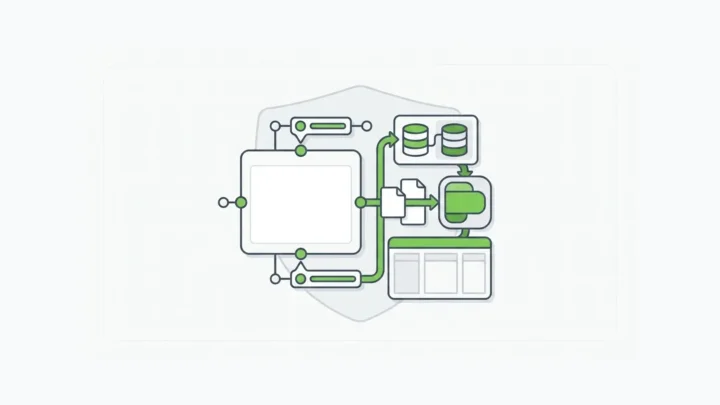
Form.io roles and permissions govern user access and interaction with forms, submission data, and projects. Form.io actions can extend what happens when submission activity occurs, so data capture can trigger email, webhook, workflow, integration, or permission behavior as part of the governed platform model.
At that point, the collection platform becomes the control layer for:
- Who can submit a record
- Who can see the record
- Which workflow runs after submission
- Which systems receive the data
- Which version of the form governed the submission
- Which evidence remains when the record is reviewed months later
Build the governance layer into the path the record travels from the first field.
Self-Hosted Collection And Deployment Control
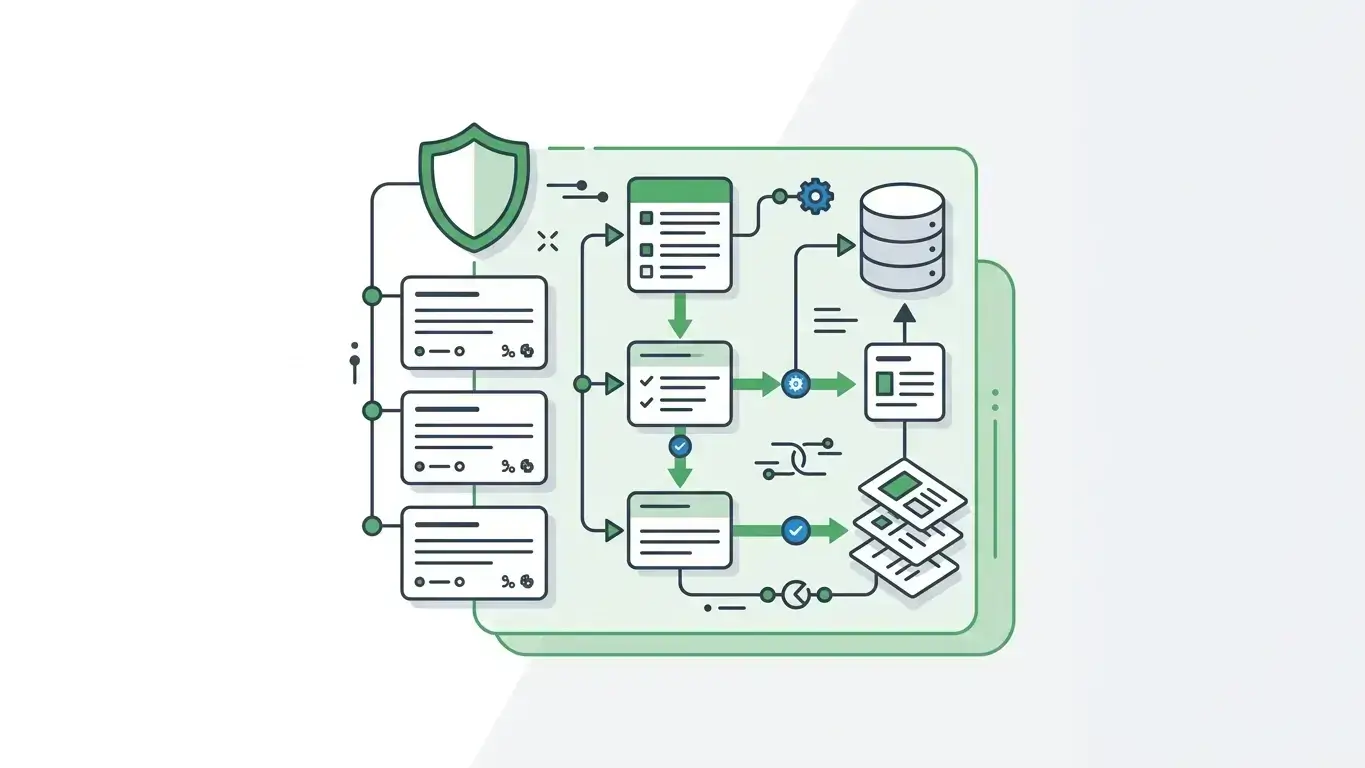
Some organizations cannot treat vendor-hosted data collection as the default.
Healthcare teams may need protected health information to stay inside an approved environment. Public-sector teams may need data collection to sit inside a government-controlled architecture. Financial services teams may need strict data residency, audit logging, access controls, and change management. B2B SaaS companies may need customer-facing forms embedded into their own product experience without exposing tenants to a third-party form brand or data boundary.
Form.io self-hosting is relevant for those buyers because form definitions, submissions, generated APIs, user access paths, integration actions, and application traffic can be designed to stay inside the customer’s approved environment.
Self-hosted Form.io runs inside your existing security envelope, so it works with your SOC 2 Type II and ISO 27001 programs. It doesn’t make a whole application HIPAA, FedRAMP, SOC 2, or GDPR compliant on its own. The customer still owns policies, procedures, infrastructure, monitoring, identity, key management, logging, documentation, and the authorization process.
But self-hosting changes the control model. The organization can evaluate the data collection layer as part of its own architecture instead of accepting a separate SaaS boundary as the center of the workflow.
Data Collection Software For AI And Agentic Workflows
AI sharpens the data collection problem. A model acting on messy intake data moves bad assumptions faster, so the workflow gets more fragile. If the form layer has weak validation, inconsistent submission structure, unclear permissions, or disconnected workflow evidence, AI will amplify the drift.
For enterprise teams, the practical question is simple: does the agent operate against the same governed structure as the human workflow, or does it get a separate path with separate rules?
Form.io keeps people and agents on the same schema. A single JSON schema can govern data-collection UIs, validation, workflow actions, data models, auto-generated APIs, and RBAC. At development time, the Form.io Agentic Coding Toolset lets coding agents build against that schema through an MCP server and Skills. At runtime, the Universal Agent Gateway (UAG) “turns the JSON schemas you already use for forms, APIs, and workflows into dynamic context, guardrails, and data access for agents.”
Not every data collection workflow becomes an AI workflow. The collection layer should still be ready for a world where agents read, validate, route, or act on submitted data. The schema should be stable enough for humans, APIs, and agents to inherit the same meaning. For a deeper look, see our guide to structured data for AI workflows.
Where Form.io Fits
Form.io is not the right answer for every team searching for a collection tool.
If the job is a quick survey, a simple campaign form, or a standalone signup page, a lightweight hosted tool may be faster and cheaper. Many valid form projects do not need infrastructure.
Form.io becomes the stronger fit when the collection layer has to do more than collect responses:
- The form is embedded inside an application or portal.
- The submission needs a durable API path.
- The organization needs self-hosted or customer-controlled deployment.
- The workflow involves roles, approvals, webhooks, actions, or integrations.
- The record may become audit evidence.
- Multiple teams need reusable form schemas and components.
- AI-assisted or runtime agent workflows need governed structured data.
Users describe the product in similar terms. A Trustpilot reviewer called Form.io useful "for integration and standalone" work. For enterprise buyers, integration is often the reason a data collection platform exists.
The strongest reason to choose Form.io is its ability to keep the form, submission, API, validation, workflow, and governance layer connected for teams whose complexity is legitimate.
Key Takeaways
- Data collection software should be evaluated by what happens after submission, not only by how quickly a form can be built.
- Lightweight hosted tools fit simple forms, surveys, and low-risk operational workflows.
- Enterprise teams need structured schemas, validation, APIs, permissions, workflow actions, auditability, and deployment control.
- Poor data quality is expensive, and many problems start at the capture layer.
- Form.io fits when data collection has to become governed application infrastructure.
FAQ
What Is Data Collection Software?
Data collection software helps teams gather information through structured inputs such as forms, apps, files, surveys, or workflow steps. It usually stores submissions in a system where teams can review, route, export, analyze, or integrate the collected data. For enterprise teams, the stronger version also governs validation, permissions, APIs, workflow actions, and audit evidence.
What Is The Best Collection Platform For Enterprise Teams?
The best platform for enterprise teams is the one that matches the role the data plays after submission. If the record only needs to feed a simple table, a lightweight hosted tool may work. If the record needs APIs, roles, workflow actions, embedding, self-hosting, auditability, or regulated deployment control, Form.io is a stronger platform to evaluate.
How Is A Collection Platform Different From A Survey Tool?
Survey tools usually focus on questionnaires, responses, and analysis. A collection platform can include surveys, but it also covers applications, requests, inspections, claims, approvals, registrations, files, and operational records. The difference becomes important when submissions need to trigger workflows or feed other systems.
Why Should Data Collection Software Include Validation?
Validation determines whether the collected record is usable before it moves downstream. Required fields, allowed formats, conditional logic, calculations, and cross-field rules reduce ambiguity at the point of capture. Without validation, downstream teams inherit cleanup work that could have been prevented earlier.
Why Should Data Collection Software Include APIs?
APIs let collected data move into applications, databases, workflows, reporting systems, and automation paths without relying on manual export. For enterprise teams, API access is often the difference between a form tool and a true application infrastructure layer. Form.io is built around forms and submissions that can be accessed programmatically.
Is Self-Hosted Collection Better Than SaaS?
Self-hosted collection software is better for organizations that need control over deployment, data residency, network boundaries, identity, logging, database location, or compliance review. SaaS tools are often better for simple, low-risk workflows that do not justify infrastructure ownership. The right choice depends on the risk and integration profile of the data.
What Collection Software Works For Regulated Industries?
Regulated industries should evaluate the platform around deployment control, access control, auditability, validation, encryption, data residency, workflow evidence, and integration with existing systems. Form.io is a strong fit for regulated teams that need the collection layer to run inside a customer-controlled architecture and connect to governed APIs and workflows.
How Should AI Teams Evaluate Collection Software?
AI teams should ask whether the data collection layer gives agents structured, governed, and current data to operate on. The form schema, validation rules, permissions, submission APIs, and audit paths should be clear enough for both human workflows and agentic workflows. Weak intake data becomes a faster problem when AI starts acting on it.
Try Form.io Free