
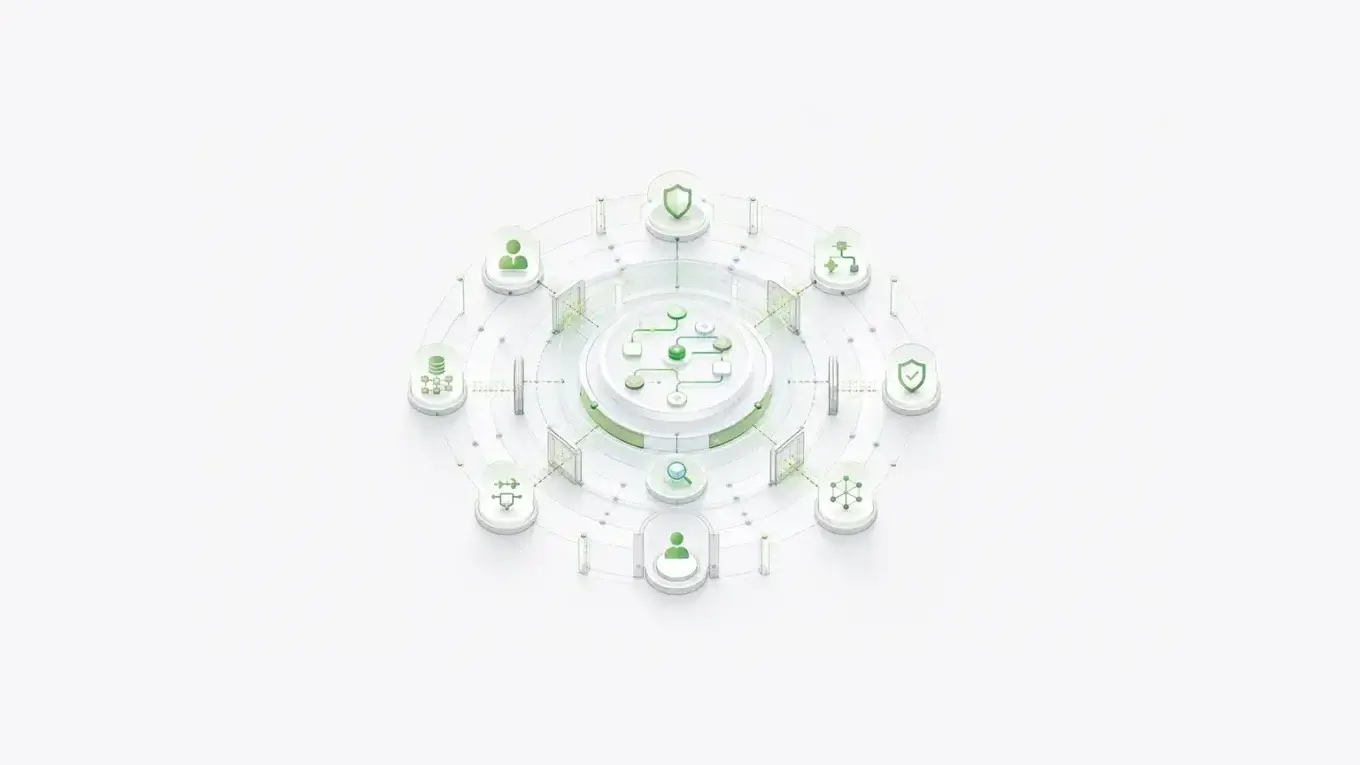
AI governance platform searches hide several different problems under one phrase. A policy registry is not runtime tool-call control. A process engine is not schema-driven data access. If agents can read data, invoke tools, submit records, and trigger workflows, governance has to live where the agent acts. This comparison names the layer before judging the tool.
The AI Governance Gap Is Now Operational
Most AI governance conversations started with model risk, policy documentation, and compliance review. Those still matter.
But agentic workflows add a sharper question: what happens when the AI system can do something?
Grant Thornton's 2026 AI Impact Survey found that 78% of senior business leaders lacked full confidence that their organization could pass an independent AI governance audit within 90 days. The same survey said 46% of leaders believed AI underperformed because controls and compliance were not working (Grant Thornton).
That is not just a board-level policy problem. It is an infrastructure problem.
Gartner's 2025 strategic technology trends report predicted that by 2028, at least 15% of day-to-day work decisions would be made autonomously through agentic AI, up from 0% in 2024 (Gartner). If even a small share of ordinary operational decisions moves through agents, governance has to follow the action, not only the policy record.
If an agent can approve a request, update a record, route a case, draft a decision, trigger an integration, or submit structured data into a system of record, the organization needs more than a governance statement. It needs an execution path that can answer:
- What was the agent allowed to do?
- Which identity or role gave it that permission?
- What schema, validation rule, or process state constrained the action?
- Was a human required to approve it?
- What audit evidence exists after the action?
An AI governance platform can help with policy, inventory, and risk. An agentic workflow needs that, plus runtime controls at the exact layer where the agent touches the business system.
Five Governance Layers To Compare
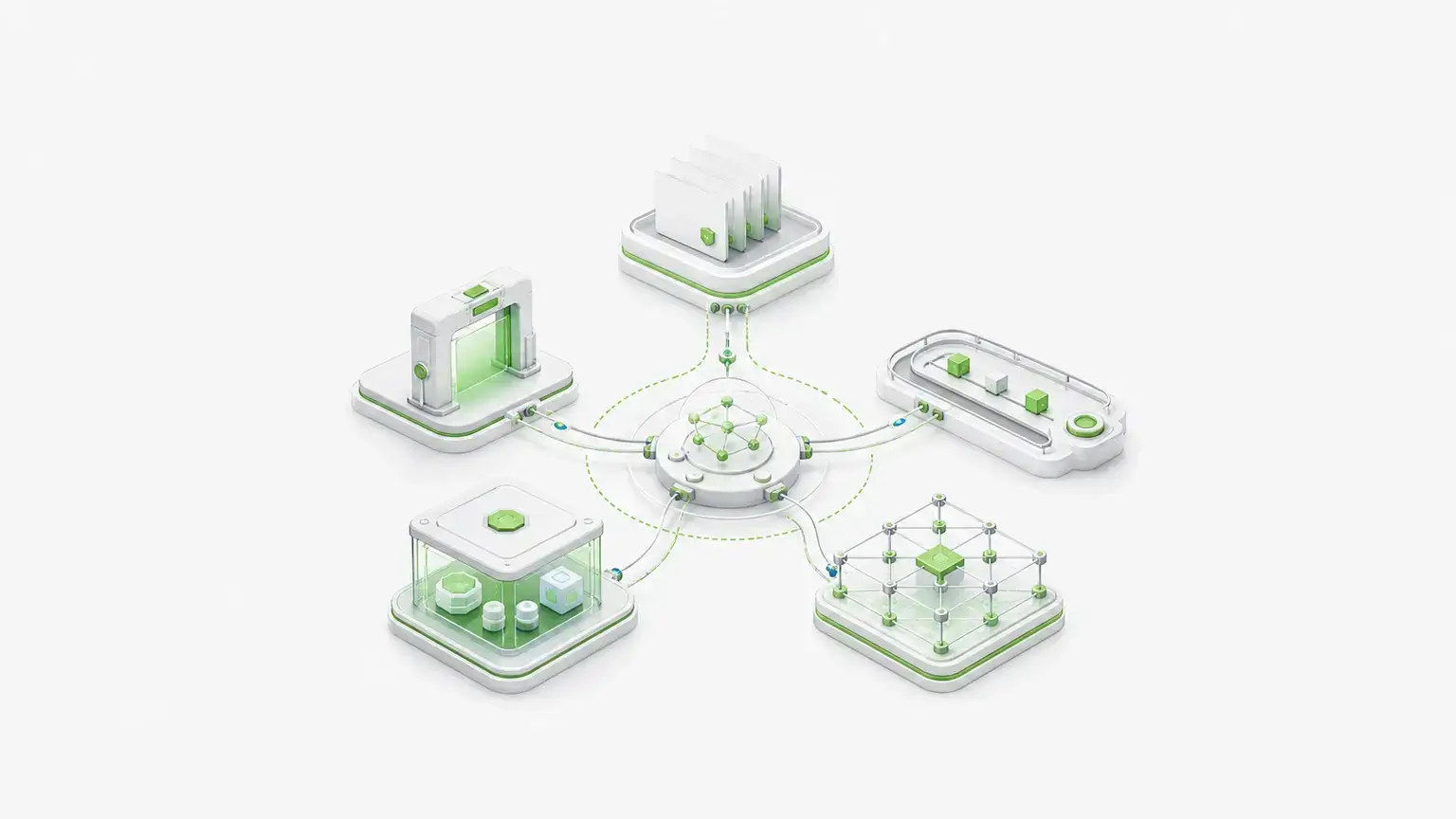
The phrase "AI governance platform" is too broad unless you name the layer.
For agentic workflows, the main layers are:
| Governance layer | What it governs | Example fit |
|---|---|---|
| AI policy and risk governance | AI inventory, use cases, risk tiering, compliance evidence, board reporting | Credo AI, OneTrust, IBM watsonx.governance, classic GRC-style AI governance suites |
| Runtime agent governance | Tool calls, resource access, inter-agent messages, action-level policy enforcement | Microsoft Agent Governance Toolkit |
| Process orchestration governance | BPMN, case state, human tasks, SLAs, process audit trails, exception handling | Camunda 8.9, Flowable 2025.1, Appian process workflows |
| Platform-native agent governance | Agents built and managed inside a specific app/process platform | Appian Agent Studio |
| Schema/API/data-access governance | The forms, fields, validation rules, submissions, APIs, roles, and actions an agent uses to do work | Form.io Universal Agent Gateway |
These layers can overlap. They can also coexist.
A bank might use Microsoft Entra for agent identities, Microsoft Agent Governance Toolkit for action-level policy, Camunda for cross-system process orchestration, and Form.io UAG for governed access to intake forms, validation, submissions, and downstream workflow actions.
The mistake is treating those as interchangeable.
Quick Comparison
| Platform or toolkit | Governance center of gravity | Strongest fit | Watch the boundary |
|---|---|---|---|
| Form.io UAG | Schema, form, API, submission, RBAC, and action governance exposed to agents through MCP | Agents that need governed access to forms, submissions, validation, and workflow infrastructure | Not a generic AI GRC dashboard or full BPMN engine |
| Appian Agent Studio | Agents embedded inside Appian's process/application platform | Teams already building workflows in Appian | Strong inside Appian's platform boundary; less about portable schema/API ownership |
| Camunda 8.9 | BPMN-based agentic orchestration, human tasks, process state, audit logs, MCP/A2A | Teams that govern work through explicit process models | Governance starts at orchestration; the data-capture/schema layer may still live elsewhere |
| Flowable 2025.1 | Agent engine beside BPMN/CMMN/DMN, agent exchange tracking, case/process control | Dynamic case work and process automation with first-class agents | Strong process layer; still needs source-of-truth data contracts |
| Microsoft AGT | Runtime policy enforcement, identity, sandboxing, OWASP agentic risk controls | Developers adding action-level governance to agent frameworks | A toolkit, not a business workflow or forms infrastructure platform |
Form.io UAG: When The Governed Schema Should Become Agent Context
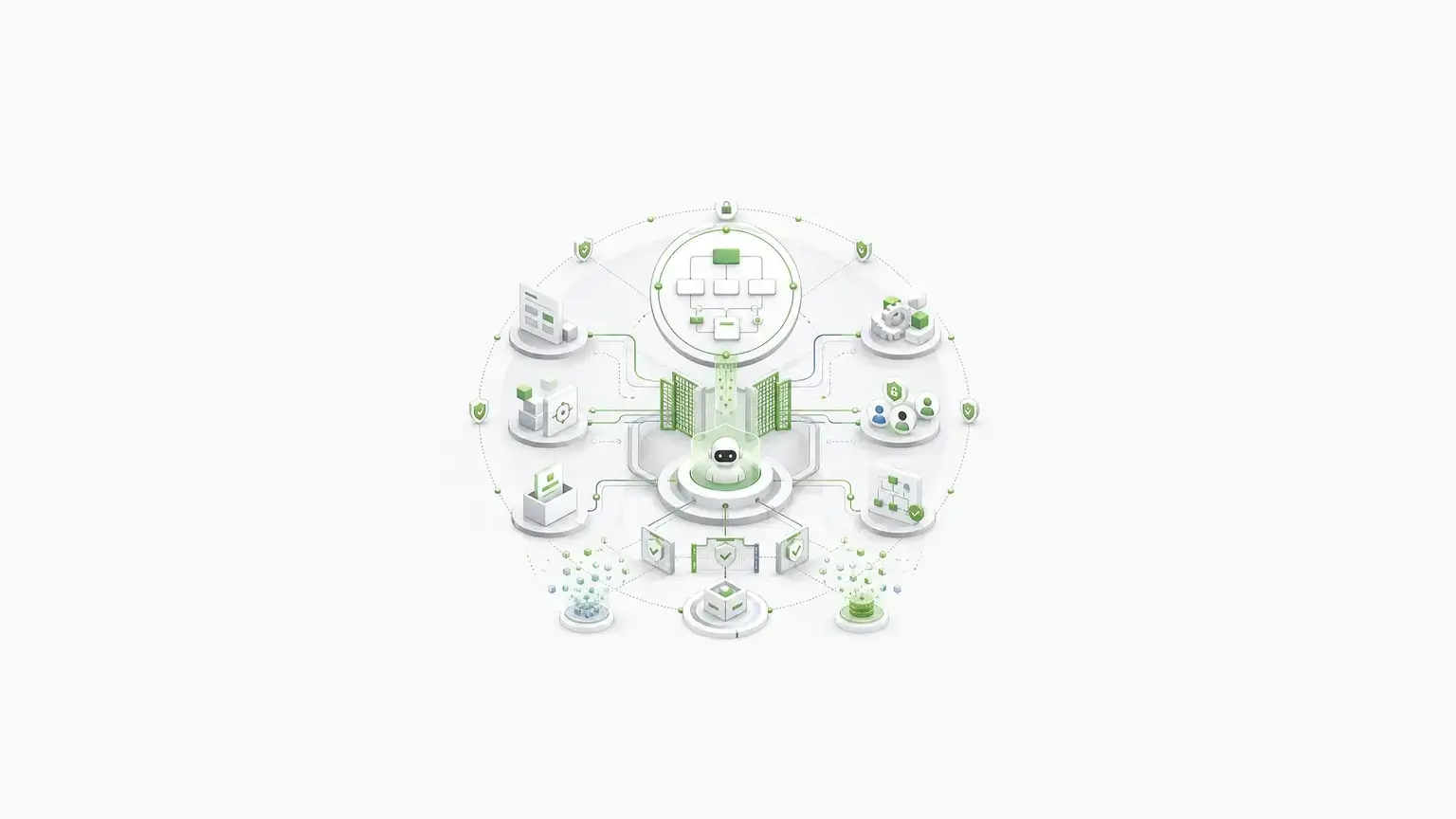
Form.io's Universal Agent Gateway is strongest when the agent has to operate through a governed form and workflow layer instead of a loose collection of prompts, tools, and credentials.
Form.io's core argument starts below the agent. In Form.io, Form JSON is the schema created by the form builder. The Form.io documentation says that schema is used to render forms inside applications, generate REST API interfaces on the server, and host the form schema at the embed URL (Form.io Form JSON documentation).
That matters because an agent needs structured context.
An agent does not need a vague prompt saying "collect the right onboarding details." It needs to know which fields exist, which fields are required, what validation rules apply, how submissions are shaped, which actions can run, and what permissions apply to the current actor.
Form.io UAG turns that existing application infrastructure into the agent surface. The UAG page explains that agents can authenticate through existing Form.io auth and SSO, inherit enterprise RBAC, retrieve and route secure data inside the private network, and execute actions governed by Form.io Actions and audit trails (Form.io UAG).
That is a specific kind of governance. It is not "AI governance" as a board dashboard. It is governance at the layer where forms, APIs, submissions, validation, and workflow actions already meet.
This is why Form.io should not be framed as simply another AI agent platform. Form.io's AI page describes UAG as the runtime governance layer for production agentic workflows, while the MCP Server, Skills, and Agentic Coding Plugin support build-time development (Form.io AI). That separation is important. Build-time agents need patterns for creating software. Runtime agents need permissioned, logged access to production workflow surfaces.
The customer proof is not AI-specific yet, so it should be used carefully. But it does show why this infrastructure layer matters. In one Form.io public-sector case study, publicplan supported more than 400 digital public-sector services and 1,000+ forms while meeting strict standards and a short timeline (Form.io publicplan case study). In another Form.io banking case study, an international banking deployment served 5,000 banking groups and recovered 50% of the team's capacity (Form.io banking case study).
Those are not UAG deployment claims. They are infrastructure claims. They show why a governed forms/API/submission layer is valuable before agents arrive. UAG extends that same layer to agents.
Strongest Fit
Form.io UAG is the strongest fit when:
- forms are part of the application contract, not just hosted collection pages
- agents need to understand field structure, validation rules, submission shape, and workflow actions
- the customer needs self-hosted or private-network control
- RBAC, auth, audit trails, and form revisions are already part of the governance model
- the team wants humans and agents operating through the same governed schema layer
Form.io is not the right answer if the buyer only needs a general AI policy registry. It is the right answer when the agent's work touches form-driven application infrastructure.
Appian Agent Studio: When Agents Belong Inside The Appian Process Platform
Appian's governance story is platform-native.
Agent Studio is built for teams that already use Appian to design applications, workflows, data fabric patterns, and enterprise processes. Appian's 25.4 release material frames Agent Studio as a guided way to create enterprise AI agents and drag them into business processes. Appian also says agents embedded in processes can use guardrails, tools, data, and human review inside the process context (Appian Agent Studio release material).
That is a clear fit when Appian is already the process application platform.
The governance center is not the open schema/API layer. It is the Appian platform boundary. Agents live inside the Appian design and process model, use Appian objects and tools, and inherit governance from the Appian environment.
That can be exactly what an Appian customer wants. It is less compelling when a team needs agent access to application-owned forms, APIs, validation rules, submissions, and deployment boundaries outside Appian.
Strongest Fit
Appian Agent Studio fits when:
- the business process already lives in Appian
- low-code process design is the center of gravity
- agents need to operate inside Appian's app/process/data fabric layer
- the organization wants human review and process guardrails inside the same platform
The Form.io contrast is not "Appian cannot govern agents." It can govern them inside its platform. The Form.io distinction is that governance starts at the schema and form infrastructure layer agents use to collect, validate, submit, and route data.
Camunda 8.9: When BPMN Orchestration Is The Governance Backbone
Camunda approaches agentic governance from the process orchestration layer.
In its 8.9 release, Camunda frames agentic orchestration as coordinating AI agents, knowledge workers, tools, and systems across end-to-end business processes. The release emphasizes deterministic process logic, global user task listeners, centralized audit logs, MCP access to running clusters, and A2A support for multi-agent communication (Camunda 8.9 release material).
That is a strong governance story for teams that already model work as BPMN.
The useful distinction is this: Camunda governs the flow of work. It controls process state, human tasks, incidents, retries, escalation, and the audit trail around the process. That is different from governing the form schema, validation logic, submission payload, or field-level context an agent uses before it reaches a process step.
In many architectures, both layers matter.
A government service workflow might use Form.io to collect and validate service request data through self-hosted forms and generated APIs, then use Camunda to orchestrate downstream case routing, approvals, exceptions, and cross-system work. The agent should respect both layers.
Strongest Fit
Camunda fits when:
- BPMN is already the operating language for process governance
- the organization needs explicit process state and incident handling
- agents participate in workflows with human tasks and deterministic rules
- auditability needs to follow the end-to-end process path
Form.io fits earlier in the path: where the agent needs governed access to the structured data, forms, validation rules, and APIs that feed the process.
Flowable 2025.1: When Case And Process Work Need First-Class Agents
Flowable's 2025.1 release puts agents beside BPMN and CMMN rather than treating them as external helpers.
Flowable says the release adds an agent engine alongside its BPMN and CMMN automation engines, with internal agent types such as utility, document, knowledge, and orchestrator agents. It also describes agent exchange tracking as a way to store AI interactions for traceability and audit support (Flowable 2025.1 release material).
That makes Flowable a serious process/case governance comparison.
Its strongest fit is dynamic work: cases, documents, human judgment, process variation, and AI-assisted decisions that need to stay inside a process/case model. If a case state determines what an agent can and cannot do, Flowable's governance center makes sense.
The Form.io distinction is again layer ownership.
Flowable can govern the case or process. Form.io can govern the structured form and submission layer that feeds the case. In agentic workflows, those are connected but not identical.
Strongest Fit
Flowable fits when:
- work is case-heavy and may not follow one fixed process path
- AI agents need to operate inside CMMN/BPMN-style orchestration
- traceability of agent exchanges matters
- the organization wants an agent engine inside the process platform
Form.io fits when the agent's most important constraint is the governed schema, validation, permission, submission, and action surface around data intake and form-driven workflows.
Microsoft Agent Governance Toolkit: When Developers Need Runtime Action Controls
Microsoft Agent Governance Toolkit is the most developer-centered entry in this comparison.
Microsoft introduced AGT as an open-source runtime security governance project for autonomous AI agents. The announcement says the toolkit is designed to work with existing frameworks and includes deterministic policy enforcement, identity, sandboxing, reliability controls, and mapping to OWASP agentic AI risks (Microsoft open-source announcement).
That layer matters because agents can misuse tools even when the surrounding workflow looks well designed.
Microsoft's later Agent Framework guidance makes the layer even clearer: Agent Framework handles build and orchestration, while Agent Governance Toolkit handles govern and audit. It evaluates tool calls, resource access, and inter-agent messages against policy before execution (Microsoft Agent Framework and AGT).
That is not the same job as Form.io UAG.
AGT helps govern the agent's actions at runtime. Form.io UAG gives agents governed access to Form.io's form, submission, schema, API, RBAC, and action layer. In some architectures, AGT could sit beside or around an agent framework, while UAG provides the business-specific tools and context the agent is allowed to use.
Strongest Fit
Microsoft AGT fits when:
- developers need action-level policy checks inside an agent framework
- tool-call misuse, goal hijacking, rogue agents, or inter-agent trust are the main concern
- the team wants an open-source runtime governance toolkit
- the application/workflow platform is already chosen elsewhere
Form.io fits when the agent needs a governed business surface for form-driven work, not only a policy wrapper around tool calls.
How To Choose The Right Governance Layer
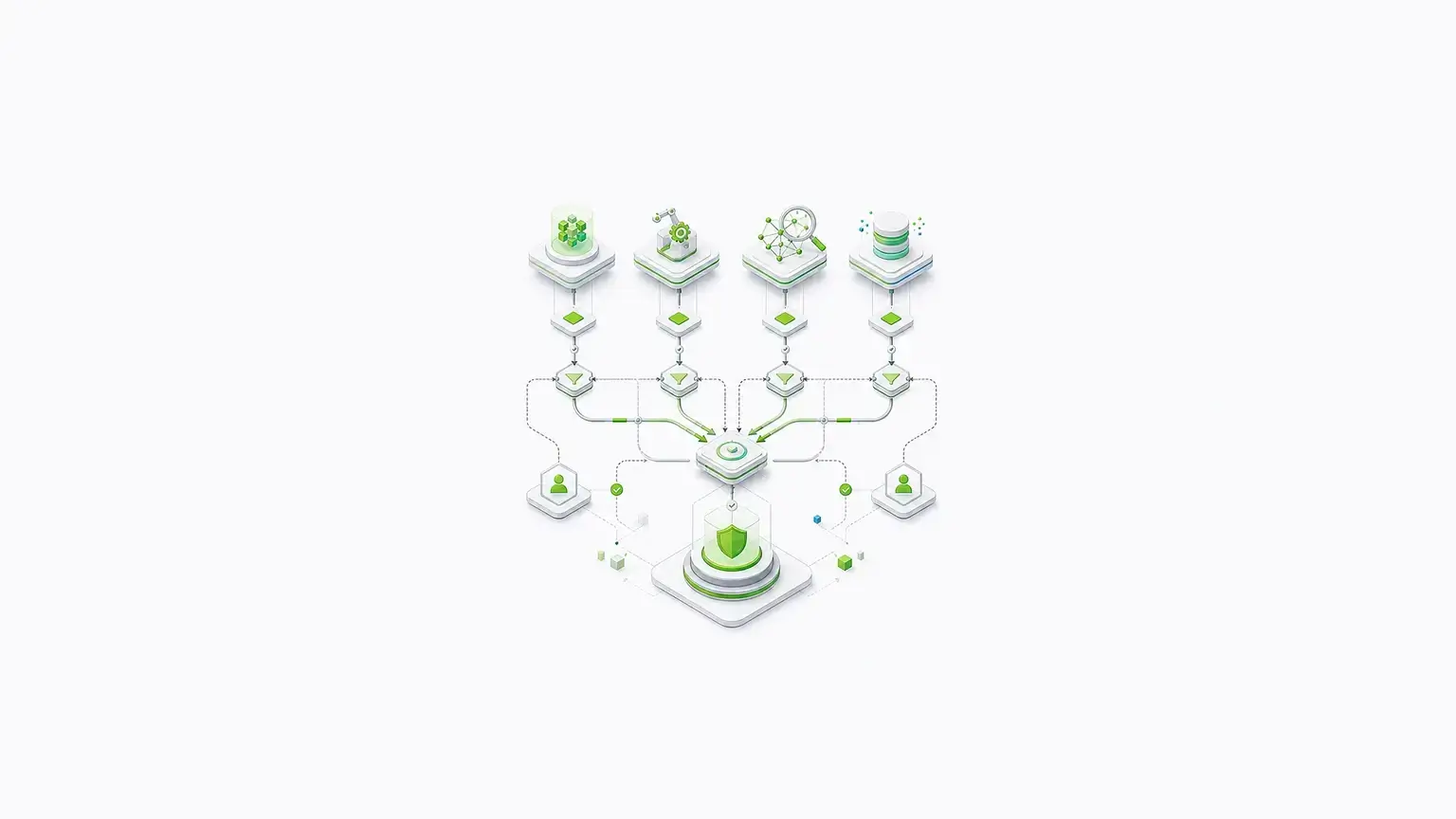
The useful question is not "which AI governance platform should we buy?"
The useful question is: where can the agent create the most risk?
If The Risk Is AI Inventory And Compliance Evidence
Start with a classic AI governance platform.
This is the layer for model inventory, use-case approvals, risk tiers, policy mapping, regulatory documentation, monitoring, and executive accountability. It matters most when the organization cannot answer which AI systems exist, who owns them, what risk category they fall into, or what evidence supports approval.
Form.io does not replace that layer.
If The Risk Is Tool-Call Misuse
Look at runtime agent governance.
This is where Microsoft Agent Governance Toolkit is relevant. It helps evaluate actions before execution and provides runtime security controls for autonomous agent frameworks.
Form.io can supply governed business tools and context; AGT can help enforce broader action-layer policies.
If The Risk Is Process Visibility
Look at process orchestration.
Camunda, Flowable, and Appian are stronger when the work has to be governed as a process or case: state, sequence, incidents, handoffs, human review, SLAs, escalation, and full process auditability.
Form.io can still matter if the workflow starts with governed forms, submissions, and APIs.
If The Risk Is Data, Schema, And API Drift
This is where Form.io belongs.
If humans use one form definition, APIs use another contract, agents use a prompt-based tool description, and workflow actions use yet another set of assumptions, governance will drift. The agent may still complete the task. The organization may not be able to prove that the task followed the governed path.
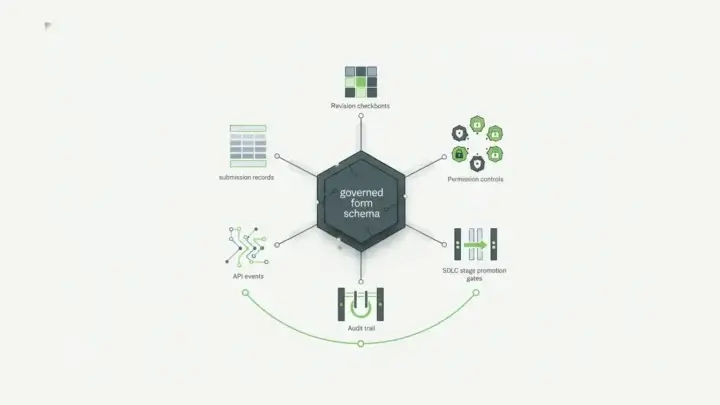
Form.io's stronger argument is that the same Form JSON and platform layer can define the form, the validation, the generated API surface, the submission shape, permissions, and the runtime agent context.
That starts with deployment control. A self-hosted Form.io environment lets the form and submission layer live inside the customer's own infrastructure boundary.
It also starts with the form contract itself. The drag-and-drop form builder with APIs is not only a visual authoring surface; it produces structured definitions that can become application interfaces.
Governance then depends on behavior, not just fields. Conditional logic and validation help define what data is acceptable before a workflow or agent acts on it.
Finally, the work has to map to people and roles. Teams and permissions belong in the same architecture conversation because agent access should inherit the same governance model that controls human access.
Where Form.io Fits
Form.io is not trying to be every layer of AI governance.
That is a strength, not a weakness.
Form.io is strongest when forms are application infrastructure: the schema, user interface, generated API, validation model, submission record, permission boundary, and workflow trigger are connected. When agents enter that environment, the agent should not get a separate shadow contract. It should operate through the same governed layer as the application.
That is the UAG argument.
If your organization only needs an AI policy dashboard, choose an AI governance suite. If it needs action-level runtime policy enforcement across agent frameworks, evaluate a toolkit like Microsoft AGT. If it needs process orchestration, evaluate Camunda, Flowable, or Appian.
If the agent needs governed access to forms, fields, submissions, APIs, validation rules, permissions, and workflow actions inside a customer-controlled deployment, Form.io should be in the conversation.
Key Takeaways
- AI governance platform is too broad unless you name the layer.
- Agentic workflows need governance where agents act, not only where policies are documented.
- Form.io UAG governs the schema/API/form/submission/action layer for production agents.
- Appian, Camunda, and Flowable govern agents through process or case platforms.
- Microsoft AGT governs runtime tool calls and action policies.
- The strongest architecture can combine layers instead of forcing one product to do every job.
- Form.io's strongest claim is not generic AI governance. It is governed application infrastructure for agents working through forms, APIs, validation, submissions, permissions, and actions.
FAQ
What Is An AI Governance Platform?
An AI governance platform helps organizations manage AI risk, policy, accountability, compliance evidence, monitoring, and operational controls. In classic enterprise usage, it often includes AI inventory, use-case approvals, risk classification, policy mapping, audit evidence, and reporting.
For agentic workflows, the term needs more precision. A platform that governs model risk is not automatically the same as a tool that governs agent actions, process state, form submissions, or API access.
What Is Agentic Workflow Governance?
Agentic workflow governance is the set of controls that determines what an AI agent can do inside a business process. It covers tool access, data access, identity, permissions, validation, human review, logging, audit trails, exception handling, and policy enforcement.
The key difference is action. A chatbot that answers a question needs content safety. An agent that updates a submission or triggers a workflow needs execution governance.
Is Form.io UAG An AI Governance Platform?
Form.io UAG is most accurately understood as a runtime governance layer for agents operating through Form.io infrastructure. It is not a general AI GRC dashboard.
UAG gives agents governed access to the Form.io layer: forms, field definitions, validation, submissions, actions, auth, RBAC, and application workflow context. That makes it highly relevant to agentic workflow governance, especially when forms and APIs are part of the customer-controlled application stack.
How Is Form.io UAG Different From Microsoft Agent Governance Toolkit?
Microsoft Agent Governance Toolkit focuses on runtime policy enforcement for agent actions: tool calls, resource access, identity, sandboxing, and auditability around the agent framework.
Form.io UAG focuses on the business surface the agent uses when work involves forms, submissions, validation, APIs, and workflow actions. AGT can help govern the agent's behavior. UAG gives the agent a governed Form.io context to operate through.
How Is Form.io UAG Different From Process Engines?
Process engines such as Camunda and Flowable govern processes and cases. They are strong when the main governance problem is end-to-end orchestration: state, sequence, human tasks, incidents, escalation, and process audit trails.
Form.io governs the form and data infrastructure layer. It is stronger when the main governance problem is schema, validation, submissions, permissions, APIs, and form-driven workflow actions. Many enterprise architectures can use both layers.
When Should A Team Use A Classic AI Governance Suite Instead?
Use a classic AI governance suite when the main problem is enterprise oversight: AI inventory, use-case approvals, risk scoring, regulatory mapping, model monitoring, audit evidence, and board-level accountability.
Use Form.io UAG when the main problem is operational: agents need governed access to forms, submissions, validation, APIs, and workflow actions. The two layers can complement each other.
Why Does Schema Matter For Agent Governance?
Agents need structured context. A schema tells the agent what fields exist, which data is required, what validation rules apply, how submissions are shaped, and which actions are meaningful.
When the same schema drives human forms, APIs, validation, and agent context, the organization reduces drift. The agent is less likely to operate from stale prompt instructions or a parallel tool definition that no longer matches the application.
Can Form.io Replace A Process Engine?
No. Form.io should not be framed as a full process engine replacement.
Form.io is infrastructure for forms, APIs, submissions, validation, permissions, and workflow-related actions. If the organization needs full BPMN or case orchestration, a process engine may still be appropriate. Form.io's role is to make the form and data capture layer governed enough for humans, developers, systems, and agents to use safely.
Build Governed Agentic Workflows With Form.io
If your agents need to work through forms, submissions, APIs, validation rules, permissions, and workflow actions inside your own deployment boundary, start with the governed infrastructure layer.
Try Form.io for governed agentic workflow infrastructure.
Try Form.io for free