
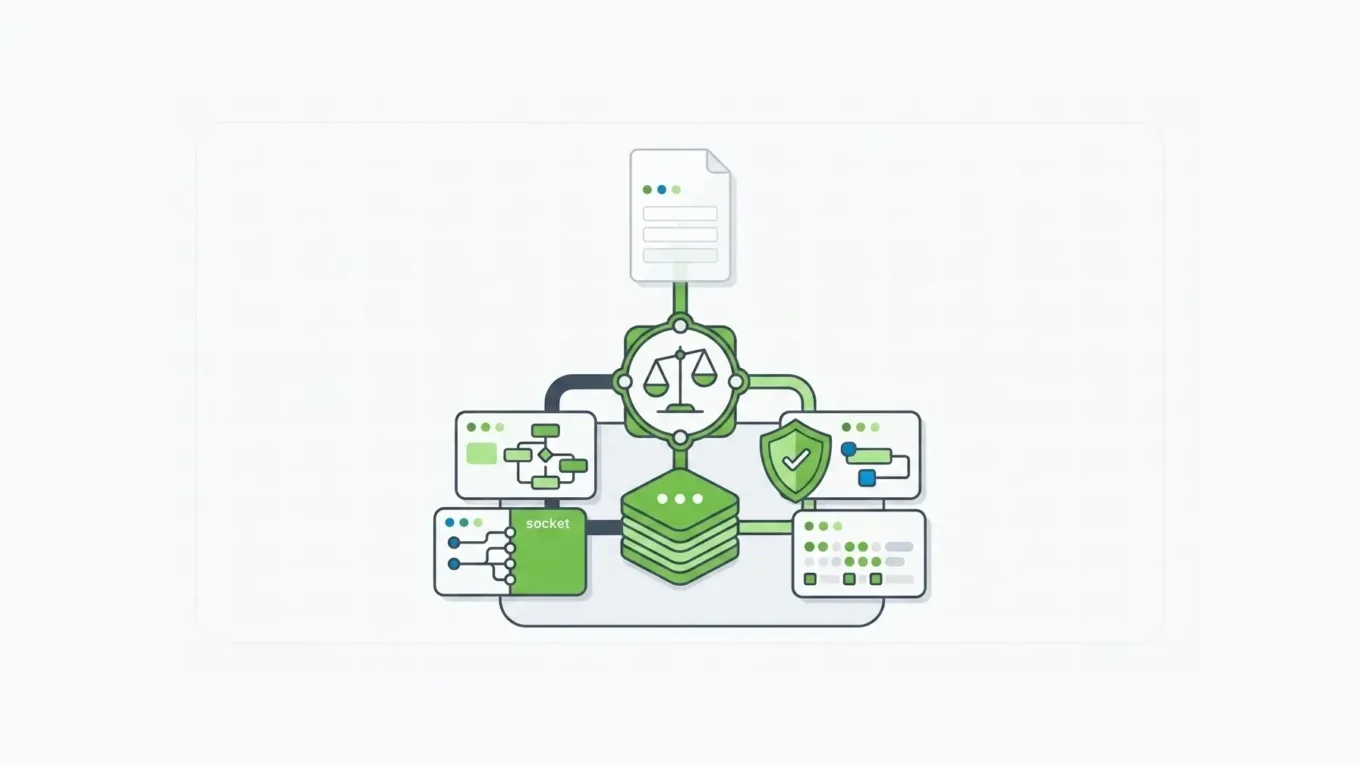
AI changes the make vs buy analysis because teams can now generate a convincing prototype before the architecture has been fully understood. That speed is useful. It is also dangerous when the prototype starts collecting sensitive data, exposing APIs, routing approvals, or becoming the workflow layer people depend on.
Key takeaways
- AI can accelerate custom development, but it does not remove responsibility for security, permissions, data contracts, audit evidence, operations, or change control.
- Form.io is strongest as a governed buy decision when forms, submissions, APIs, roles, Actions, revisions, and deployment control are not the company's unique invention.
- The right make-versus-buy question is not "Can AI build it?" It is "Do we want to own this platform layer forever?"
The prototype is not the platform
AI-generated software is changing buyer expectations because the first visible version can appear quickly. A team can describe a workflow, generate screens, connect a database, scaffold endpoints, and produce something that looks like a working internal platform. For low-risk experiments, that is a real advantage.
The hard part begins after the demo. A platform that collects operational data needs authentication, authorization, validation, audit logging, error handling, accessibility, monitoring, deployment process, data retention, API stability, backup strategy, incident response, and a team willing to maintain every generated decision. Those obligations do not disappear because the first version was produced by AI.
A make vs buy analysis has to include those obligations before the generated platform becomes the system people depend on.
The NIST Secure Software Development Framework is a useful external lens because it treats secure software as a lifecycle discipline. Generated code still has to be reviewed, protected, tested, released, monitored, and maintained. If the generated platform becomes part of a regulated workflow, the organization inherits the full operating burden.
Building makes sense when the layer is truly proprietary
Build is the right answer when the workflow itself is a core differentiator and no platform can carry the requirement without forcing the business to compromise. If the company's advantage lives in a unique algorithm, a domain-specific collaboration model, a patented workflow, or a product experience competitors cannot copy, a make vs buy analysis may show that AI-assisted development should help the team move faster while still owning the differentiated layer.
That does not mean every layer should be generated. A make decision should be reserved for the parts of the system where ownership creates strategic value. Many platform concerns are necessary but not differentiating: forms, validation, generated APIs, submission records, role-based access, workflow triggers, audit trails, form revisions, PDF output, and deployment packaging. Rebuilding those from scratch can feel empowering during the first sprint and expensive for years afterward.
The NIST Cybersecurity Framework 2.0 is helpful because it keeps the decision anchored in govern, identify, protect, detect, respond, and recover work. A generated platform does not only need features. It needs a defensible operating model around those features.
Buying infrastructure is different from buying a black box
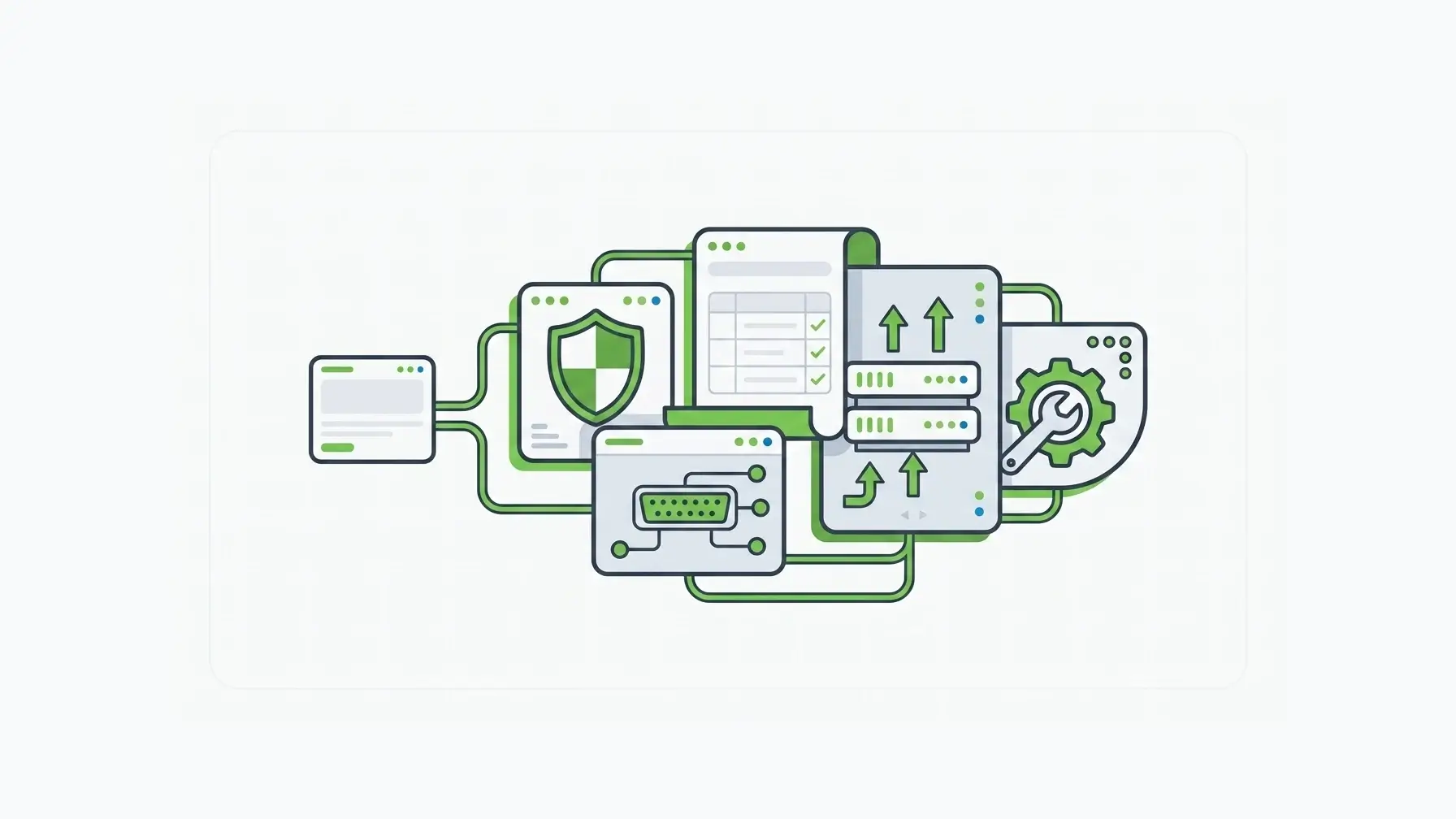
The choice is not only "generate everything" or "accept a closed SaaS product." Form.io fits a middle category: buy the governed forms, data, API, workflow, and evidence infrastructure, then build the differentiated application around it.
That matters for teams that want control. Form.io can be deployed in customer-controlled environments through its self-hosted forms for enterprise model, while still giving teams reusable infrastructure for forms, resources, submissions, permissions, workflow Actions, revisions, PDF workflows, and APIs. A team can keep building its portal, case system, customer experience, internal app, or agentic workflow without asking AI to reinvent the form infrastructure layer every time.
This is the more precise buy argument. The buyer is not buying away responsibility. The buyer is choosing where responsibility should live. If Form.io already provides the governed substrate, the team's custom work can focus on the product logic and integration behavior that actually belongs to the business.
AI makes repeated infrastructure work easier to create and harder to govern
AI-generated platforms can multiply inconsistency. One team generates its own submission model. Another creates a different permission pattern. A third uses a different validation approach. A fourth handles audit evidence through an application log that no one planned to preserve. Each team may move faster locally while the organization becomes harder to govern globally.
This is especially risky when AI-generated systems expose APIs. The OWASP API Security Top 10 is a reminder that authorization, authentication, object-level access, excessive data exposure, and unsafe consumption of APIs are not side issues. If the generated platform stores submissions and exposes them through endpoints, the API surface is part of the governance problem from day one.
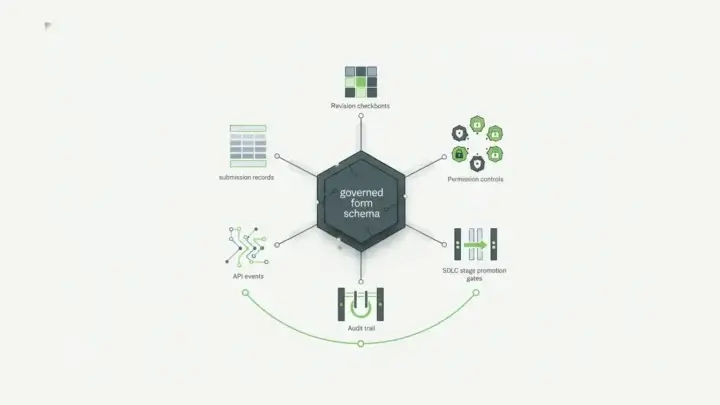
Form.io's schema-driven approach reduces that drift by making the form definition, submitted data, API behavior, permissions, and workflow behavior part of one platform model. Teams can still extend and integrate. They do not have to independently generate the basic contract for every form-driven workflow.
Make vs Buy Analysis Responsibility Matrix
| Decision area | AI-generated custom-platform risk | Form.io infrastructure fit |
|---|---|---|
| Data contract | Each workflow invents its own schema and validation path | Forms and resources provide inspectable schema-driven definitions |
| API behavior | Endpoints are easy to scaffold but hard to govern consistently | Form.io APIs follow the form/resource model |
| Permissions | Access control may be under-designed until a real incident appears | Roles and submission permissions stay close to the data |
| Workflow events | Generated code spreads lifecycle logic across services | Actions connect submission events to approved processes |
| Audit evidence | Logs are added late, inconsistently, or without retention design | Revisions, submissions, action logs, and audit trails support review |
| Deployment | The generated stack may not match enterprise operations | Self-hosted deployment can fit the approved environment |
The Form.io layer should be bought when it is not the invention
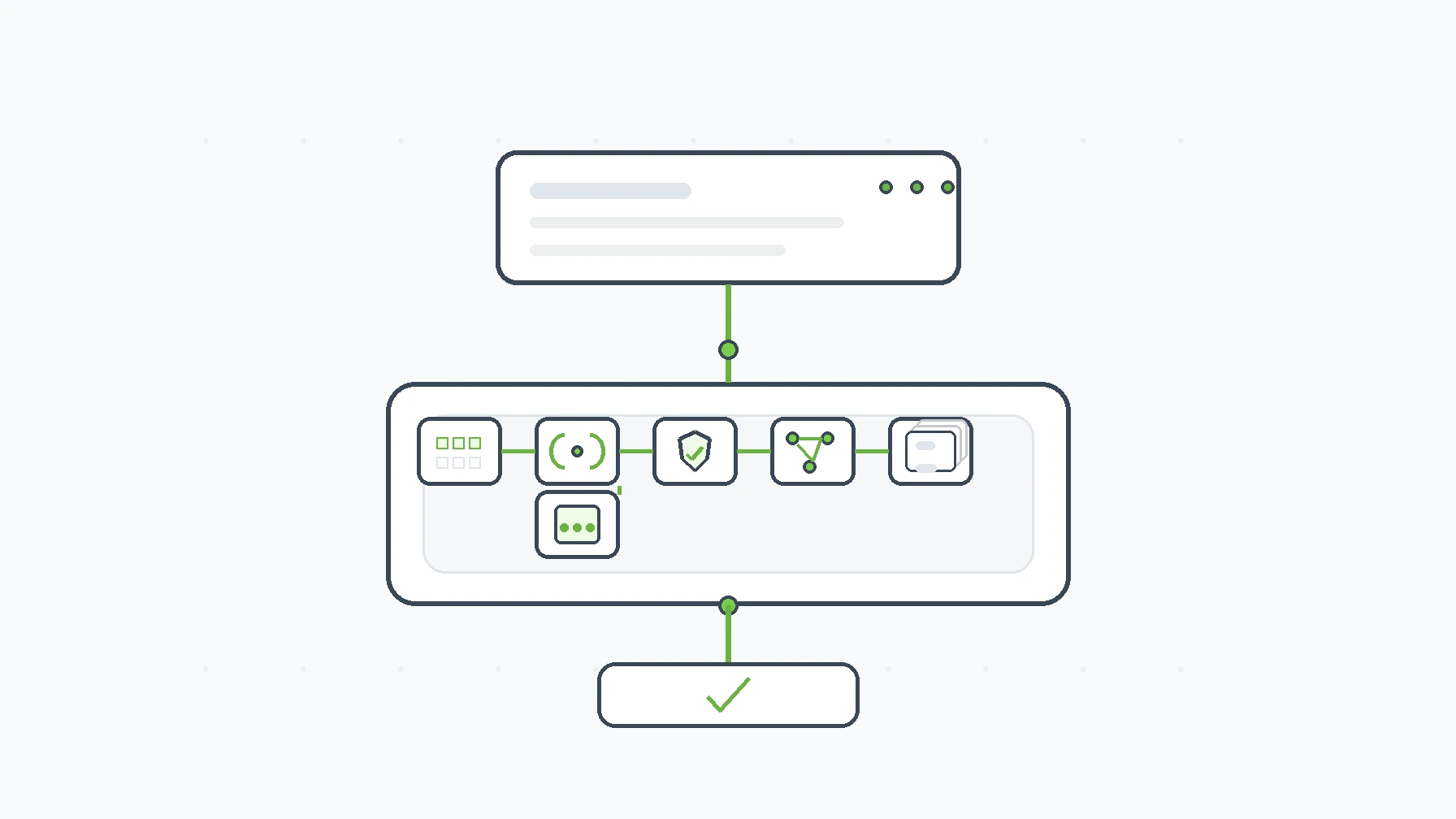
The form layer is often more important than teams expect, but it is rarely the company's unique invention. Customers may care deeply that a portal works, a claim is approved, a patient workflow moves forward, or an internal process is auditable. They usually do not care that every form schema, API endpoint, revision record, permission model, and submission event handler was handcrafted for that project.
That is where Form.io's Enterprise Form Builder and Digital Forms & APIs story becomes a make-versus-buy argument. Business users and implementers can work with forms while developers still integrate against APIs and platform artifacts. The result is not a toy no-code layer. It is a governed forms and API layer that can sit inside real applications.
In a make vs buy analysis, that distinction keeps the buyer focused on which layer should be owned and which layer should be standardized.
Form.io should not be framed as replacing the full application stack. Developers still own the surrounding product, identity decisions, custom services, integration design, deployment practices, and edge cases. The stronger claim is narrower and more credible: when forms, submissions, APIs, permissions, Actions, revisions, and evidence are common infrastructure, buying that layer can reduce long-term liability.
The make vs buy analysis should therefore separate application differentiation from the governed platform layer that every team would otherwise rebuild.
Proof point: speed without surrendering architecture
This page needs proof about the build-versus-buy tradeoff, not another broad scale case study. The CHESS Health case study is a better fit because the headline compares time-to-market directly: six weeks instead of six months.
The important point is not just speed. Form.io describes CHESS Health as dealing with EMRs, EHRs, interoperability, strict security and compliance requirements, sensitive data in its own environment, and legacy integrations. That is exactly the kind of scenario where generating everything from scratch can look fast at first but create a platform ownership burden the team did not mean to accept.
The lesson for AI-generated platforms is simple: speed is valuable when the control surface is already designed. If AI helps a team compose around governed Form.io infrastructure, the speed can be useful. If AI generates the infrastructure layer itself without durable contracts, permissions, evidence, and operations, the organization may only be accelerating future maintenance.
That is why the make vs buy analysis should treat long-term operating responsibility as a primary criterion.
AI should accelerate composition, not erase governance
AI still has a role in a buy decision. It can help generate forms, assemble workflows, draft integrations, create tests, document APIs, and help developers move faster around a governed substrate. Form.io's Agentic Toolset is relevant because it gives agentic coding teams Form.io-aware patterns instead of leaving each AI assistant to improvise.
Runtime AI needs a separate boundary. Form.io UAG matters when agents need governed access to forms, submissions, resources, APIs, or workflow actions after the system is live. That distinction keeps the architecture honest: build-time AI can accelerate creation, while runtime governance controls what agents can see and do.
The OWASP Top 10 for Large Language Model Applications reinforces the need for that separation. LLM applications can fail through prompt injection, excessive agency, sensitive data exposure, supply-chain weaknesses, and insecure output handling. Buying a governed platform layer does not solve every AI risk, but it gives teams a stronger place to put the operational controls.
What buyers should inspect before deciding
Start with the artifacts that will still matter six months after launch. Inspect the form schema, resource model, generated API behavior, permission model, submission lifecycle, workflow Actions, revision history, audit logs, deployment boundary, and integration path into systems of record.
Form.io roles and permissions should be reviewed before assuming a generated platform can enforce the same access model. Form.io Actions should be reviewed before assuming submission lifecycle behavior belongs in custom code.
Form.io form revisions should be reviewed before assuming a generated app can explain which definition governed an older record.
Security and compliance teams should also ask how the platform aligns with information-security management expectations. ISO/IEC 27001 does not choose the product for the buyer, but it keeps the conversation focused on responsibilities, controls, risk treatment, and operating discipline.
A practical decision sequence
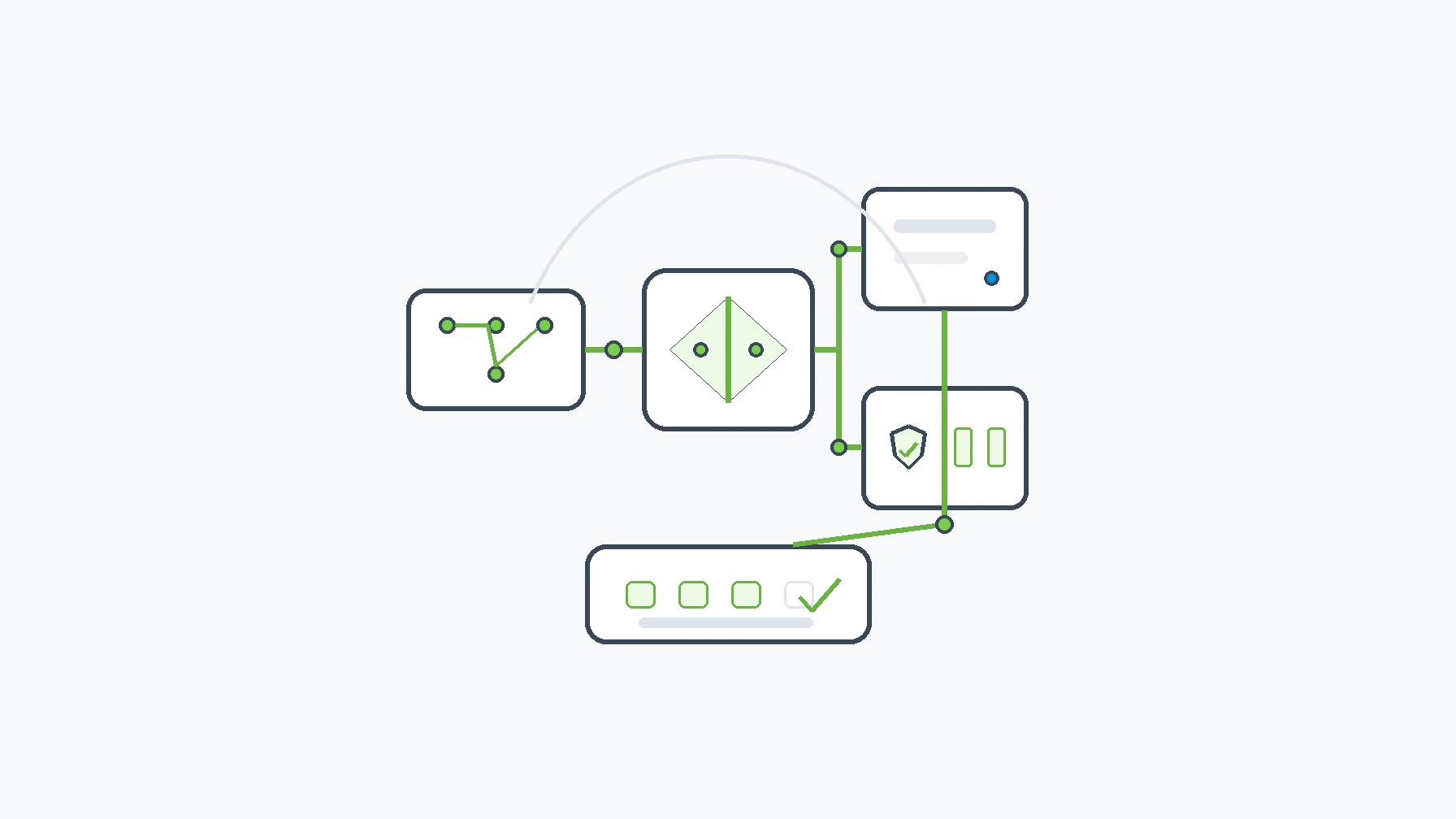
Use one real workflow as the test. Map the fields, validation rules, submitter roles, reviewer roles, downstream systems, evidence requirements, audit questions, AI-assistance opportunities, and deployment constraints. Then divide the system into two categories: what is truly differentiating, and what is repeated infrastructure.
If the differentiating work is the product experience, business rules, domain model, customer portal, reporting workflow, or integration strategy, keep building there. If the repeated work is forms, submissions, APIs, permissions, workflow triggers, revisions, PDF output, signatures, or audit evidence, evaluate whether Form.io should carry that layer.
The strongest make vs buy analysis is rarely ideological. It is architectural. Build what creates durable advantage. Buy the infrastructure that prevents every team from rebuilding the same governed substrate differently.
What not to overclaim
Form.io does not remove the need for developers, platform ownership, product architecture, security review, or operational discipline. It is not a magic replacement for the application stack. That is not the value.
The value is that teams can stop treating forms, APIs, submissions, permissions, workflow Actions, revisions, and audit evidence as disposable scaffolding. For AI-generated platforms, that matters because scaffolding becomes permanent faster than anyone expects. The generated prototype can become the business system before the team has decided who owns its risks.
If the workflow is simple and low risk, generate it, use a lightweight tool, or choose a hosted builder. If the workflow becomes application infrastructure, the buy decision deserves a serious look.
FAQ
What does make vs. buy mean for AI-generated platforms?
It means deciding whether to generate and own the platform layer yourself or buy governed infrastructure for the repeatable parts of the system, such as forms, APIs, submissions, permissions, workflows, and evidence.
When should a team build?
Build when the workflow or platform behavior is a core proprietary advantage and the team is ready to own security, testing, deployment, operations, and maintenance for the life of the system.
When should a team buy Form.io infrastructure?
Buy Form.io infrastructure when the team needs governed forms, generated APIs, submissions, permissions, workflow Actions, revisions, audit trails, PDF workflows, or deployment control as reusable infrastructure.
Can AI still help if the team buys Form.io?
Yes. AI can help teams compose, implement, document, and extend Form.io-based workflows. The difference is that AI works around a governed platform layer instead of inventing the whole layer from scratch.
Does Form.io replace the whole application stack?
No. Form.io is infrastructure for forms, APIs, submissions, validation, permissions, workflow-related actions, and evidence. The surrounding application, product logic, integrations, and user experience still need ownership.
What is the biggest risk of AI-generated platforms?
The biggest risk is mistaking a fast prototype for an operating platform. Generated code still needs durable contracts, access control, audit evidence, monitoring, deployment process, and maintenance.
How should security teams evaluate the decision?
Security teams should inspect API behavior, authentication, authorization, data exposure, logging, audit trail, change control, deployment boundary, and how AI-generated or AI-assisted code will be reviewed.
What evidence should buyers ask to see?
Ask to see the schema, API behavior, permissions model, revision history, submission lifecycle, action logs, audit records, deployment model, and how older records remain explainable after form changes.
When is a lightweight generated app enough?
A lightweight generated app may be enough for a short-lived prototype, low-risk internal utility, or workflow that does not collect sensitive data, drive operational decisions, or need audit evidence.
What is the practical next step?
Map one real workflow and separate differentiating application behavior from repeated infrastructure. Then decide which layer deserves custom ownership and which layer should be governed infrastructure.
For teams deciding whether to generate the whole platform or build on a governed substrate, Form.io is strongest when the repeated infrastructure layer needs to be controlled, integrated, and audited from the start.