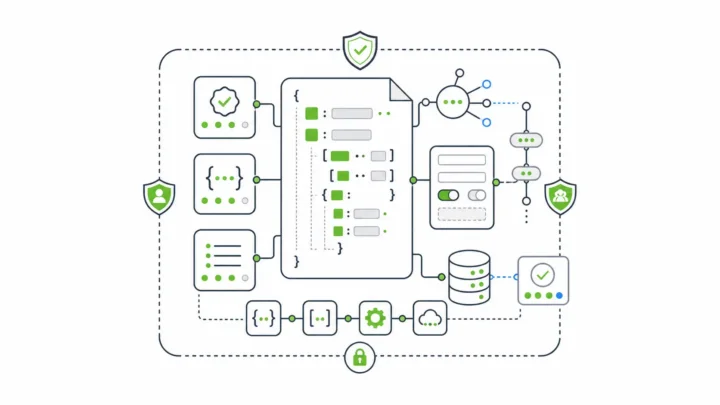

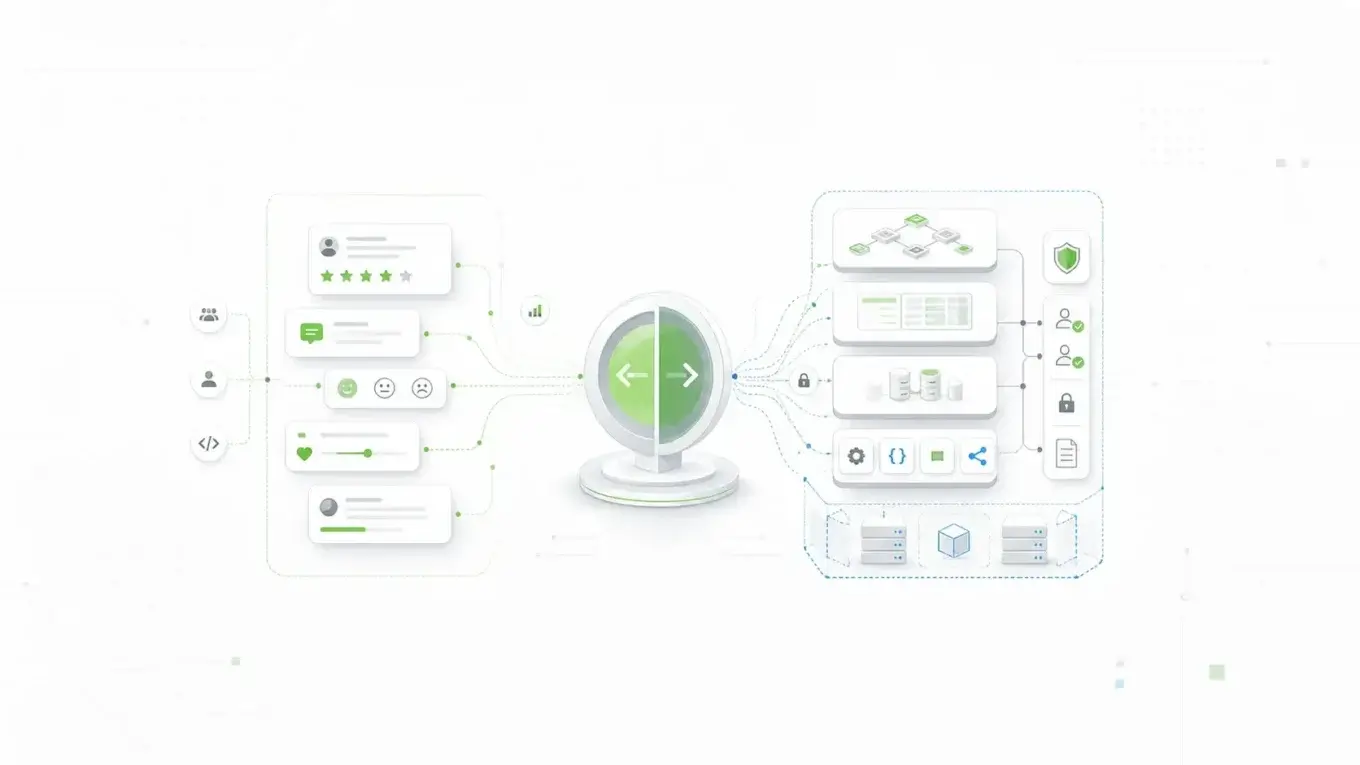
Organizations looking for a self-hosted alternative to Typeform or a privacy-first feedback platform often compare Formbricks and Form.io. Both have open-source and self-hosted evaluation paths, but they solve fundamentally different problems.
Formbricks focuses on surveys, experience management, and product feedback. Form.io is designed as application infrastructure for forms, APIs, workflows, and enterprise governance, including agentic workflow patterns where governed forms and submissions need to stay connected to permissions, validation, actions, and audit evidence.
That distinction matters before the feature checklist begins. The question is not whether both products can build forms. It is whether the form is mainly a survey or part of the application architecture.
Key takeaways
- Formbricks is best understood as an open-source experience management and survey platform for link surveys, website surveys, in-app surveys, email surveys, and customer feedback workflows.
- Form.io is best understood as form-driven application infrastructure: JSON-defined forms, generated APIs, submission data, permissions, workflow actions, self-hosted deployment, and governed patterns for agentic workflows.
- Formbricks is a credible choice when the buyer wants a self-hosted Typeform alternative or privacy-first feedback tool.
- Form.io is the better fit when forms need to be embedded in a product, reused across tenants, governed through submission-level permissions, exposed through APIs, managed across enterprise environments, or used as structured context for agentic workflows.
- The main question is not “Which one is open source?” It is “Does your form need to collect feedback, or does it need to become part of the application architecture?”
Quick comparison
The comparison below summarizes the product jobs documented in Formbricks’ platform, API, self-hosting, and licensing docs and Form.io’s JSON schema, generated API, self-hosting, and embedded builder pages.
| Decision area | Formbricks | Form.io |
|---|---|---|
| Primary job | Open-source surveys and experience management | Form and API infrastructure for embedded, governed applications and agentic workflows |
| Best use case | Feedback, NPS, CSAT, product surveys, link surveys, in-app micro-surveys | Regulated intake, customer-facing product forms, portals, workflow forms, schema-driven applications, and agentic workflow interfaces |
| Form model | Survey flows and question types for response collection | JSON schemas that define UI, validation, submission structure, and backend APIs |
| API model | Public Client API for survey interactions and Management API for surveys, contacts, responses, and webhooks | Form and resource paths generate schema and submission endpoints |
| Embedding | Website, app, email, and link survey delivery | Renderer and builder embedded directly into customer-controlled applications |
| Governance center | Self-hosting, privacy, survey data control, open-core packaging | Project, form, and submission permissions; roles, actions, audit patterns, stages, and deployment boundaries |
| Best buyer | Product, growth, customer experience, and feedback teams that need open-source surveys | Development teams building form-heavy products, portals, and enterprise workflows |
| Wrong fit warning | Not designed to be the form/API layer for every application workflow | Not the lightest answer for simple surveys or one-off feedback forms |
What Formbricks is good at
Formbricks deserves a fair reading. Its official docs describe it as an open-source platform for collecting and analyzing feedback from customers, users, and employees through targeted surveys.
That is a real product category.
If your team needs NPS surveys, CSAT surveys, product feedback, onboarding feedback, churn surveys, website surveys, in-app micro-surveys, or link-based surveys, Formbricks is built for that motion. Its homepage frames the product around privacy-first experience management, feedback collection across websites and apps, and self-hosting when a team wants more control over data.
Its open-source form builder page also makes the category clear: unlimited forms, unlimited responses, open-source survey building, conditional logic, multi-language surveys, integrations, hidden fields, partial submissions, single-use links, and custom domains.
That matters because the Typeform-alternative search is not only about technical architecture. Many buyers really do want a better survey tool: more generous limits, more privacy control, self-hosting, open-source code, and enough product polish for feedback collection.
Formbricks has a strong claim there.
The question is what happens when the form is not mainly a survey.
What Form.io is good at
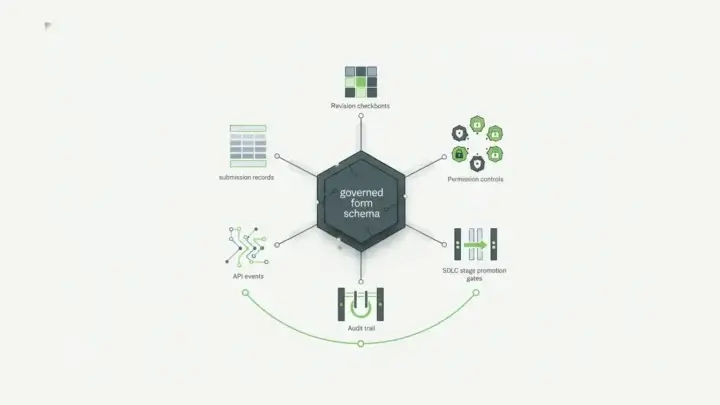
Form.io is strongest when the form is not just a feedback surface, but part of the application contract. Its value shows up when a team needs JSON-defined forms, generated APIs, submission records, validation, permissions, workflow actions, audit patterns, and self-hosted deployment to stay aligned.
That includes regulated intake, customer portals, tenant-managed SaaS forms, healthcare and financial workflows, government services, insurance claims, and internal processes where the submitted record needs to remain explainable over time.
It also matters for agentic workflows. If an AI agent or human-in-the-loop workflow needs to ask for data, validate fields, route submissions, require confirmation, or operate inside an enterprise governance boundary, the form layer needs to be more than a survey delivery tool. Form.io gives developers a governed form and API layer that can become part of that workflow infrastructure.
So the Form.io category should appear early in the decision: it is not the survey tool in this comparison. It is the form infrastructure layer when forms, submissions, APIs, and workflow behavior need to be owned by the application.
What changes when a survey becomes application infrastructure
A survey collects feedback. Application infrastructure carries business process.
That line gets blurry at first. A customer feedback form can become a support workflow. A product survey can feed account health. A compliance questionnaire can become an auditable record. A tenant-specific intake form can become a feature inside a SaaS platform. A public-facing form can become the first step in a case management workflow.
At that point, the evaluation changes.
The buyer is no longer asking only whether the tool can collect a response. The buyer is asking:
- Who owns the schema?
- What validates the submission?
- Which API receives and exposes the data?
- Can the form be embedded inside our product?
- Can customers build or modify their own forms inside our app?
- Can roles and permissions apply at the form and submission level?
- Can the same form move through development, test, and production?
- Can historical submissions remain explainable after form definitions change?
Those are Form.io questions.
Form.io’s drag-and-drop form builder and APIs page describes the builder as a JSON schema editor that defines form UI, validation, the data model, and REST API endpoints together. That is the architectural difference.
Formbricks is strong when the workflow is survey-led. Form.io is strong when the form is a contract between the user interface, submitted data, backend API, permissions, and downstream process.
Survey flows vs schema contracts
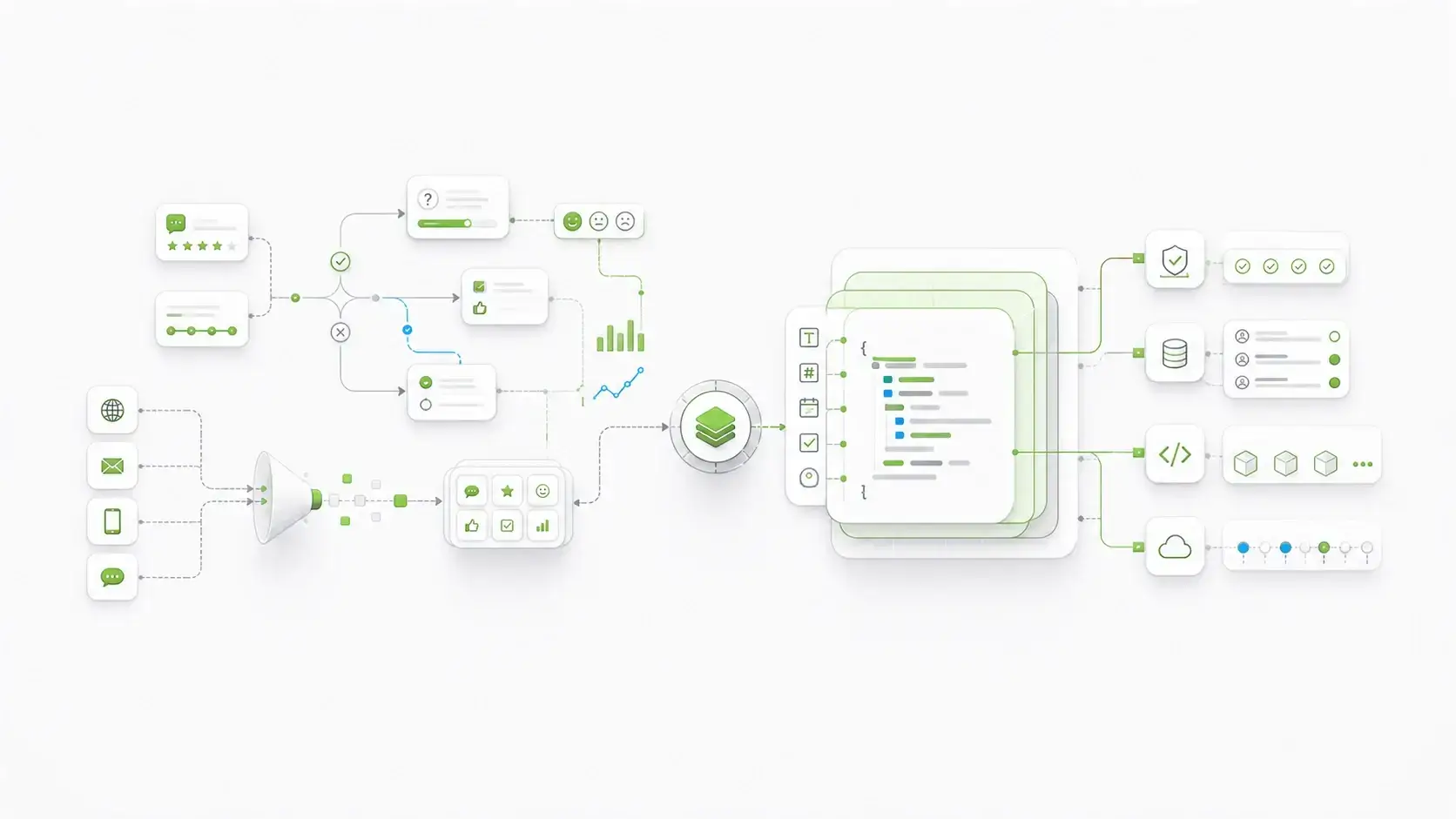
Formbricks is optimized around survey delivery. Its own Typeform-alternative page describes link surveys, in-app micro-surveys, pop-up surveys, Dockerized self-hosting, an open API, and open-source customization.
That is useful when the main asset is a survey.
Form.io starts from a different object: the form schema. Every Form.io form is a JSON document that defines the title, path, display mode, components, validation, conditional logic, and submission data shape.
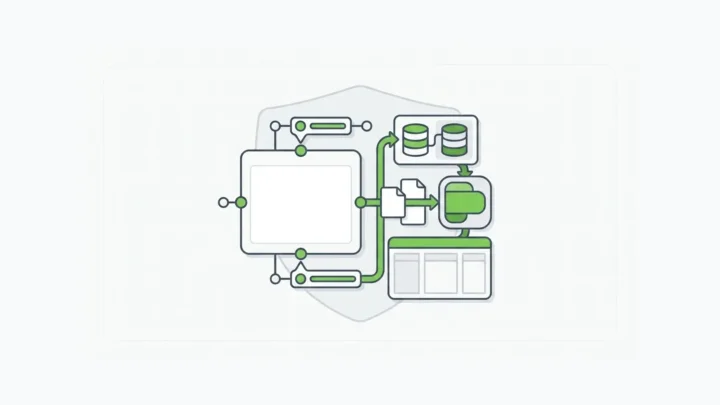
That schema can render in an application, accept submissions, validate data, and create predictable API behavior. The form is not only a front-end artifact. It is the source of truth that connects rendering, validation, submission storage, and backend endpoints.
This matters when multiple systems need to trust the same form definition.
If the form is only a feedback survey, a survey-first platform is usually enough. If the form is a reusable business object across applications, tenants, workflows, and environments, the schema needs to carry more responsibility.
That is where Form.io’s model becomes more valuable.
API and data model comparison
Formbricks has APIs, and the comparison should say that clearly. Its REST API documentation describes two API surfaces: a Public Client API for frontend survey interactions and a Management API for backend management tasks. The exposed methods include displays, responses, contacts, surveys, action classes, contact attributes, and webhooks.
That API surface fits a survey and feedback product.
Form.io’s API model is different because the form path and schema define the submission API itself. The Forms from JSON documentation explains that a form path can create endpoints for retrieving the schema and creating, listing, reading, updating, and deleting submissions.
That changes the center of gravity.
In Formbricks, the API helps manage and operate surveys. In Form.io, the form can define part of the application data layer.
For feedback collection, Formbricks’ model is sensible. For application intake, regulated submissions, onboarding flows, service requests, claims, eligibility workflows, or tenant-managed forms, Form.io’s generated form/submission API model is usually the more direct fit.
Embedding and white-labeling
Formbricks can reach users in useful places: websites, apps, email, pop-ups, and links. That is exactly what a survey platform should do. For customer experience teams, that flexibility matters because feedback is most useful when it appears at the right moment in the product journey.
Form.io uses embedding for a different purpose.
The Form.io open-source page explains that forms are rendered from JSON using Form.io renderers for frameworks such as Vanilla JavaScript, Angular, React, and Vue. The Enterprise Form Builder Module goes further: it lets teams embed a customizable, white-labeled form-building interface directly into their own applications.
That is not the same as embedding a survey.
It means a SaaS platform, healthcare product, government portal, insurance system, or internal enterprise app can expose governed form creation to its users without sending those users into a separate form product. The application still controls navigation, authentication, permissions, branding, allowed components, data model, and workflow behavior.
That is a major distinction for platform teams.
If you want to ask users for feedback, Formbricks may be the cleaner answer. If your customers need to build and manage forms inside your product, Form.io fits the architecture more directly.
Self-hosting, licensing, security, and governance
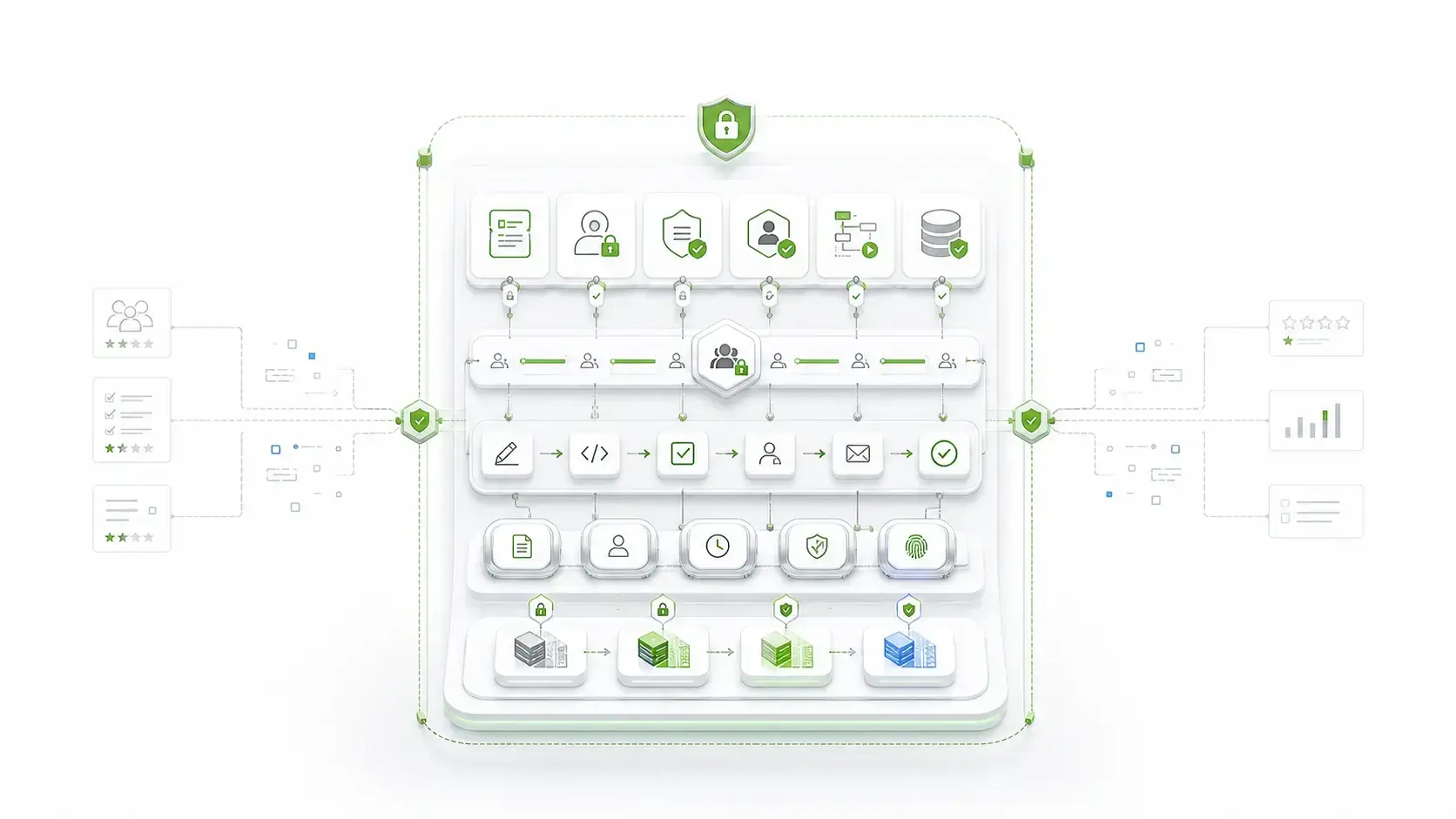
Do not reduce this comparison to “self-hosted vs not self-hosted.” Formbricks is a legitimate self-hosted option. Its self-hosting docs describe cloud hosting, free self-hosting, self-hosting with an Enterprise Edition license, Docker setup, one-click setup, migration, configuration, and integrations.
Formbricks’ license docs also give useful detail. The core source code is AGPLv3, while larger-team and enterprise functionality lives under a separate enterprise license. The Community Edition includes self-hosting for commercial purposes, unlimited surveys, unlimited responses, unlimited users, API access, SDKs, website and app surveys, webhooks, multi-language surveys, and integrations. Enterprise features include items such as teams and access roles, audit logs, SSO, two-factor authentication, contact management, quota management, and prioritized support, depending on the license configuration.
That is a strong open-source story, but buyers need to understand the packaging.
Open source and self-hosting are valuable. They are not the same thing as complete application governance.
GitHub’s 2025 Octoverse report shows why this nuance matters. It says 63% of all repositories are public or open source, while 81.5% of contributions happen in private repositories (GitHub Octoverse 2025). Modern software teams often depend on open source while doing most operational work inside private, governed systems.
Form.io’s self-hosted model is built for that private operational side. Its self-hosted forms for enterprise page describes Form.io as deployable infrastructure that can run in AWS, Azure, Google Cloud, private data centers, or local Docker-based environments. It also describes separate components such as Enterprise Server, PDF Server, Developer Portal, renderer libraries, deployment environments, file storage, database requirements, and dev/test/prod patterns.
The key point is not that Form.io is self-hosted and Formbricks is not. Both can be self-hosted.
The key point is what is governed inside that boundary.
Formbricks governs surveys, feedback, contacts, responses, and experience-management workflows. Form.io governs forms, resources, submissions, generated APIs, roles, permissions, actions, environments, and form lifecycle.
Those are different control surfaces.
Pricing basis and scale predictability

Formbricks has a strong Community Edition story for survey teams: AGPLv3 core access, free self-hosting, unlimited surveys, unlimited users, and unlimited responses. Teams evaluating Enterprise Edition should verify response, feature, workspace, support, and private-fork requirements directly against the current license table.
Form.io’s pricing story is different.
The point is not that Form.io is cheaper in every scenario. The point is that the buying model is designed around configured form/API infrastructure. Form.io’s configuration-based pricing page lists unlimited API calls, unlimited submissions, unlimited developers and form builders, and unlimited forms and resources in relevant enterprise configurations.
That difference matters when forms become a platform feature.
If every tenant, customer, department, agency, or product line can create forms, usage can grow in ways that are hard to forecast. A per-response survey model may be fine for customer feedback. A configuration-based infrastructure model may be a better fit when submissions, forms, builders, tenants, and APIs are part of the product architecture.
The buyer should ask what is scaling.
If survey responses are scaling, Formbricks may fit. If application forms, submitted records, generated endpoints, customer form builders, and environments are scaling, Form.io deserves closer evaluation.
Customer proof: when form infrastructure scale becomes real
Form infrastructure arguments can sound abstract until the volume shows up.
Form.io’s public case-study pages describe a publicplan GmbH implementation supporting more than 400 services and 1,000+ forms, and a Safety Mojo implementation that Form.io says saved 6-12 months of development time. Those are Form.io-published examples, so they should be read as customer proof rather than independent analyst validation. The Safety Mojo page also includes the customer proof line, “Form.io cleans up all the dirty work and does it for you” (publicplan case study, Safety Mojo case study).
Those examples point to the real Form.io use case.
The hard part at that scale is not drawing a field. It is keeping the form, schema, submission record, API behavior, permissions, environment boundary, and downstream workflow aligned as requirements change.
IBM’s 2025 Cost of a Data Breach report puts the global average breach cost at $4.4 million and says 63% of organizations lacked AI governance policies (IBM Cost of a Data Breach 2025). That is not a form-specific statistic, and it should not be treated as one. It is a reminder that data workflows and governance boundaries are not minor implementation details when forms collect sensitive or operationally important data.
For teams handling simple feedback, that level of infrastructure may be unnecessary. For teams building regulated intake, customer portals, financial workflows, healthcare workflows, insurance claims, government services, or multi-tenant form platforms, it is often the main issue.
When Formbricks is the better choice
Formbricks is likely the better fit when your team needs:
- a self-hosted Typeform alternative
- product feedback surveys
- NPS, CSAT, CES, onboarding, churn, or market research surveys
- in-app micro-surveys and website surveys
- open-source survey tooling with a clear cloud/self-host path
- privacy-first feedback collection
- a survey API for responses, contacts, and webhooks
- broad survey features without building a survey platform from scratch
In those cases, Form.io may be too much infrastructure. If the primary object is a survey and the output is feedback analysis, Formbricks is a natural choice.
When Form.io is the better choice
Form.io is likely the better fit when your team needs:
- embedded forms inside a customer-facing application
- white-labeled form building inside your own product
- JSON-defined forms that drive rendering, validation, submissions, and APIs
- generated form APIs instead of hand-built backend endpoints for every form
- form, project, and submission permissions
- dev/test/prod form environments and SDLC-aware form promotion
- multi-tenant form workflows
- audit-relevant controls such as permissions, deployment boundaries, submission history, and security/compliance features
- configuration-based pricing for high-volume form infrastructure
- forms that support workflows beyond feedback collection
- governed form and submission context for agentic workflows
In those cases, the form is no longer just a question flow. It is a governed application layer.
The decision rule
Choose Formbricks if the main job is collecting feedback through open-source, self-hosted surveys.
Choose Form.io if the main job is making forms, submissions, APIs, permissions, workflow behavior, and agentic workflow context part of your product or enterprise application infrastructure.
That is the real comparison.
Formbricks helps teams own survey and feedback collection. Form.io helps teams own the form layer when it becomes part of the architecture.
FAQ
Is Formbricks a form builder?
Yes, but it is better understood as an open-source survey and experience management platform. It can build forms and surveys, but its strongest fit is feedback collection across websites, apps, emails, and shared links.
Is Form.io a Formbricks alternative?
Form.io can be an alternative when the buyer’s requirement is governed forms, generated APIs, embedded form rendering, self-hosted deployment, and application infrastructure. It is not a direct replacement for every survey, feedback, or experience-management use case Formbricks supports.
Which is better for a self-hosted Typeform alternative?
Formbricks is usually the stronger fit for a self-hosted Typeform alternative. It is built around surveys, feedback collection, open-source access, and privacy-first response workflows.
Which is better for embedded forms?
Form.io is usually the stronger fit when forms need to be embedded into a customer-facing product or enterprise application as a governed runtime. Formbricks can embed surveys, while Form.io is built around embeddable form rendering and embedded form building.
Can Formbricks be self-hosted?
Yes. Formbricks documents free self-hosting and self-hosting with an Enterprise Edition license. Buyers should verify which features are included in Community Edition and which require Enterprise Edition.
Can Form.io be self-hosted?
Yes. Form.io supports self-hosted deployment with API server environments, portal/authoring environments, renderer libraries, PDF Server options, customer-controlled databases, file storage choices, and common dev/test/prod deployment structures.
Does Formbricks have an API?
Yes. Formbricks documents a Public Client API for frontend survey interactions and a Management API for backend management tasks such as surveys, contacts, responses, action classes, and webhooks.
Does Form.io generate APIs from forms?
Yes. Form.io’s distinction is that form schemas and paths can directly define schema and submission endpoints, making the form itself part of the application API contract.
Which is better for regulated form workflows?
Form.io is usually the better fit when the regulated workflow depends on form schemas, submission permissions, generated APIs, deployment boundaries, submission history, and long-term governance of form changes. Formbricks may still fit regulated feedback collection when a survey-first model is enough.
Which is better for customer-facing SaaS platforms?
Form.io is usually the stronger fit when SaaS customers need to create or use forms inside your product experience, especially with white-labeling, tenant boundaries, permissions, and governed form behavior. Formbricks is stronger when the SaaS product mainly needs in-app feedback and customer surveys.
How should teams evaluate Formbricks vs Form.io?
Start by deciding whether you are choosing a survey platform or a form infrastructure layer. Then compare deployment, embedding, API behavior, permissions, licensing, pricing basis, audit needs, and who will maintain the form model over time.
Build form infrastructure without turning every form into a custom project
When forms become part of the application architecture, the right platform needs to do more than collect responses. It needs to keep schemas, submissions, APIs, permissions, and workflows aligned as the system grows.
Try Form.io for free if your team needs self-hosted form infrastructure that developers can embed, govern, and scale inside the applications you already own.
Try Form.io for free