
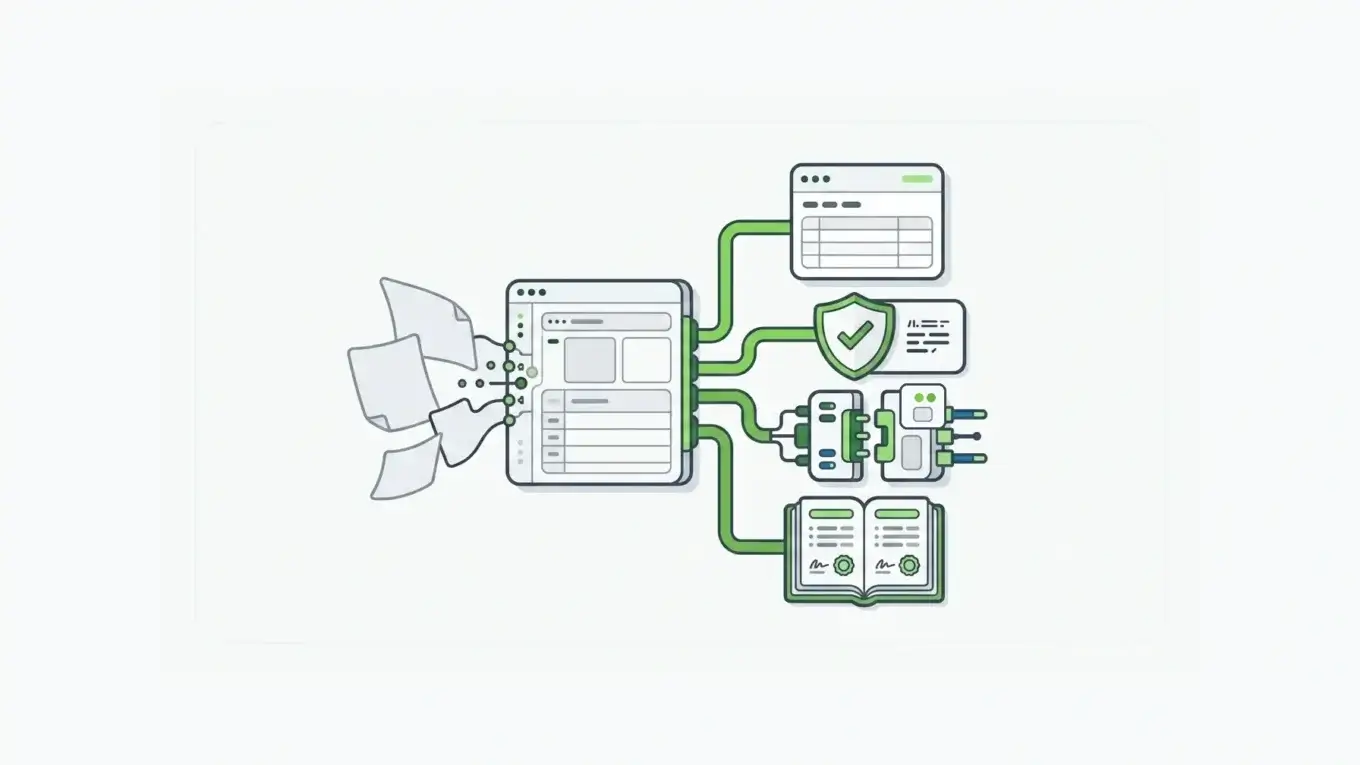
Structured data vs unstructured data explains why AI can interpret language but still needs governed records before it can operate a business process safely.
The mistake is thinking of structured data as an input-format preference. The structured data vs unstructured data distinction is really an operating-boundary question. For production AI workflows, structure tells the system what a record is, which fields exist, which values are valid, who can see them, which downstream systems are allowed to receive them, and what evidence must remain when an action is taken.
That is why better prompts are not enough. A prompt can ask an agent to be careful. A schema, permission model, API contract, and audit trail give the organization something enforceable.
The Real Problem Is Not Understanding. It Is Action.
Large language models are good at reading ambiguous material. They can summarize a transcript, extract intent from a support request, and infer that a customer is asking for help. But production workflows do not end at interpretation. They move data into systems, trigger approvals, create documents, update records, and expose sensitive context to people and tools.
That is where unstructured input becomes dangerous. If the agent receives a paragraph, a PDF, or a chat history without a reliable data contract, it may understand the general request while still missing the operational requirements. Which field is the legal name? Which address is the current address? Which attachment is evidence? Which user is allowed to approve? Which value must be preserved exactly because it was submitted under a prior form version?
In practical terms, structured data vs unstructured data is the difference between a workflow the system can validate and a workflow the agent has to infer.
The NIST AI Risk Management Framework is useful here because it frames trustworthy AI as a managed system of risks, not a one-time model capability. In real workflows, many of those risks show up at the boundary between AI interpretation and system action.
Structured Data vs Unstructured Data: AI Needs A Contract, Not Just Context.
For AI to operate inside a business process, it needs context that can be trusted by the surrounding system. That means field names, field types, required values, validation rules, state, identity, permissions, and lifecycle history. Without those pieces, the agent is forced to treat workflow data as prose.
JSON Schema matters because it gives teams a shared way to describe the shape of data. Form.io builds on that pattern by using JSON-powered forms and resources to define how data is collected, validated, submitted, revised, and exposed through APIs.
This is where Form.io form JSON becomes more than a developer detail. The schema is the shared definition that can drive the user experience, submission payload, validation behavior, API surface, and later AI context.
The Five Structured Layers AI Needs
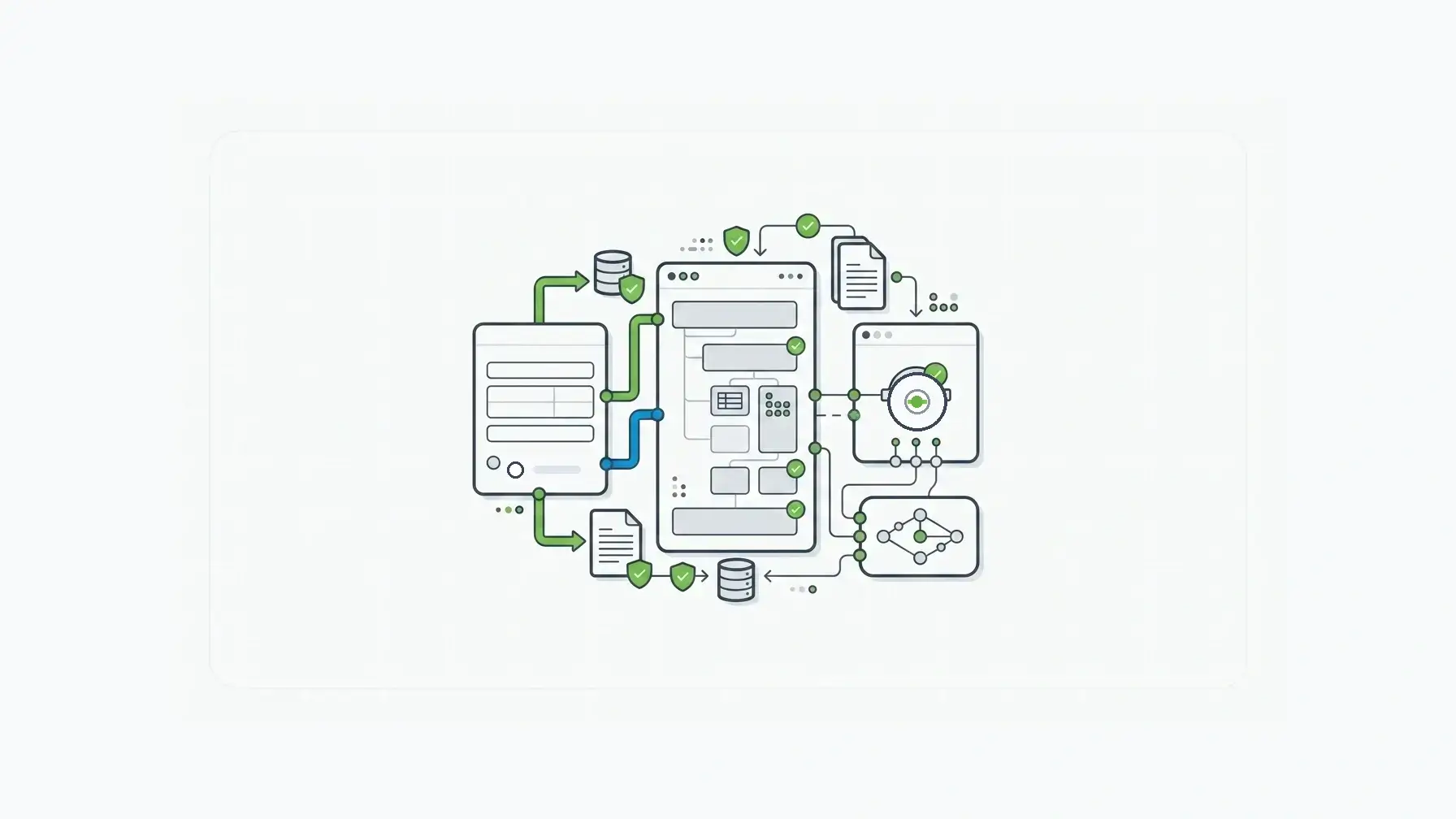
Production AI workflows usually need five kinds of structure before they can be trusted.
| Structured layer | What it answers | What breaks without it |
|---|---|---|
| Data shape | What fields exist, what they mean, and which values are valid | The agent guesses from text and creates inconsistent records |
| Identity context | Who is acting and which role applies | The agent sees or changes data outside the user's authority |
| Action boundary | Which tools, APIs, approvals, and side effects are allowed | A recommendation becomes an uncontrolled system update |
| Revision history | Which schema and record state existed when the work happened | Teams cannot explain old decisions after the workflow changes |
| Evidence trail | What was read, changed, approved, generated, or sent | Reviews depend on screenshots, exports, or memory |
These layers are difficult to bolt on later. A team can prototype AI over a pile of documents, but the production version still has to answer field-level, user-level, system-level, and evidence-level questions.
That is why structured data vs unstructured data belongs in the architecture review, not only in the data glossary.
The OWASP Top 10 for Large Language Model Applications makes the same class of concern concrete by naming risks around excessive agency, sensitive information disclosure, insecure output handling, and supply chain behavior. Those risks are easier to govern when the workflow exposes structured data and constrained tools instead of open-ended text.
Form.io Turns Collection Into A Governed Data Layer.
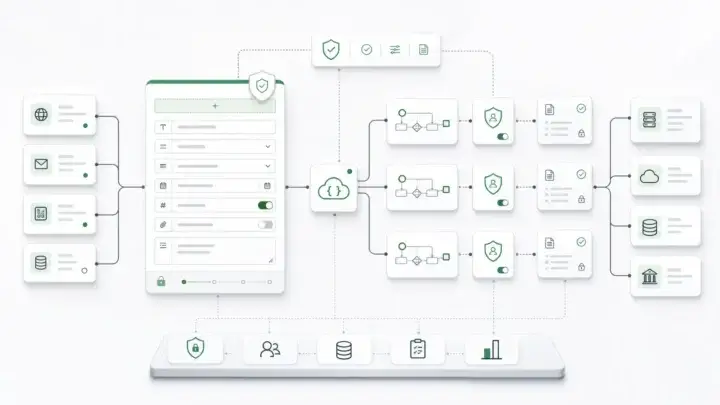
Form.io is strongest when the form is not just a page. It is the intake and workflow boundary for an application. The form defines the structure. The submission becomes the record. The API exposes controlled access. Permissions determine who can read or change the data. Actions connect the lifecycle to downstream services.
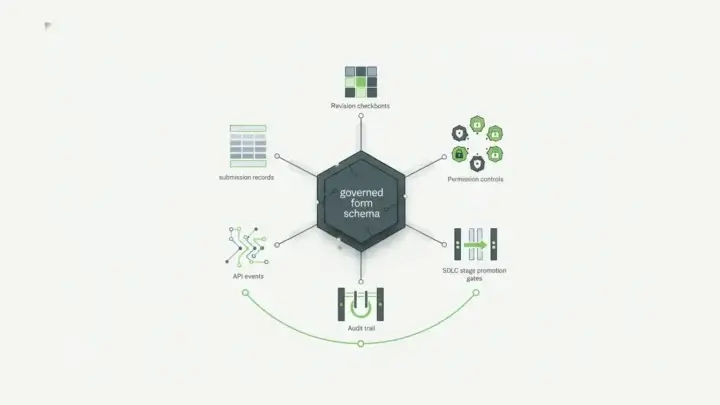
That model matters for AI because an agent can only be governed against the structures the platform actually exposes. A disconnected form tool might collect a field. A governed application layer can say which schema version created the field, which user submitted it, which role can view it, which webhook ran, and which record should remain available for review.
For teams comparing structured data vs unstructured data, this is the operational point: the governed record is what lets AI participate without inventing the workflow boundary.
Teams evaluating Form.io should inspect forms from JSON Schema and form revisions together. The first shows how structured definitions can become form experiences. The second matters because AI workflows need to explain not only what a record says now, but what definition governed the record when it entered the system.
APIs Are Where Structured Data Becomes Operational.
AI does not become useful in production because it can talk. It becomes useful when it can work with governed systems. That requires APIs with predictable inputs, outputs, permissions, and failure states.
The OpenAPI Specification is relevant because it represents APIs as contracts that humans and machines can inspect. In the Form.io model, generated APIs around forms, resources, and submissions give teams a more stable surface for automation than spreadsheet exports, copied text, or one-off prompt adapters.
This does not mean every AI workflow should write directly to production systems. It means the application should have clear boundaries for reading, validating, proposing, approving, and committing changes. Form.io API documentation is part of that evaluation because the buyer needs to understand how submissions, forms, resources, authentication, and access behave as real system surfaces.
Agentic Workflows Need Permissioned Context, Not More Raw Data.
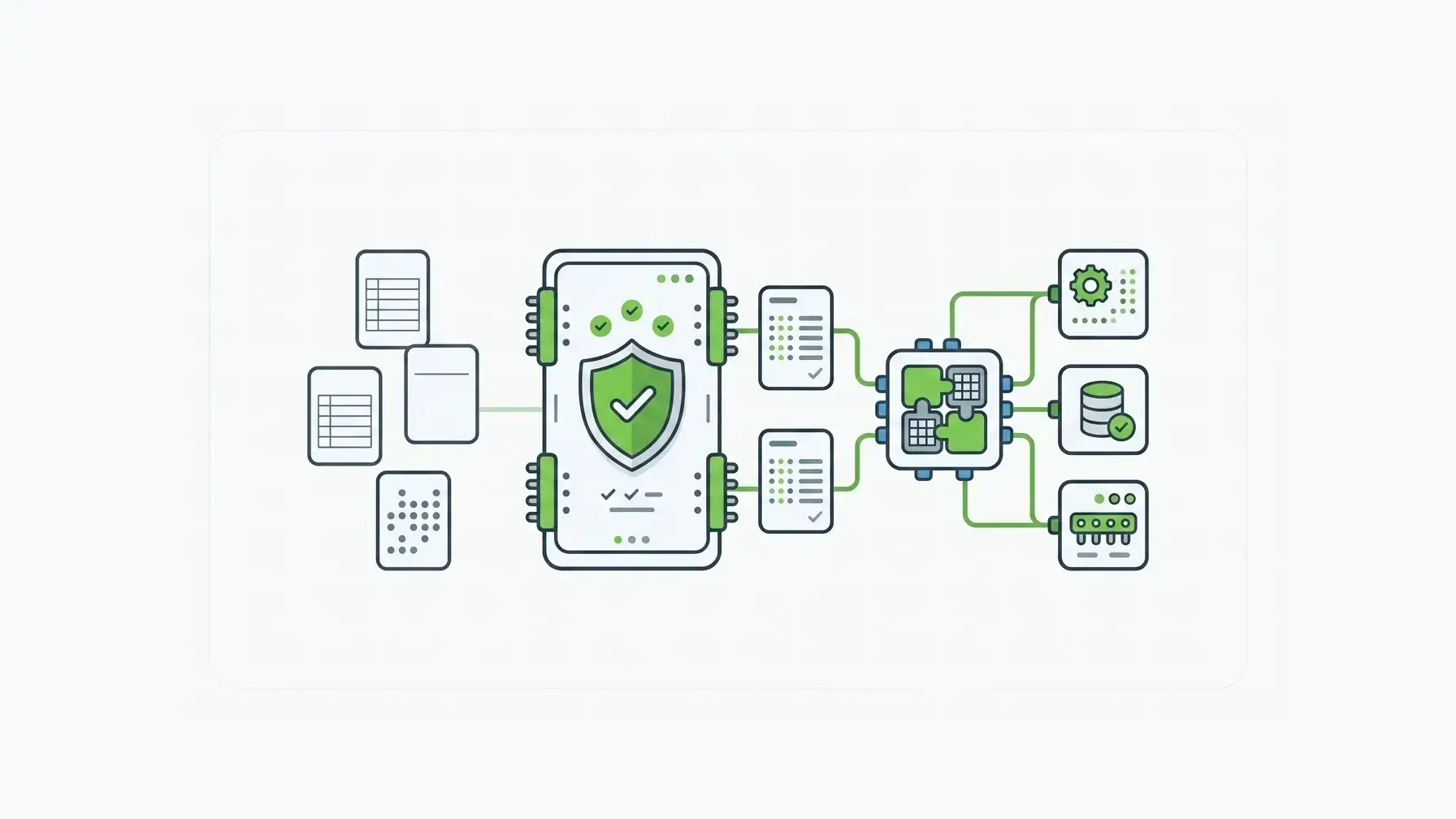
More context is not always safer. In many enterprise workflows, giving an agent more raw data increases risk because it exposes information outside the user's role, includes irrelevant history, or mixes records from different tenants, departments, cases, or environments.
The structured data vs unstructured data tradeoff matters here because raw context can expand exposure while governed records constrain what the agent can use.
The better pattern is permissioned context. The agent should receive the structured records, tools, and actions that match the workflow and user. That is the reason Universal Agent Gateway belongs in this discussion. UAG is about exposing governed Form.io structures to AI agents as controlled context and tool access, not about turning every agent loose on every system.
W3C Data on the Web Best Practices gives a broader standards reference for why data should be documented, understandable, reusable, and managed with quality in mind. AI does not remove those duties. It makes them easier to neglect if the workflow is treated as a prompt exercise instead of a data architecture problem.
Customer Proof: Structured Workflows Outlive The First Application.
The strongest proof pattern for this page is not a single AI demo. It is a customer case where structured form and data infrastructure supported a real application build under time pressure.
In the E-Risk Services case study, Form.io describes a specialty-lines insurance team building a CRM in two months instead of two years using Form.io as part of the application foundation: building a CRM took 2 months instead of 2 years. The AI lesson is straightforward. When forms, records, APIs, and workflow structures are reusable, a team has a governed operating layer that future automation can reason about.
That is different from using AI to generate a screen. The durable value is the record structure underneath the screen.
What Buyers Should Inspect Before Trusting AI Over Workflow Data.
A serious evaluation should not stop at whether the AI response sounds useful. It should inspect the records, controls, and contracts that make the response safe to use.
Start with the schema. Can the team see the exact field definitions, required values, validation rules, nested objects, and resource relationships? Next, inspect how the form renders and how the same structure becomes the submission payload. Then inspect the access model: roles, permissions, authentication, and tenant boundaries.
That inspection should make the structured data vs unstructured data boundary visible before an AI agent is trusted with workflow data.
The evaluation should also follow one submitted record through its lifecycle. Which Form.io components captured the data? Which API exposed it? Which workflow Action ran? Which revision history remained when the form changed? Which user can reconstruct the event later?
The W3C Verifiable Credentials Data Model is not a general requirement for every Form.io workflow, but it is a useful reference for one principle: when claims and records become portable or decision-relevant, structure and provenance matter.

The Practical Implementation Pattern
A practical Form.io pattern for AI-ready workflows starts before the agent is connected.
First, define the form or resource schema. Second, enforce validation and permissions in the platform. Third, expose the governed data through APIs and Actions. Fourth, decide where AI can read, summarize, draft, propose, or trigger next steps. Fifth, require review and evidence for any action that changes the operational record.
Agentic Toolset fits after that foundation exists. It is more credible to give agents access to governed structures than to ask an agent to invent structure from ungoverned inputs.
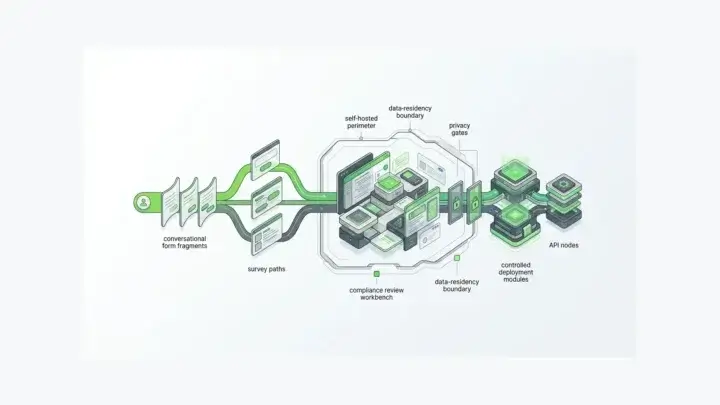
For teams that need the data boundary to live inside their own environment, Form.io's Digital Forms and APIs layer can be evaluated alongside deployment, security, and integration requirements. The key is not that AI needs a form builder. The key is that AI needs a governed data layer before it can become part of an operating workflow.
The Decision Rule
If AI only needs to help someone draft language, structured data is still useful but not always decisive.
If AI needs to interpret submissions, route work, update records, generate documents, support approvals, trigger integrations, or explain past decisions, structured data becomes mandatory infrastructure.
That is the real structured data vs unstructured data decision for production AI: whether the organization wants enforceable records or inferred prose.
That is the honest line. AI can assist with unstructured material. It cannot safely operate production workflows without stable records, validation, permissions, APIs, revisions, and evidence.
FAQ
Why does AI need structured data if it can read natural language?
Natural language helps an AI model infer meaning. Structured data lets the surrounding system validate fields, enforce permissions, call APIs, preserve evidence, and make changes without guessing.
Is structured data only a developer concern?
No. Developers need the schema, but security, compliance, operations, product, and business teams also depend on it because the schema defines how real workflow records behave.
How does Form.io create structured workflow data?
Form.io uses JSON-powered forms and resources to define fields, validation, submissions, permissions, APIs, Actions, revisions, and audit-relevant workflow records.
How does structured data reduce AI risk?
It narrows what the agent can see, what the agent can change, how values are validated, which tools are available, and what evidence remains after the action.
Does this mean every workflow needs AI agents?
No. The point is that workflows should be structured enough for automation, review, integration, and future AI use. Some workflows may remain fully human operated.
Where does UAG fit?
UAG can expose governed Form.io context and tools to agents so access is mediated through structured platform boundaries instead of improvised prompt context.
What should buyers inspect in a demo?
Ask to see the schema, generated API behavior, permission model, form and submission revisions, workflow Actions, audit evidence, deployment boundary, and how one record moves from capture to downstream use.
Can Form.io replace a full application stack?
No. Form.io provides form, data-collection, API, workflow, and governance infrastructure. Teams still own the surrounding application, integrations, identity, deployment, and business-specific logic.
What is the warning sign of a weak AI workflow platform?
If the platform can show an impressive AI answer but cannot show the governed record, field definitions, permissions, API contract, revision history, and evidence path, the workflow is not production-ready.
What is the practical next step?
Choose one important workflow and map the structured record from field definition through submission, permission, API access, AI context, action boundary, and evidence retention. That map will reveal whether the current platform is ready for production AI.
For teams evaluating AI over operational workflows, Form.io is strongest when structured forms, generated APIs, governed submissions, permissioned context, and audit evidence need to be designed together.