
Agentic AI Governance Controls Runtime Access, Tool Calls, Human Review, And Evidence
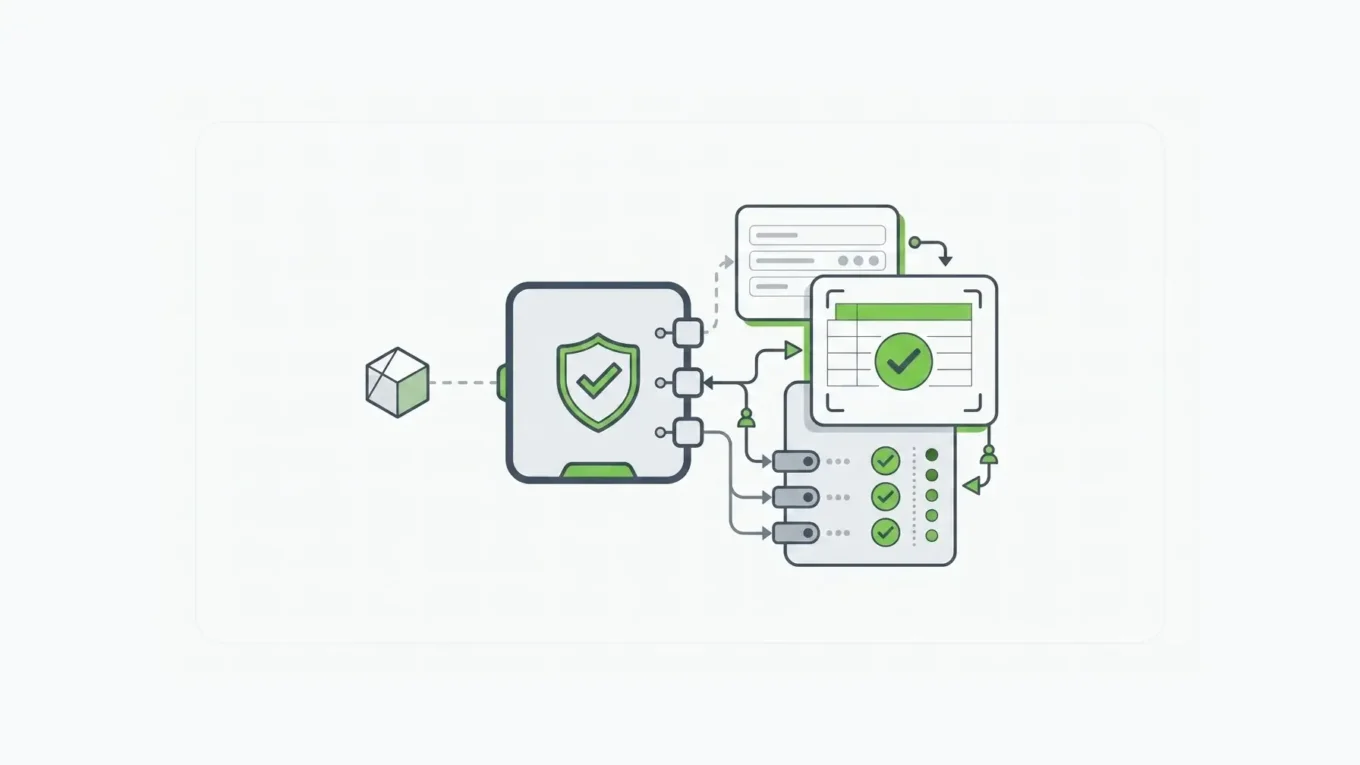
An agentic AI governance framework cannot stop at policy documents, model-risk checklists, or prompt review. Pre-deployment controls help, but production agents create a different problem because they can retrieve operational context, call tools, update records, trigger workflows, and move cases forward. Governance has to follow the agent into runtime.
Policy Defines Intent, But Runtime Controls Enforce It
Most organizations start AI governance by asking which models are approved, which teams may use them, and which categories of data are restricted. Necessary as that work is, it becomes incomplete once the AI system becomes agentic. An assistant limited to drafting text can be governed through review, usage policy, and data-handling rules. An agent that can inspect a submission, call an API, update a workflow, request a signature, or initiate an approval needs controls that operate while the work is happening.
The NIST AI Risk Management Framework is useful here because it frames AI risk as a management discipline, not a one-time feature review. For production workflows, the practical question becomes more concrete: which identity is acting, what structured context is available, which tool call is allowed, which human review step applies, and what record proves the decision afterward?
A runtime governance layer has to close the gap between policy intent and operational action. If the agent's permissions are defined only in a prompt, the organization is trusting text to enforce architecture. If the agent's tools bypass the same roles, schemas, and audit trail that govern human workflows, the AI implementation becomes a parallel control system. Security, legal, operations, and business-process owners will have a harder time defending that design.
Separate Build-Time Standardization From Runtime Governance
Agentic AI programs need consistency before production too. Teams need shared ways to generate forms, use platform patterns, connect to approved capabilities, and avoid one-off agent behavior that no one can maintain. Form.io's Agentic Toolset supports that build-time side with the MCP Server, Skills, and Agentic Coding Plugin so agentic coding teams can work from Form.io-aware primitives instead of inventing their own form infrastructure patterns on every project.
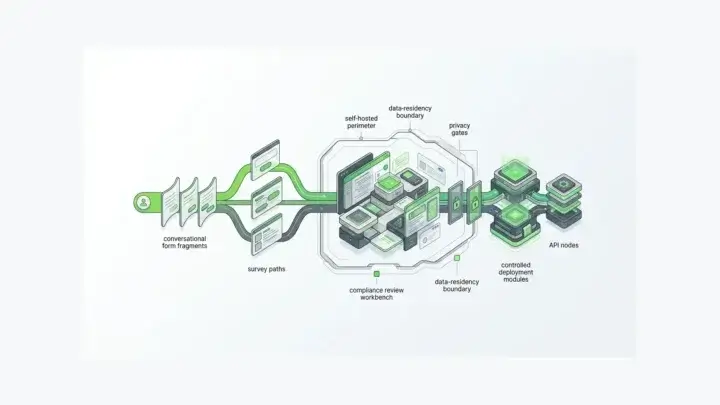
Build-time discipline belongs in the framework, but it should not be mistaken for the whole governance system. Runtime governance begins once the agent connects to live or operational workflow context. Form.io Universal Agent Gateway is the relevant layer there because it gives agents governed access to Form.io data and actions through a controlled interface rather than an open-ended integration path.
A credible governance claim separates the two layers. Build-time tools help teams produce more consistent applications and workflows. Runtime governance decides what an agent can do after deployment. A serious framework should define both layers, document where each one applies, and avoid pretending that a well-written prompt or well-trained developer agent automatically makes production activity safe.
The Governed Unit Is The Tool Call, Not The Conversation
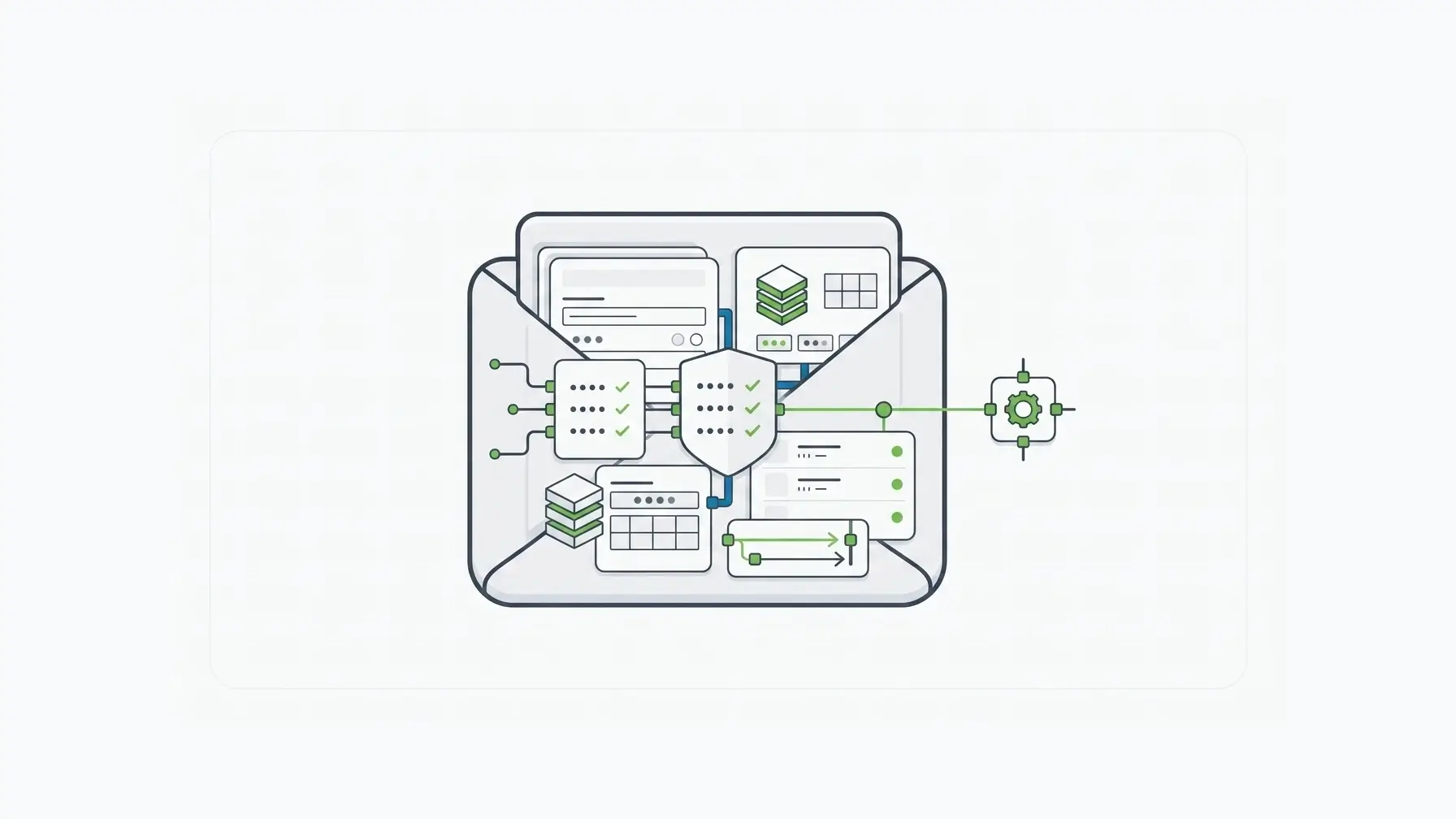
The highest-risk moment in an agentic workflow is often not the model response. It is the tool call that reads a record, changes a value, sends a payload, starts a workflow, or returns sensitive context. The OWASP Top 10 for Large Language Model Applications makes that security concern visible by treating prompt injection, excessive agency, sensitive information disclosure, and insecure output handling as production risks.
For Form.io-driven workflows, the control surface can be more specific than "watch the agent." Forms and resources define structured data. Submissions hold the operational record. Roles and permissions define who can read or change data. Actions connect submission events to workflow behavior. APIs expose approved integration points. UAG can sit in front of those capabilities so the agent receives governed context and permitted actions instead of unrestricted application access.
An agentic AI governance framework should describe allowed operations in operational language. Which forms can the agent inspect? Which submissions can it see? Which resources are excluded? Which workflow Actions may it trigger? Which update requires approval? Which request should fail closed? The framework gains strength from mapping those questions to durable platform artifacts instead of prose alone.
Structured Context Makes Governance Inspectable
Agents need context, but context is not automatically safe. A long prompt, a dumped database row, or a copied support thread can contain more information than the task requires. The governance problem is to give the agent enough structure to act usefully without giving it an accidental privilege expansion.
Form.io's schema-driven model helps because data collection is already represented in inspectable definitions. Teams can evaluate the form schema, resource model, submission lifecycle, validation behavior, and generated API behavior before exposing anything to an agent. The Form.io AI repository reinforces this pattern by describing Form.io primitives such as forms, resources, nested data, role-based access, group permissions, and server-side actions as the structures agents should work with.
Handing the agent unstructured business context and hoping for good behavior creates a weaker control model. Schema and permission boundaries turn context into something a platform team can review. If the agent is allowed to read one type of submission but not another, the rule should be enforceable by the same access model that governs application users. If the agent needs a field value, it should come from a governed source, not from a copied screen, a spreadsheet export, or an undocumented middleware convention.
Runtime Governance Matrix
| Governance question | What can go wrong | Form.io / UAG control pattern |
|---|---|---|
| Who or what is acting? | Agent activity cannot be attributed | Authenticated access path and inherited role context |
| What context is exposed? | The agent receives more data than the task requires | Schema-scoped forms, resources, and submissions |
| Which tool call is allowed? | The agent can update, trigger, or retrieve outside policy | UAG-mediated access to approved APIs and Actions |
| When must a person review? | High-risk steps execute without judgment | Human-in-the-loop form, approval, or E-Sign workflow |
| What evidence remains? | Teams cannot reconstruct the event | Submission history, logs, workflow records, and audit trail |
Human Review Should Be Designed Into The Workflow
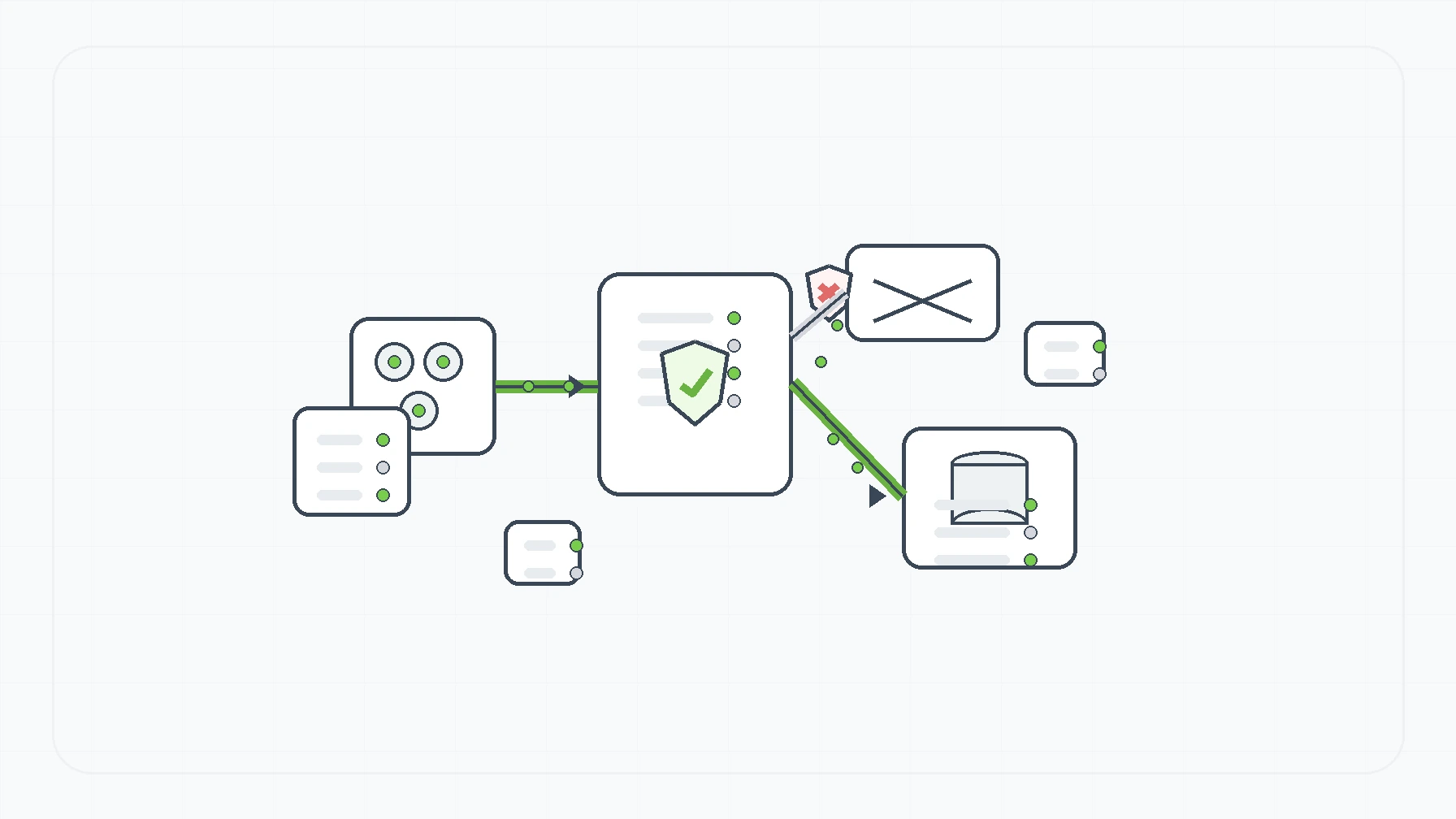
Human-in-the-loop control loses force as a manual note after the agent has already acted. Stronger governance puts the review step in the path of the workflow. The agent can prepare context, recommend a disposition, classify a record, or assemble a draft action, but the platform should still know which decisions require human approval before the state changes.
Form.io roles and permissions give teams a way to keep those review responsibilities close to the workflow data. A reviewer can be different from a submitter, an administrator, or an agent-connected service account. Form.io Actions can connect submission lifecycle events to downstream processes, and E-Sign+ can support approvals that need a signed artifact rather than an informal click.
Agentic governance becomes less abstract once the workflow distinguishes recommendation, execution, and review. The question is not "Do we trust AI?" The question is "Which decision may the agent recommend, which decision may it execute, and which decision must be routed to a person before the workflow changes?" Teams that can answer in platform terms are closer to a defensible production model.
The broader security control language in NIST SP 800-53 Rev. 5 supports the same posture. Access control, identification, audit and accountability, configuration management, and system communications all become more demanding once software components act on behalf of people or processes. Agentic workflows do not remove those disciplines. They raise the burden of proof.
Evidence Has To Survive The Agent
Production teams need to reconstruct what happened after the workflow is complete. The evidence should include the relevant record, the acting identity, the agent-visible context, the tool request, the permission decision, the review step where required, the action result, and the final state. Without that chain, the organization may know an agent participated without being able to explain the decision path.
Form.io's submission model and form revision capabilities help anchor the evidence side of the framework. The goal is not to keep a decorative log.
The audit trail keeps the record useful after the agent conversation ends. Teams need enough operational detail for security review, compliance review, debugging, and process improvement.
The MITRE ATLAS knowledge base is relevant to the evaluation because AI systems can fail through adversarial behavior, misuse, data exposure, insecure integrations, and weak monitoring. A runtime governance framework should assume production workflows need reviewable evidence, not just successful automation.
Form.io's Governed AI Layer Is Built Around Separation Of Duties
Form.io's own governed AI direction supplies the relevant proof point for this evaluation: Agentic Toolset for build-time standardization, UAG for runtime access, and the public Form.io AI repository for agent-facing platform primitives. The combination separates the agent's development workflow from the live workflow boundary it is allowed to touch.
Buyers need that separation made explicit. An agentic coding tool can help create a form-driven workflow. A runtime gateway can govern the agent that later interacts with that workflow. Those are different responsibilities. A platform that separates them gives evaluators clearer questions to inspect: what helps teams build, what controls production access, and what evidence remains after the agent acts?
For teams using AI to accelerate application delivery, this is the more credible promise. Form.io does not need to claim that AI replaces the application stack or removes technical ownership. The stronger claim is that agents can work against governed Form.io infrastructure: schemas, APIs, submissions, roles, Actions, and review paths that remain visible to the team responsible for the system.
Evaluation Sequence For Production Teams
Start with one workflow where an agent could create real operational risk. Map the data it needs, the records it should never see, the tool calls it might make, the review decisions it should escalate, and the evidence the business would need after the fact. Then ask whether those decisions can be represented in the platform or only described in an implementation note.
Use Form.io roles and permissions to test whether agent access can mirror the organization's authorization model. Use the UAG documentation to evaluate how agent access is governed at runtime.
Then inspect the API documentation to understand how surrounding services will integrate without bypassing the governance layer.
AI governance standards are still evolving, but the operating questions are already clear. ISO/IEC 42001 gives organizations an AI management-system frame, while NIST SP 800-218 is useful for thinking about secure software development discipline around systems that will eventually carry production risk. The evaluation should connect those frameworks to the actual workflow boundary, not leave them as reference links at the bottom of the page.
Where Form.io Fits The Governance Conversation
Agentic AI governance is not solved by adding a gateway name to a slide. The organization still has to design roles, map workflow states, define which tool calls are allowed, choose where human review belongs, monitor the system, and maintain the surrounding application architecture. Form.io gives teams a stronger place to put those controls when the workflow is already form-driven, schema-driven, API-driven, or approval-driven.
The fit depends on the operating boundary. A team that only needs a chatbot answering questions against public content may not need Form.io at the center of the architecture. An agent acting inside governed workflows involving submissions, generated APIs, permissions, records, approvals, signatures, and evidence creates a stronger infrastructure case for Form.io.
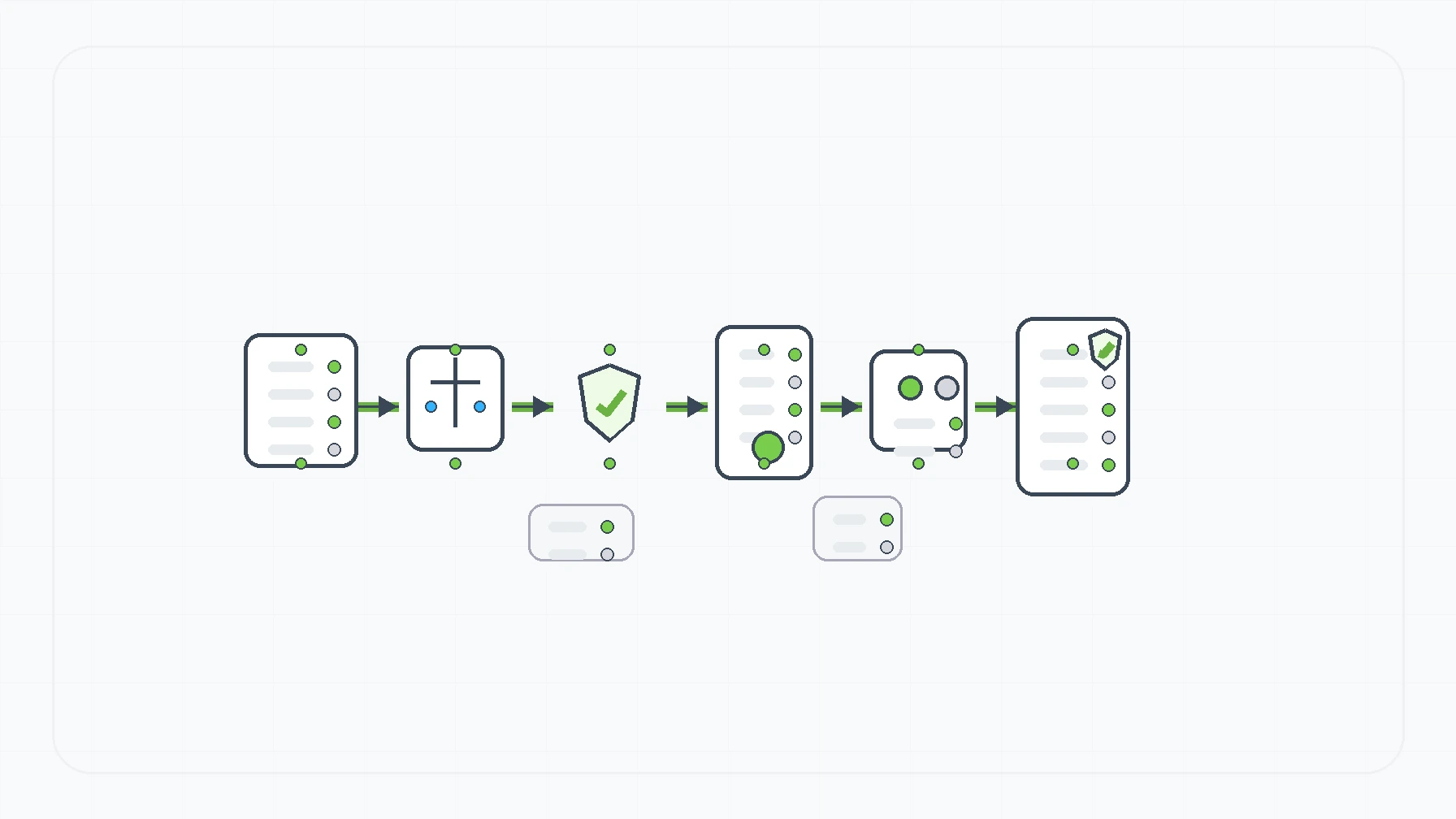
The practical test is whether the team can explain the agent's path from identity to context, from context to tool call, from tool call to review, and from review to evidence. If that path is visible and enforceable, the governance framework is doing real work.
Key Takeaways
- Agentic AI governance should be evaluated at the point of action: data access, tool calls, permissions, human review, and evidence.
- Form.io UAG gives agents governed access to Form.io schemas, submissions, APIs, roles, workflow Actions, and audit records.
- Build-time AI standardization and runtime AI governance are related but different; mature teams need both.
FAQ
What is an agentic AI governance framework?
It is the operating model that controls what an AI agent can see, which tools it can call, which workflow steps require human review, and what evidence remains after the agent acts.
Why is runtime governance different from AI policy?
AI policy defines intent. Runtime governance enforces that intent when the agent interacts with data, APIs, forms, submissions, approvals, or downstream systems.
Where does Form.io UAG fit?
Form.io UAG fits at the runtime boundary. It helps agents interact with Form.io schemas, submissions, APIs, and workflow capabilities through a governed access layer instead of open-ended integration.
How is this different from the Form.io MCP Server?
The MCP Server helps agentic coding tools work with Form.io patterns during development. UAG is focused on governing runtime agent access to operational Form.io context and actions.
Does this replace human approval?
No. A strong framework decides where agents may recommend or prepare work and where a human reviewer must approve before the workflow changes.
What evidence should teams keep?
Teams should preserve the relevant submission or record, acting identity, context boundary, tool request, permission decision, human review step when required, action result, and final workflow state.
What should security teams inspect first?
Inspect the agent's identity model, accessible data, allowed tool calls, permission mapping, escalation rules, logging, audit trail, and integration paths into downstream systems.
Can Form.io govern every AI use case?
No. Form.io fits best where the AI workflow touches Form.io-managed forms, resources, submissions, APIs, workflow Actions, permissions, approvals, or evidence records.
How should teams start?
Choose one production workflow and map the agent's data access, permitted actions, human-review points, and evidence requirements before connecting the agent to live systems.
What is the biggest mistake to avoid?
Do not treat a prompt as a control plane. Production agents need enforceable access boundaries, structured context, review paths, and evidence that survive after the conversation ends.
For teams evaluating AI in governed production workflows, Form.io brings structured data, permissioned APIs, human review, and audit-ready evidence into the same operating model.