





Updated November 14, 2026
The hidden complexity behind a digital web form is everything that happens after someone clicks Submit: the data flows to several systems, gets validated, has to stay secure and compliant, and often reaches outside partners. In the video below from HLTH 2024, Form.io Co-Founder and CEO Gary Wetzel explains why the usual choice between building forms yourself and buying a hosted tool leaves a gap, and the third path of sourcing form infrastructure that fills it.
The Submit button is clicked.
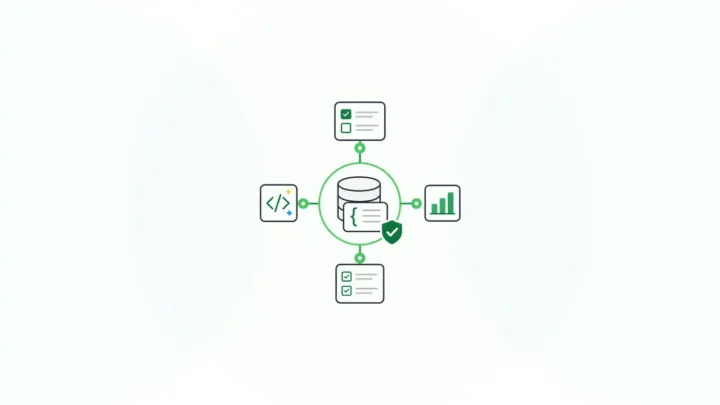
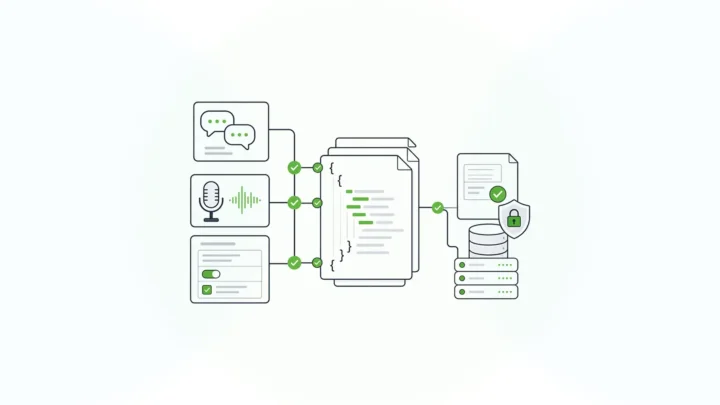
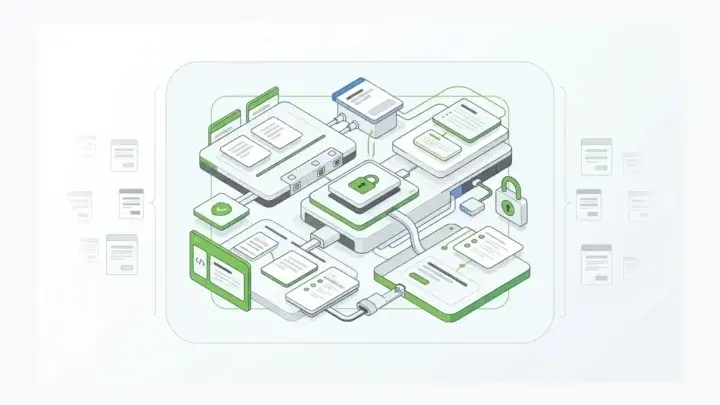
The digital touch points that happen behind the scenes at that moment, be it a patient intake form, an insurance claim, or a clinical trial document, spiderweb into a number of systems, databases, services, and potential third-party organizations.
They’re not just boxes to check—they’re the gateway to critical patient care, operational efficiency, and customer experiences that build trust in your organization.
Yet organizations across industries are caught in a frustrating tension when it comes to implementing them.
Because forms don’t exist in isolation.
On the surface, digital web forms seem simple—just fields to fill out. But pull back the curtain and you’ll discover an intricate web of data flows, integrations, and mission-critical processes that power modern operations.
And the stakes are particularly high in healthcare, where form failures can impact patient care, compliance, and operations.
Maybe you’ve got thousands of PDFs. Maybe you’re building digital forms from scratch. Either way, the complexity with digital web forms is unavoidable.
Each form needs to talk to multiple systems, validate data in real-time, maintain security compliance, and often communicate with external partners – all while providing a customer experience for both patients and providers that’s so good it feels invisible.
All of this raises the question: do you make a solution or do you buy one?
You can make a custom solution that perfectly fits your needs but requires significant resources to maintain, or adopt a pre-built solution that might not fully integrate with your existing systems or scale with your needs, at least not affordably.
This tension is so taut that if you plucked the rope between the two, it might snap.
Speaking at HLTH 2024 in October 2024, Form.io Co-Founder and CEO Gary Wetzel offered a different perspective on the age-old “make vs. buy” debate.
Here’s the hint: Most organizations have comfortably bought or sourced elements like databases, authentication, and cloud environments.
But when it comes to digital web forms, they remain a curious outlier—often caught between inadequate off-the-shelf solutions and resource-intensive custom builds.
Watch: A Third Path Between Making And Buying Digital Web Forms
Wetzel suggests there’s a third path forward. Watch:
What The Third Path Looks Like With Form.io Today
Here’s how the make, buy, or source choice plays out for digital web forms now, based on Form.io’s product pages:
- Three options, not two. Build means your team writes and maintains the form engine, data model, APIs, validation, permissions, workflows, and audit trail. Buy usually means a hosted SaaS form builder. Source means adopting a form infrastructure platform you can deploy, embed, extend, and govern inside your own architecture.
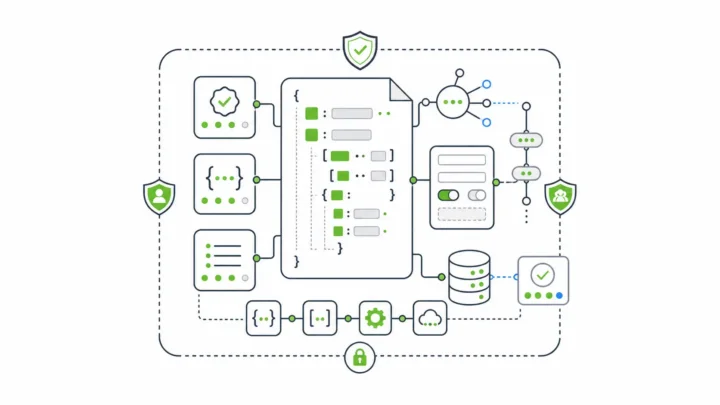
- The API comes with the form. Form.io’s drag-and-drop builder generates the form’s API as you build it, and your app renders the form from its JSON definition.
- It runs in your environment. Self-hosted Form.io deploys into your environment as a Docker container, and it can pre-fill forms from your existing databases and send submission data out to external ones.
- Healthcare forms still need a governed data path. A form builder can support HIPAA compliance but can’t replace it. Once a form collects PHI, the business associate agreement and everywhere the data goes after Submit both matter.
- Business users can build forms inside your app. The Enterprise Form Builder Module (EFBM) embeds a white-labeled, pre-configured form builder in your application, while you keep control of the data model and workflow behavior.
Sources: Build vs. Buy vs. Source, How Form.io Works, Enterprise Self-Hosting, HIPAA-Compliant Form Builder guide, and Enterprise Form Builder Module. Keep reading: Why Product Teams Are Thinking Differently About Digital Web Form Solutions. Want to try it? Start a free 30-day trial or contact us.